
Why Interactive eLearning Drives Professional Growth
Why Interaction and Experiential Activities Are Essential in Professional Training
Employees learn best through action and experience, not passive reading. Interactive and experiential learning activities such as video quizzes, branching scenarios, hotspots, flashcards, group discussions, and real-time coaching significantly boost engagement, skill mastery, and retention.
When employees practice real situations and receive immediate feedback, their confidence, competence, and performance improve. Interactive learning does more than convey information; it creates memorable experiences that directly impact workplace effectiveness and professional growth.
Modern neuroscience and learning research show that people retain knowledge far more effectively when they experience it, practice it, and receive feedback.
Experiential learning tools—from interactive simulations to collaborative exercises—accelerate skills development, increase engagement, and support measurable performance outcomes.
Learning platforms like The Learning Lab integrate these experiential formats to help employees learn by doing, enjoy the process, and immediately apply knowledge on the job. Structured coaching, feedback, and peer interaction reinforce skills, creating a culture of continuous professional development and measurable business impact.
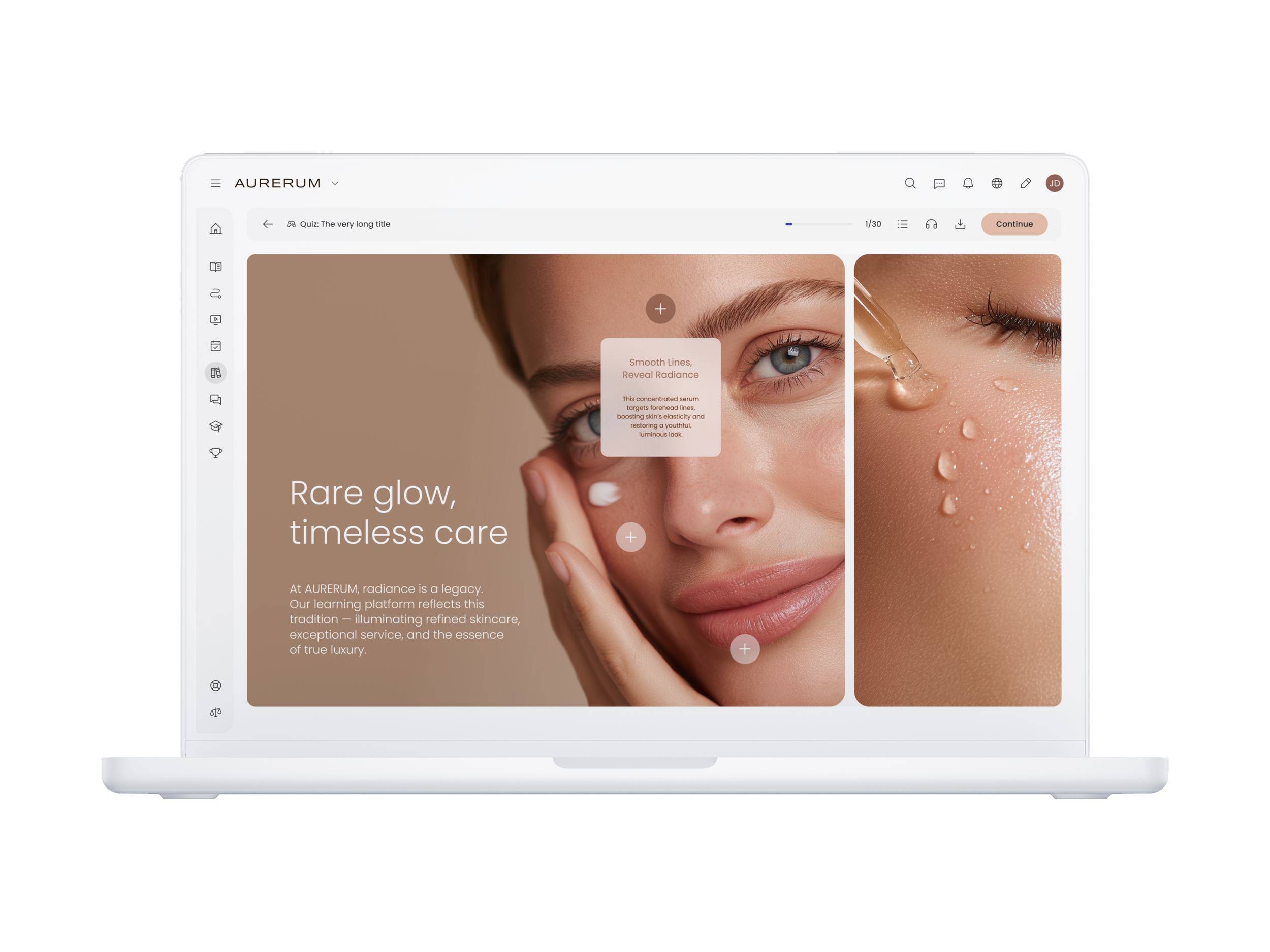
Why Experiential Learning Drives Performance in Professional Training
Employees learn most effectively when they act, experiment, and apply knowledge, rather than passively reading or watching content.
Modern neuroscience and learning research show that hands-on practice, scenario-based learning, and immediate feedback significantly increase knowledge retention, skill mastery, and performance.
For professionals who need to master complex skills, client interactions, or specialized knowledge, experiential learning is the fastest path to confidence, competence, and consistent execution. Interactive formats turn training into real-world experiences, accelerating both learning and results.
Key Takeaways
Active learning boosts retention by +50–75% compared to passive methods.
Interactive formats increase course completion rates by +30–45%.
Experiential training doubles confidence levels in applying skills and making decisions.
Scenario-based practice reduces errors by up to 40% and speeds up skill mastery.
Real-time feedback accelerates behavioral adoption, improving overall performance and outcomes.
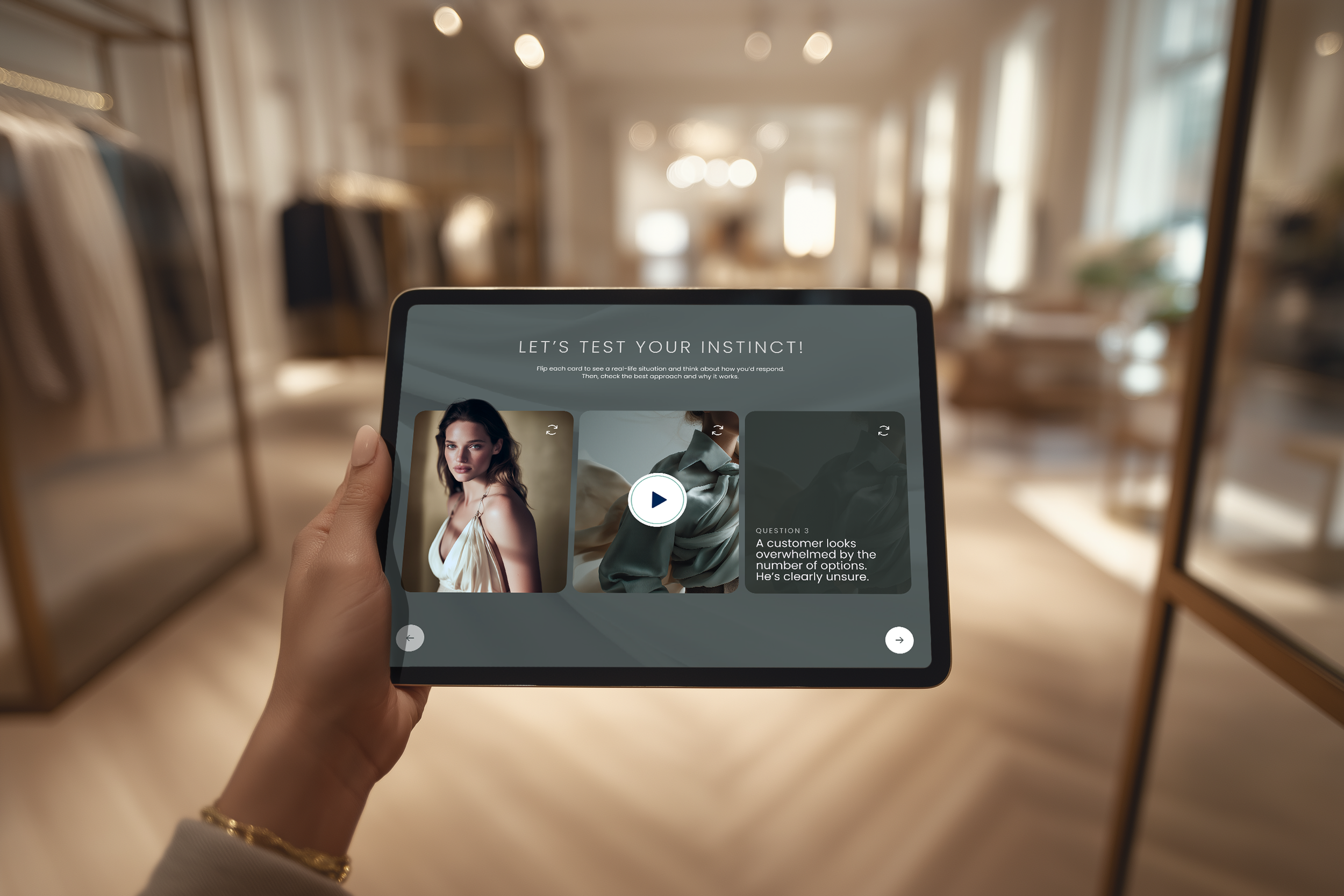
Video Quizzes: Learning Through Real Situations
Video quizzes transform professional training by allowing employees to learn from real actions and scenarios rather than just theory.
By observing behaviors, decision-making, and workplace scenarios, learners process information in a more natural, memorable, and actionable way. Modern learning science demonstrates that visual, scenario-based training significantly improves engagement, retention, and performance.
Video quizzes are one of the fastest and most effective ways to build practical competence, particularly in roles that require precision, professional judgment, or consistent execution of skills.
Key Takeaways
+60–70% retention improvement when learners watch and analyze real scenarios instead of reading text.
+35–50% higher engagement compared to traditional quizzes.
Stronger behavioral accuracy, as employees model the behaviors and actions shown in videos.
Immediate application on the job, thanks to visual, context-rich learning.
Scalable for global teams, ensuring consistent demonstration of professional standards and practices.
Video Assessments: Validating Real Skills Through Real Demonstration
In professional training, skill mastery must be demonstrated, not assumed.
Video assessments allow employees to showcase their expertise by recording real-world actions, techniques, or workflows, bringing practical evaluation into a digital format.
This approach provides managers with a clear, objective view of proficiency, while giving learners meaningful, actionable feedback that accelerates growth. Research shows that demonstrating skills significantly improves long-term retention and ensures consistent application of best practices across teams and locations.
Key Benefits
Validates practical mastery of essential techniques and workplace behaviors.
Provides objective evaluation with visual proof of performance.
Improves knowledge retention by +40–60% when learners demonstrate skills instead of only consuming content.
Boosts confidence by +50%, thanks to personalized, actionable feedback.
Ensures consistency across teams, locations, or departments by standardizing best practices.
Supports coaching workflows, enabling managers to refine small but critical behaviors that drive better results.
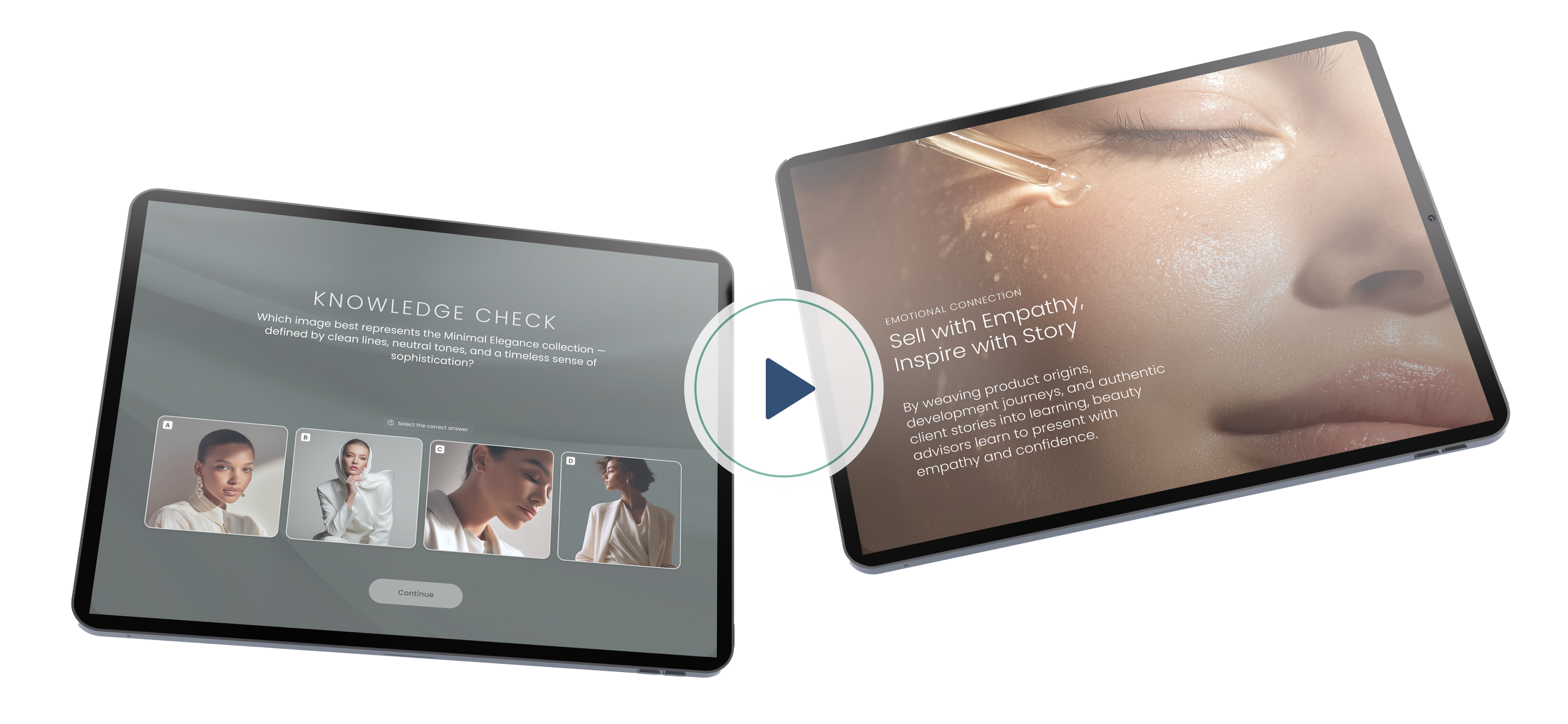
InstaLearning Interactions: Fast, Swipeable Training for Busy Teams
In fast-paced work environments, long training sessions are often impractical.
InstaLearning interactions provide a highly effective alternative: short, swipeable learning bursts that fit naturally into employees’ daily routines.
These microlearning activities deliver essential skills, reminders, and knowledge in seconds — exactly when employees need them. Research shows that microlearning improves knowledge retention, engagement, and completion rates, making it ideal for modern professional training.
Key Takeaways
Quick, targeted learning moments: Micro-activities can be completed in minutes, fitting naturally into busy schedules.
Faster assimilation: Microlearning increases retention by +20–40% compared to longer, traditional modules.
Higher engagement: Short-format content boosts participation by +50–60%.
Immediate application: Employees can practice and apply knowledge right away, enhancing skill development.
Real-time updates: Microlearning ensures teams stay aligned with the latest processes, procedures, or organizational knowledge.

Video Hotspots: Bringing Skills and Techniques to Life Through Interactive Visuals
In professional training, employees often need to understand complex concepts, techniques, or workflows in depth.
Video hotspots transform passive videos into interactive learning experiences, allowing learners to tap directly on visuals to reveal explanations, expert tips, and contextual insights.
This format enhances curiosity, comprehension, and practical application, mirroring how people naturally learn: by observing, interacting, and exploring. Interactive video hotspots make complex knowledge intuitive, memorable, and immediately actionable on the job.
Key Takeaways
Interactive visual learning boosts knowledge retention by +45–60% compared to static videos.
Tap-to-explore hotspots help learners understand complex processes and key details in context.
Gesture or action hotspots reinforce correct techniques and best practices.
On-demand micro-explanations reduce training time while improving accuracy.
Teams trained with interactive visuals report +40% higher confidence in applying new skills and knowledge.
Flash Cards and Micro Games: Boosting Memory and Knowledge Retention
In professional training, employees often need to retain large volumes of information, from technical details and procedures to best practices and workflows.
Flash cards and micro games transform this cognitive load into quick, memorable learning moments. By using repetition, instant feedback, and playful interaction, these formats significantly improve long-term retention, recall, and on-the-job accuracy.
These methods make training engaging, fast, and effective, perfectly suited for employees who need knowledge at their fingertips anytime.
Key Benefits
+40–60% improvement in memorization when using spaced-repetition tools like flash cards.
Micro games increase engagement by 35–50%, making learning enjoyable and effortless.
Instant recall accuracy rises by +30% after repeated exposure through short, gamified drills.
Ideal for quick daily refreshers on procedures, processes, or key professional knowledge.
Supports consistency across teams, ensuring everyone applies best practices and standards effectively.
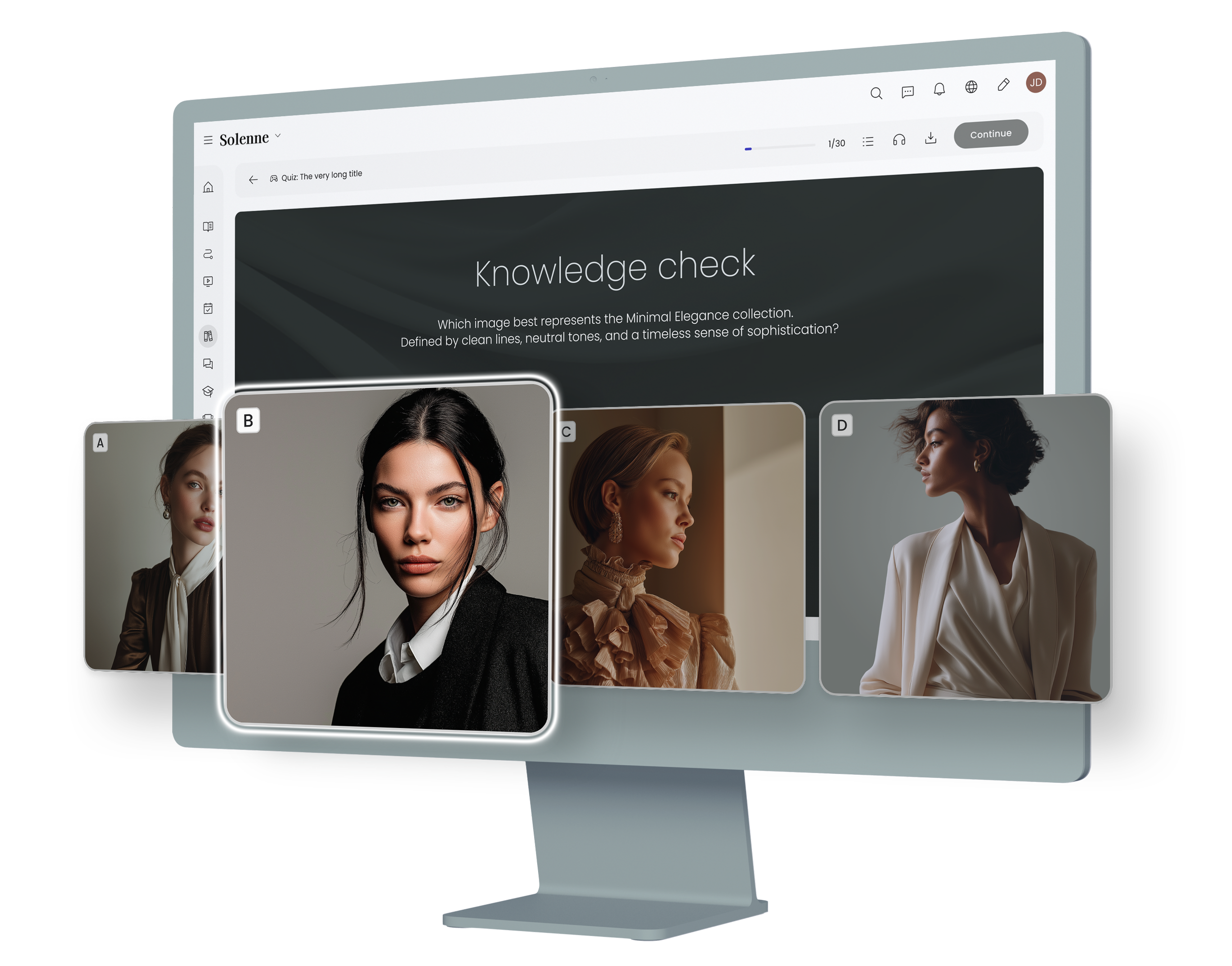
Group Discussions and Community Sharing: Elevating Collective Intelligence
In professional environments, expertise does not grow in isolation.
Group discussions and community learning spaces enable employees to learn from real experiences, compare approaches, and exchange best practices across teams, departments, or locations. When teams share success stories, problem-solving strategies, and practical tips, creativity increases and knowledge spreads organically.
Research shows that peer-to-peer learning significantly boosts engagement, knowledge retention, and skill development, making community interaction a powerful lever for professional growth.
Key Takeaways
+35–45% higher engagement when employees participate in group discussions and exchanges.
Peer learning drives +25% faster skill adoption compared to solo training.
Community sharing increases creativity and problem-solving by +30%.
What It Enables
Exchange of best practices across teams, departments, or locations.
Sharing real-world cases, strategies, and workflows to enhance practical knowledge.
Collaborative problem-solving for complex challenges.
A stronger sense of belonging, reinforcing organizational culture and motivation.
Why Interactive Learning Matters
Interactive learning drives higher engagement, stronger knowledge retention, and more consistent application of skills in the workplace.
Organizations that adopt experiential and hands-on training formats see measurable improvements in employee performance and productivity, according to industry research.
Effective coaching and peer learning foster communities of motivated employees who perform at a higher level, stay aligned with organizational values, and contribute to a positive workplace culture.