
Modern LMS (Learning Management System): What Teams Need in 2026
Learning Management Systems That Deliver Real Impact for Teams
In today’s fast-paced work environments, training cannot be treated as a generic HR activity or a back-office task.
Teams operate under tight deadlines, high performance expectations, and constant pressure to deliver results.
A modern Learning Management System (LMS) is designed for real-world use: mobile-friendly, easy to access, visually engaging, and practical in the moment. It delivers short, high-impact learning formats such as microlearning, nano-learning, and interactive content that can be revisited quickly when needed. Learning experiences like videos, branching scenarios, quizzes, and activity-based exercises simulate real job tasks and help employees practice skills they can immediately apply.
For organizations with global teams, an LMS must support multiple languages, be culturally adaptable, and maintain brand consistency while allowing local customization. Learning programs only create value when they boost confidence, improve performance, and help teams execute effectively. Any system that is slow, generic, or disconnected from day-to-day work will fail to engage employees.
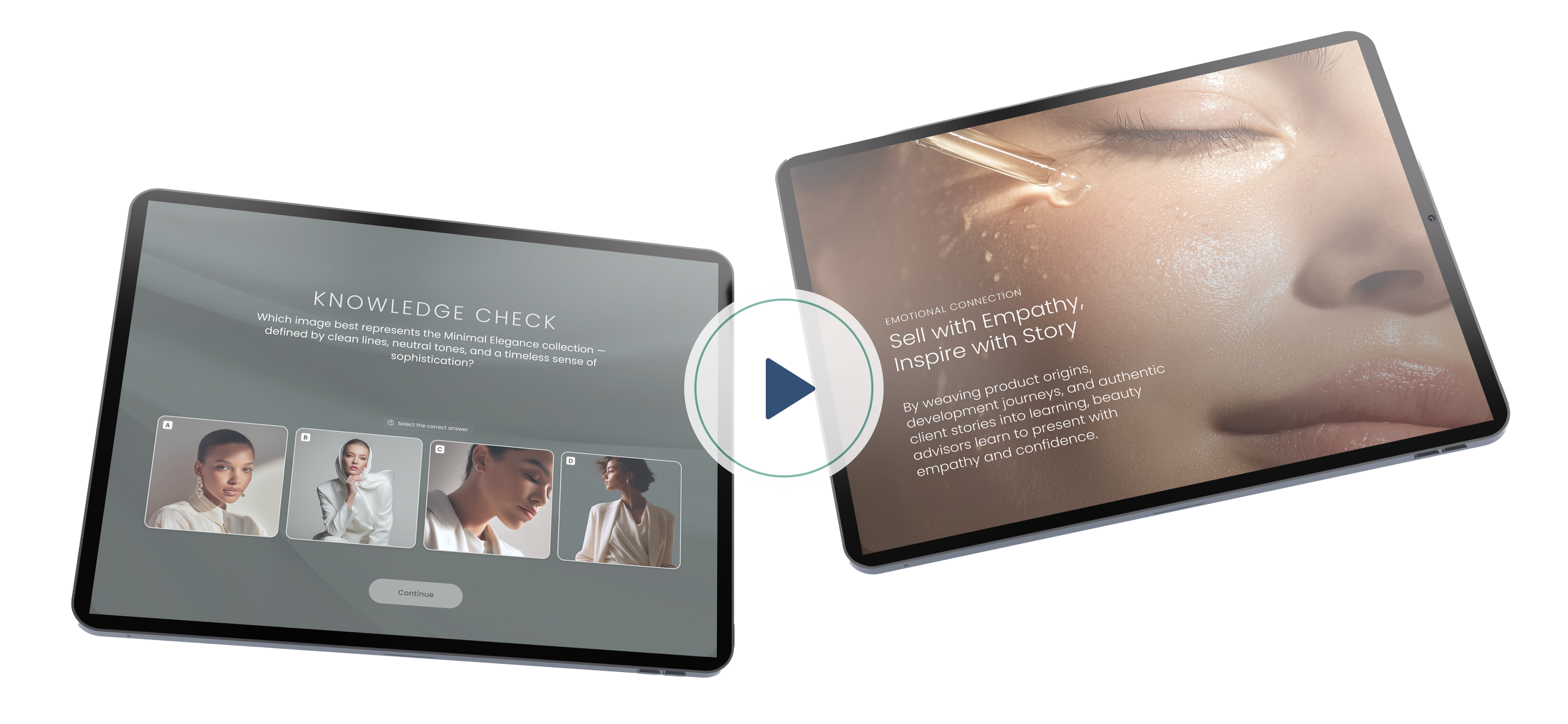
Learning Without Limits: How LMS Customization Enhances Learning Design
In 2026, learning platforms are no longer just configurable. Modern Learning Management Systems (LMS) allow organizations to fully design and personalize the learning experience.
Advanced customization tools enable teams to go beyond branding and visual changes to create a truly tailored learning environment. Users can design layouts, organize content, manage navigation, integrate multimedia, set interactions, and build learning paths—all without coding or technical support. This flexibility empowers organizations to translate their identity, instructional approach, and business priorities directly into the learning experience.
With these capabilities, LMS platforms adapt quickly to changing needs, such as new projects, product launches, team structures, or global audiences. The result is a dynamic, fully branded learning environment that grows and evolves with the organization. Learning becomes purposeful, engaging, and strategically aligned, enabling employees to develop skills effectively and immediately apply them to real work situations.
From Customization to Creation: Redefining Modern Learning
Learning is no longer limited to templates or presets. Modern Learning Management Systems (LMS) are fully buildable, offering a website-like experience for designing learning environments.
Flexible Page Design
Create and customize any page across the platform, including home pages, courses, learning paths, dashboards, and communities.No-Code, Fast Setup
Build layouts, organize content, and manage visuals without technical skills or lengthy development cycles.Advanced LMS Technology
Modern LMS platforms include proprietary tools designed to meet evolving learning needs, enabling fully interactive and adaptable experiences.Complete Design Freedom
Control navigation, content blocks, media, interactions, and learning flows without structural limitations.Brand-Aligned Learning
Incorporate your organization’s identity, tone, and visual style directly into the learning experience for a consistent and engaging environment.Agility for Business Needs
Quickly adapt the LMS to new projects, initiatives, team structures, or global audiences.A Living Learning Platform
The LMS evolves continuously, ensuring learning keeps pace with organizational strategy and drives meaningful skill development.
Data-Driven Learning: Turning Insights Into Action
Data only creates value when it reflects the realities of how teams work.
Generic dashboards and standard completion metrics are no longer sufficient for organizations operating across departments, locations, or global markets.
Modern Learning Management Systems provide data that is actionable, contextual, and aligned with day-to-day operations. Leaders need insights they can trust to guide coaching, improve performance, and make informed decisions.
A robust LMS data system offers the right level of visibility for executives, managers, and team leaders. It translates learning analytics into practical actions that enhance skill development, track progress, and optimize training strategies across the organization.
Built for Real-World Learning
Data is structured around what matters in day-to-day operations: departments, locations, teams, roles, and individual contributors, rather than relying on generic LMS metrics.
Advanced Filtering by Operational Dimensions
Quickly filter learning data by:
Region or market
Country or office location
Team or department
Role or job function (employee, manager, trainer, etc.)
Program type, project, or skill category
Dedicated Manager Dashboard
Managers access a clear and actionable dashboard to:
Monitor their team’s progress in real time
Identify skill gaps and training priorities
Facilitate coaching and development conversations, not just generate reports
From Completion to Performance Insights
Go beyond simple completion rates with insights on:
Employee engagement and usage patterns
Skill progression and competency development over time
Training adoption across teams, departments, or locations
Behavioral indicators connected to on-the-job performance
Custom Reports Tailored to Your Needs
Build bespoke reports that align with:
Internal performance indicators and key metrics
Mandatory or compliance training requirements
Departmental, regional, or corporate reporting standards
Organizational goals and HR objectives
Downloadable and Shareable Data
Export clean, structured datasets for:
Internal analysis and decision-making
Integration with Excel or business intelligence tools
Management reviews and performance reporting
External audits, compliance, or regulatory requirements
Multi-Level Visibility, One Source of Truth
Executives gain insight into global or company-wide performance
Departments and regional managers see localized team metrics and trends
Team leaders and individual contributors access actionable insights to drive immediate improvements
Data That Drives Action, Not Just Dashboards
Designed to support coaching, prioritization, and performance improvement rather than passive reporting, modern learning analytics turn data into a strategic asset.
A Learning Intelligence System, Not Just Reporting
Data becomes a strategic asset to improve training relevance, enhance employee performance, and drive measurable business outcomes.
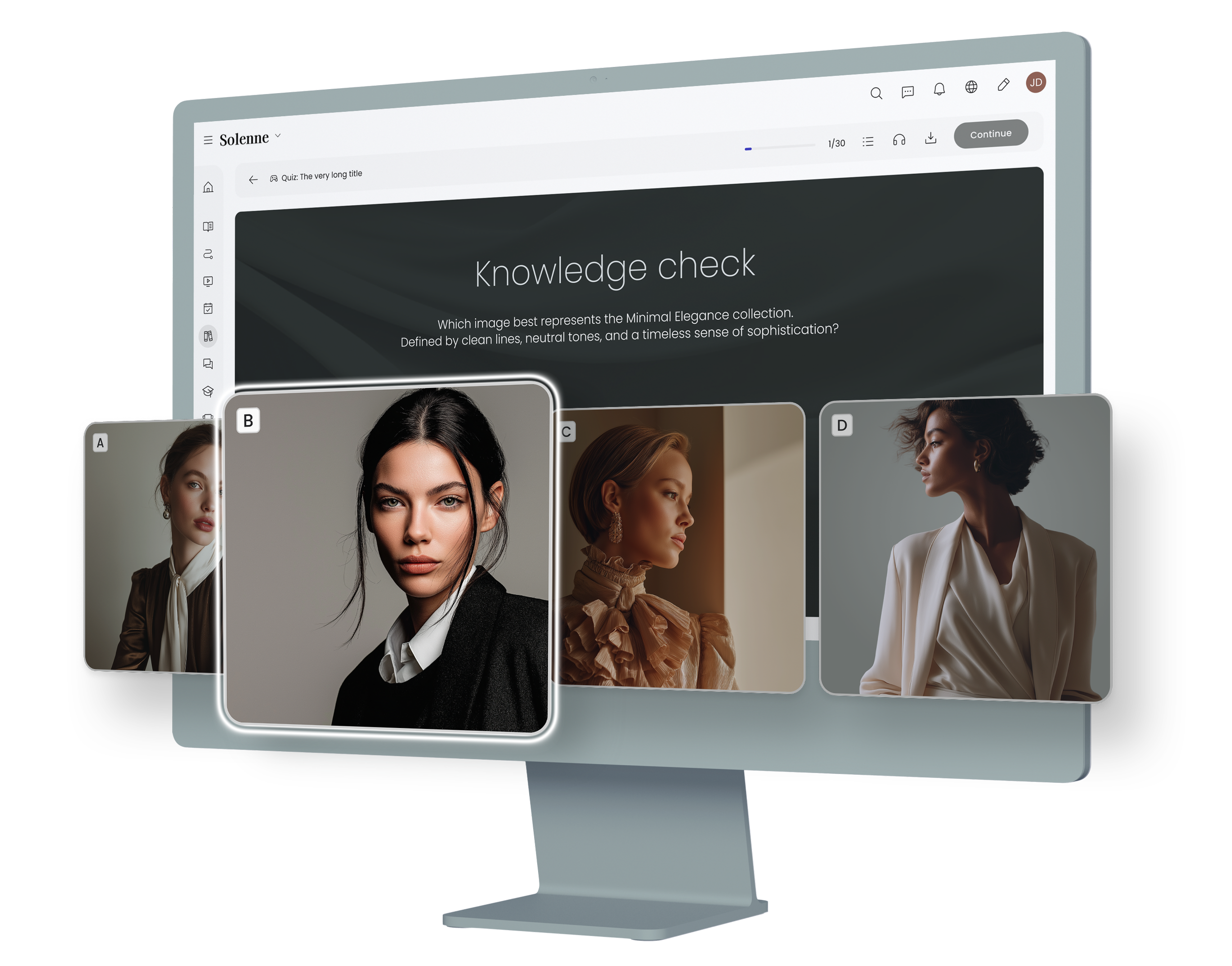
AI-Powered LMS: Intelligence That Supports Learning, Not Replaces It
Artificial intelligence in learning should never replace people; it should enhance expertise, creativity, and execution.
A modern AI-powered Learning Management System acts as a smart assistant throughout the learning journey. It helps teams create content faster, personalize learning at scale, and streamline experiences for both learners and administrators. The goal is not automation for its own sake, but greater relevance, efficiency, and impact—ensuring learning programs deliver meaningful results across the organization.
How AI Powers a Smarter Learning Experience
AI-Assisted Content Development
AI supports instructional designers and learning teams by:Structuring and rewriting content
Offering pedagogical suggestions
Adapting tone and style to align with brand or organizational voice
AI accelerates content creation without replacing creative or strategic decision-making.
Adaptive Learning and Dynamic Learning Paths
Learning journeys are automatically adjusted based on:Employee role or function
Performance, progress, and skill gaps
Organizational priorities and team maturity
Learners receive personalized experiences instead of one-size-fits-all courses.
Automatic AI Translation and Localization
Content can be instantly translated and adapted while:Preserving brand tone, terminology, and messaging
Allowing human review for quality and accuracy
Reducing time-to-market for global rollouts by up to 70–80%
AI Chatbots for Learners
A 24/7 AI assistant can:Answer training-related questions
Guide users through learning content
Reduce dependency on support teams
This is especially valuable for distributed teams working across shifts or time zones.
AI Image, Audio, and Video Support
AI enables faster production of learning visuals, audio narration, and video content:Visual assets for scenarios, simulations, and storytelling
Audio and video content for mobile and on-the-go learning
Inclusive access for diverse learning preferences
Smarter Learning Recommendations
AI suggests:Next best content modules
Reinforcement activities
Relevant exercises
Recommendations are based on real learner behavior, not assumptions.
Human-Centric AI
All AI features are optional, transparent, and configurable. AI supports decisions—it never replaces human judgment.
Why Global Learning Management Matters for Modern Organizations
Faster global rollout without compromising brand consistency
More personalized learning experiences for large, distributed teams
Reduced operational burden for L&D and headquarters teams
Higher engagement and real-world relevance on the store floor
AI positioned as an enabler of excellence—not a shortcut

The Learning Lab Creative Suite for Branded Digital Learning Experiences
In high-impact organizations, training goes beyond information delivery. It is about creating engaging learning experiences, emotional connection, and consistent brand expression.
The Learning Lab Creative Suite empowers learning and development teams with full creative freedom to design interactive digital learning content that is immersive, visually refined, and brand-aligned, all without technical constraints or complex authoring requirements.
From nano-learning to advanced, scenario-based content, every format is crafted to reflect your brand DNA while remaining effortless to use on the store floor, optimized for mobile, and scalable across global teams.
What the Creative Suite Enables
No-Code Authoring Tool
Design rich learning content—without SCORM or technical expertise:
Intuitive drag-and-drop creation
Live updates with no re-publishing required
Centralised content governance with local market flexibility
Slide Builder & Widget System
Go far beyond static slides with dynamic, modular design:
Interactive layouts
Flexible, modular components
Reusable blocks for consistency and speed
Branded Slide & Template Library
Maintain brand coherence across every market:
Custom-designed slide templates
Campaign- or collection-based designs
Consistent typography, colours, and layouts
Carousel & Visual Storytelling Modules
Ideal for:
Product launches
Campaign storytelling
Step-by-step client journeys
Designed for fast, mobile-first consumption on the store floor.
Video Quiz & Interactive Video
Turn passive viewing into active learning:
Embedded questions
Decision points
Knowledge checks during playback
Proven to increase retention by 30–40% compared to linear video.
Video Assessment
Validate real skills—not just knowledge:
Record sales pitches, rituals, or demonstrations
Enable manager feedback and coaching
Ideal for clienteling, service excellence, and product mastery
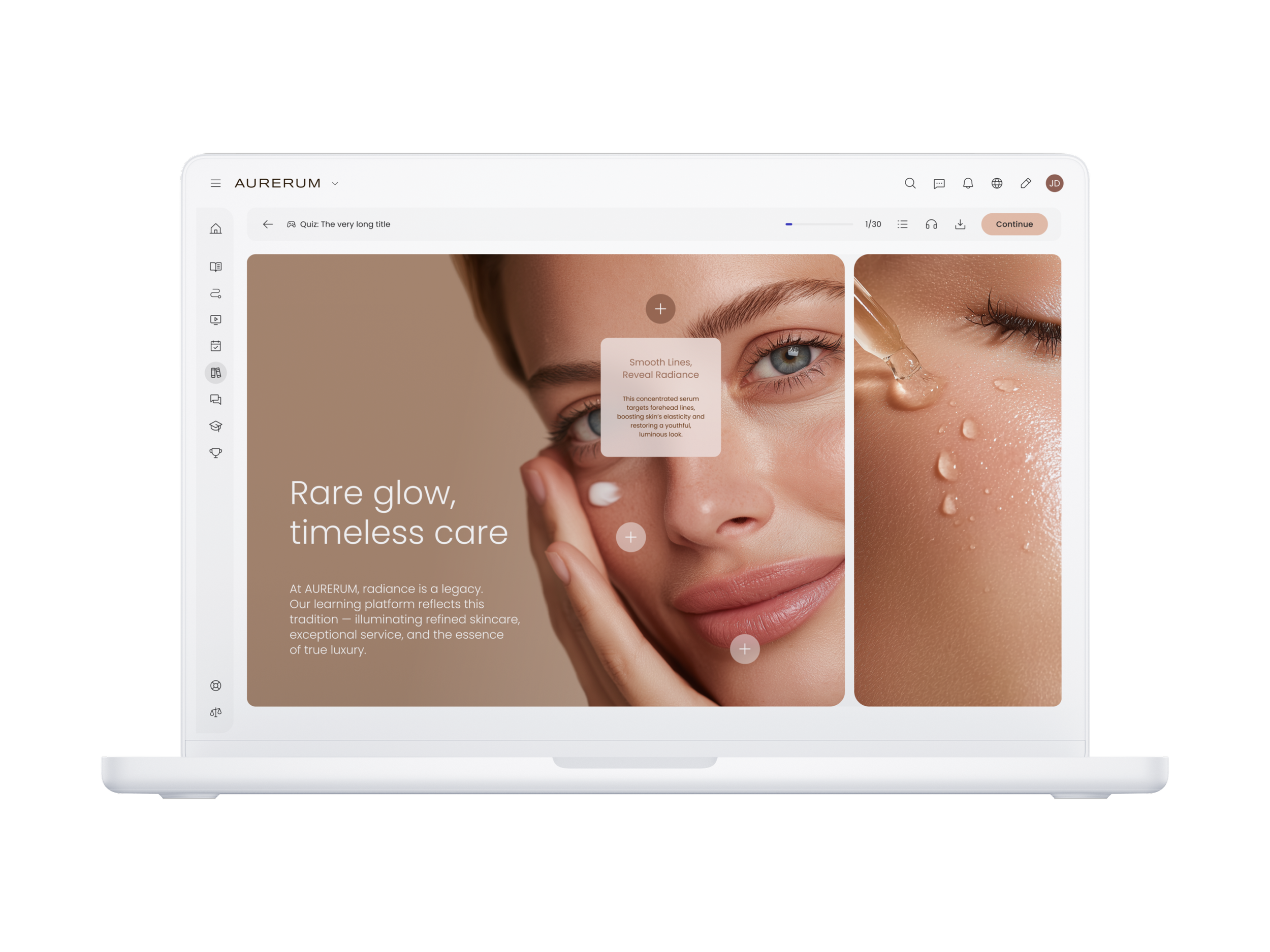
Multimedia Hotspots
Add layers of interaction to images and videos:
Product details
Storytelling elements
Feature explanations
Supports discovery-based learning.
Rich Media Flashcards
Reinforce knowledge through repetition:
Images, audio, video, and text
Ideal for product specifications, storytelling cues, and rituals
Optimised for quick, daily use
Fonts & Image Management
Full control over brand assets:
Centralised font library
Image management aligned with brand guidelines
Consistent rendering across desktop and mobile
Desktop & Mobile View Management
Design once. Deliver everywhere:
Automatic layout optimisation
Mobile-first logic for store teams
Device-specific preview and adjustments
Automatic Translation Integration
Create once. Deploy globally:
AI-powered translation
Human review workflows
Brand terminology protection
Reduces global rollout time by up to 70%.
Why This Matters for Modern Organizations
Training content that truly reflects brand standards
Faster content creation without compromising quality
Consistent global storytelling with meaningful local relevance
Higher engagement where it matters most—on the store floor
Learning that becomes a natural extension of the brand universe
Global Learning Management Built for Complex Organizations
Managing learning at a global scale requires more than a traditional LMS.
Large organizations operate across multiple regions, languages, regulations, and platforms while still requiring consistency, control, and speed.
Our Global Learning Management architecture is purpose-built to handle this complexity, enabling headquarters to maintain centralized governance while empowering local teams to execute effectively.
From advanced branching and granular user permissions to multi-language delivery and international-ready infrastructure, learning is distributed efficiently, securely, and seamlessly across the organization.
What Our Global Learning Management Enables
Advanced Branching Architecture
Organize learning by multiple dimensions:
Region
Country
Market
Brand or Division
Role
This ensures the right learning content reaches the right audience automatically, improving adoption and relevance.
Group & Sub-Group Management
Create unlimited hierarchical structures that reflect your real-world organization:
Headquarters → Region → Country → Teams
Business units, departments, or functions
Temporary groups for launches, pilots, or projects
This allows flexible organizational mapping for large, complex enterprises.
Granular Rights & Access Management
Control exactly who can:
View, create, edit, or publish content
Validate, translate, or localize learning materials
Access formats, dashboards, and analytics
Supports global governance with local autonomy.
Content Access Rights by Role & Market
Ensure learners only see content that is relevant:
Role-based learning pathways
Market-specific content
Brand, division, or program-specific materials
This reduces content noise and boosts learning engagement and adoption.
Multi-Language & Localization Management
Manage translations centrally while enabling local adaptations:
AI-powered automatic translation
Human review workflows for accuracy
Protection of brand terminology
Local customization without duplicating content
Supports global learning scalability and consistency.
China-Ready Infrastructure
Provide compliant access for China-based users:
Dedicated AWS China hosting
Optimized performance for local networks
Regulatory compliance
Seamless experience comparable to global platforms
Multi-Platform Content Distribution
Deliver learning anywhere your teams are:
Web (desktop and mobile)
iOS and Android apps
Local platforms in specific regions
One unified learning experience, optimized for every environment.
Centralized Control, Local Execution
Headquarters retains strategy, governance, and brand consistency
Local teams retain speed, relevance, and operational autonomy

Conclusion: From Learning Platform to Performance Engine
In 2026, organizations do not need more features—they need relevance, speed, and measurable impact.
A modern learning management system must go beyond being a static content repository and become a daily performance companion for employees. This includes short, mobile-first learning, strong brand-aligned experiences, intelligent personalization, and tools that enable action, not just consumption.
The platforms that will truly drive organizational performance are designed around real behaviors: learning in the flow of work, reinforcing skills through practice, supporting managers as coaches, and scaling globally without losing local relevance.
The Learning Lab LMS delivers all of this and more.
Built for complex, global organizations, it combines advanced learning architecture, creative content creation tools, AI-powered intelligence, and enterprise expertise to transform training into a measurable driver of performance, engagement, and organizational excellence.