
8 Reasons to Train with Mobile E-learning Retail Contents
This year more than ever, luxury maisons need to enable sales advisors with a smartphone.
Luxury retail runs on details: product knowledge, ritual, storytelling, clienteling, and a standard of service that feels effortless. Yet the reality for many sales advisors is anything but effortless. Collections rotate quickly, campaigns change weekly, and clients arrive informed, impatient. In this environment, smartphones aren’t a distraction; they’re the most practical training channel you can put into an advisor’s hand.
Mobile e-learning makes it possible to keep in touch with stores daily, roll out updates instantly, track engagement and learning data, and reinforce credibility on the floor. When paired with smart retail content (microlearning, videos, quizzes, scenario-based practice, and clienteling-ready product cards), mobile training becomes more than “learning.” It becomes performance support that helps advisors answer questions, recommend with confidence, and follow up with leads faster.
And the economics are straightforward. The cost of equipping each advisor with a managed smartphone is negligible compared to the revenue lost when teams can’t recall key product differentiators, miss cross-sell opportunities, or fail to respond quickly to client requests. When the goal is to make selling easier and more consistent, mobile is the shortest path from content to conversion.
Eight reasons luxury maisons should prioritize mobile e-learning retail content now, plus what you gain operationally and commercially.
1) Speed: Train at the pace of product drops and campaigns
Luxury doesn’t wait for quarterly training calendars.
New launches, capsule collections, seasonal merchandising, and brand activations demand knowledge right away. Mobile e-learning lets you publish and refresh content in days or hours, not weeks, so store teams stay aligned with HQ messaging and priorities.
When advisors learn in short bursts (3–7 minutes) between client interactions, the brand can sustain momentum across all doors without pulling people off the floor for long classroom sessions. Research on microlearning also supports the logic of delivering content in smaller units that fit real schedules and improve recall through repetition and spacing.
Major wins:
Faster time-to-knowledge for launches, limited editions, and campaign updates
Less operational disruption than half-day or full-day sessions
Consistent messaging across regions and store formats
Better retention through short, repeated practice (spaced learning)
Speed isn’t about rushing luxury; it’s about protecting brand excellence when things change. Mobile gives you a “publish-to-store” capability that matches how quickly luxury retail moves.
2) Convenience: Learning that fits real store life
Store teams rarely have uninterrupted time.
Peaks happen, staffing varies, and advisors often learn while juggling replenishment, appointments, after-sales, and client messages. Mobile learning works with this reality instead of fighting it.
Because training lives on a device advisors already know how to use, you reduce friction: no laptop logins, no “I’ll do it later,” no waiting for a back-office computer. With offline access, advisors can learn during commutes or breaks, and markets with uneven connectivity aren’t excluded.
Major wins:
Training access during downtime, commutes, and quiet moments
Lower drop-off than desktop-only LMS modules
Offline learning for travel retail, pop-ups, and low-connectivity zones
Better inclusivity for part-time and rotating staff
Convenience looks “soft,” but it drives completion rates. If learning is hard to access, it becomes optional; if it’s in-pocket, it becomes routine.
3) Consistency: One brand voice across all doors
Luxury maisons invest heavily in brand codes, tone, and storytelling.
But consistency breaks when training is uneven: some stores have strong managers, others rely on tribal knowledge, and product details get distorted over time.
Mobile e-learning lets you deploy standardized “truth” content: product pillars, craftsmanship stories, care instructions, selling ceremonies, and approved language. It also helps you maintain alignment across regions, franchises, wholesale corners, and travel retail, where training quality often varies.
Major wins:
Standardized product storytelling and selling rituals
Reduced misinformation and “advisor mythology”
Faster onboarding into brand culture and service standards
Easier governance: version control, approvals, and updates
The client experience should never depend on which door they walk into. Mobile content turns brand consistency into a repeatable system, not a hope.
4) Credibility: Advisors sell better when they feel confident
In luxury, confidence is part of the product.
Advisors don’t just share information; they embody expertise. When an advisor hesitates on materials, complications, sizing, care, or provenance, the client feels it instantly.
Mobile learning supports credibility in two ways: it builds knowledge through training, and it provides “just-in-time” performance support (quick reference cards, comparison tables, objection-handling scripts, and care guides). This reduces anxiety, improves fluency, and helps newer hires reach a high standard faster.
Major wins:
Higher advisor confidence in product and brand storytelling
More fluent answers to client questions and objections
Faster ramp-up for new hires and seasonal staff
Reduced reliance on a single “expert” in-store
You can’t demand confidence; you have to enable it. Mobile learning helps advisors become credible through practice and access, not memory alone.
5) Clienteling-ready: Use training content with clients (without breaking luxury codes)
Clients increasingly want transparency: materials, sourcing, care, craftsmanship, and comparisons.
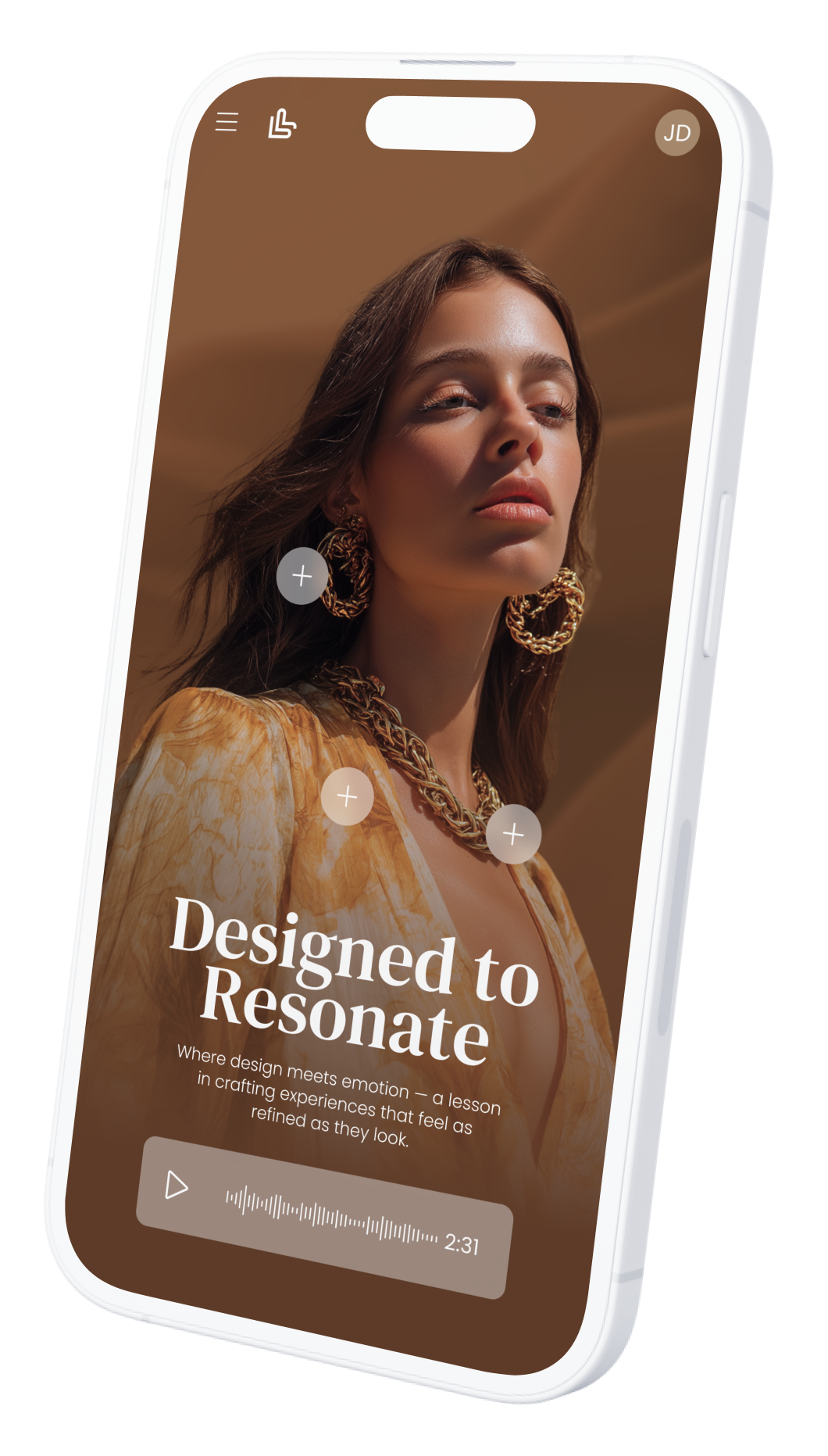
Advisors also need quick access to availability, alternatives, and product recommendations tailored to the client profile. When mobile training content is designed as “client-safe,” it can support the conversation elegantly.
Think short videos on craftsmanship, a brand-coded glossary, a care guide that can be shared post-visit, or a comparison card between two icons. The advisor stays in control of the experience while using digital support to elevate it.
Major wins:
Faster, smoother answers during assisted selling
More compelling storytelling via visuals and short videos
Shareable after-visit content that extends the experience
Better conversion on considered purchases through clarity
Mobile doesn’t replace human connection; it strengthens it. When used thoughtfully, it helps advisors keep the conversation flowing while adding proof, precision, and polish.
6) Data: Track what teams learn, not just what you publish
A PDF sent by email tells you nothing.
A mobile learning platform can tell you what matters: who completed which modules, where they struggled, which questions are missed most, and how knowledge evolves after refreshers.
This lets retail training teams move from “content production” to continuous improvement. You can spot gaps by market, store, or role, then deploy targeted micro-coaching. Over time, you build a knowledge map that supports smarter content planning and more effective field coaching.
Major wins:
Real completion and engagement analytics by store/region/role
Diagnostics: identify weak topics and fix content fast
Targeted reinforcement instead of repetitive “one-size-fits-all”
Better accountability with less managerial friction
In luxury, small details create big outcomes. Learning data gives you the detail-level visibility to improve performance systematically.
7) Performance: Microlearning supports behavior change on the floor
Knowing facts isn’t enough.
Advisors need to apply knowledge under pressure: reading the client, qualifying needs, presenting options, handling objections, and closing with grace. Mobile learning can simulate these moments with short scenario modules, branching dialogues, role-play prompts, and “what would you say next?” quizzes.
This is where mobile shines: it supports frequent practice. Behavioral science and learning research consistently show that retrieval practice (actively recalling information) and spaced repetition improve long-term retention more than passive review.
Major wins:
Better retention through retrieval practice and repetition
Stronger selling behaviors via scenario-based training
Improved objection handling and cross-sell confidence
More consistent service rituals and client experience
The goal isn’t to create walking encyclopedias; it’s to create advisors who perform beautifully in real conversations. Mobile makes practice frequent enough to stick.
8) ROI: A smartphone costs less than a single missed client opportunity
Luxury leaders often ask: “Do we really need to provide devices?”
If training and clienteling rely on personal phones, you run into privacy, security, uneven access, and inconsistent usage. But if you equip advisors with managed devices (or a robust BYOD policy with secure containers), you create a scalable platform for learning and performance.
The business case is simple: one missed sale, one lost client relationship, or one poorly handled after-sales moment can exceed the annual cost of a device and content program. Add the operational efficiencies (faster onboarding, fewer mistakes, fewer returns due to misinformation, better follow-up), and mobile becomes not just a training expense, but a revenue protection and growth lever.
Major wins:
Faster onboarding reduces time-to-productivity
Higher conversion through confident recommendations
Better retention of knowledge lowers errors and returns
Stronger client follow-up improves repeat purchase probability
Luxury margins reward precision. When you reduce hesitation and increase product fluency, you don’t just train people; you protect revenue and elevate the client experience.
In addition, competitors are already enabling their teams with mobile learning, clienteling tools, and on-the-floor content, which is quietly raising the baseline of what “excellent service” looks like. If your advisors are still waiting for PDFs, occasional workshops, or manager-led briefings, you risk missing the train and falling behind doors that feel faster, sharper, and more confident to the same clients you want to win. The next shift (new platforms, new client expectations, new selling rituals) will arrive sooner than you think, and staying relevant will depend on how quickly you can update knowledge, messaging, and behaviors across the network.
In luxury, your product is only as strong as the way it’s sold,
and the maisons that win are the ones that keep their teams enabled, current, and unmistakably credible every single day.
Build the mobile advantage now
Mobile e-learning retail content delivers what luxury maisons need in 2026:
speed for launches, convenience for store life, consistency across doors, advisor credibility, clienteling-ready support, measurable learning data, floor-ready performance practice, and a clear ROI that dwarfs the cost of devices and content.
If you want advisors to sell confidently, respond faster, and represent the maison with precision, make the smartphone your frontline learning channel. The winning approach isn’t “more training hours.” It’s better retail content, delivered in-pocket, designed for real client moments.
Ready to turn your product storytelling into a mobile learning experience your teams will actually use?
Develop your mobile training app with Penceo Creative Content Agency: we design retail microlearning, clienteling-ready assets, and brand-coded storytelling that scales globally while staying unmistakably luxury.
