
Essential LMS Features for Modern Learning
Top LMS Trends and Must-Have Features for Modern Learning in 2026
In 2026, learning management systems are evolving to deliver more engaging, personalized, and effective online learning experiences across industries.
Organizations are adopting platforms designed to meet the needs of diverse learners, offering flexibility, interactivity, and measurable results.
Key LMS trends include AI-driven personalization that adapts content to each learner’s role and performance, microlearning formats inspired by social media to match fast-paced work environments, and integrated video coaching to improve skills and confidence on the job.
Interactive tools such as storytelling modules, virtual simulations, and content carousels bring learning to life, while real-time analytics allow organizations to measure engagement, track performance, and refine training strategies with precision.
These features not only accelerate skill development but also ensure that training is relevant, consistent, and impactful for every learner. By combining AI personalization, microlearning, interactive content, and analytics, modern LMS platforms create online learning experiences that are engaging, measurable, and aligned with organizational goals.

Why Microlearning and Short-Form Video Are Must-Have LMS Features in 2026
In 2026, learners across industries expect training to be fast, visual, and instantly accessible—mirroring the way they consume content on social media and mobile apps.
Microlearning brings this behavior into digital learning by delivering ultra-short, high-impact modules (10–60 seconds) that boost engagement, retention, and knowledge transfer far more effectively than traditional eLearning.
Research shows that short-form videos can generate three times higher completion rates, while mobile-first learning formats increase participation by up to 70%. In fast-paced work environments, where updates, product knowledge, or procedural changes happen frequently, microlearning allows organizations to push content instantly, deliver visually engaging explanations, and keep employees continuously trained without disrupting workflows.
The result: faster knowledge absorption, more confident teams, and learning experiences that align with how people naturally engage with digital content.
Key Benefits of Microlearning and Short-Form Video
3× higher completion rates compared to long-form eLearning modules.
70%+ increase in mobile engagement, ideal for employees on the move.
50–60% better knowledge retention when content is delivered in short, visual bursts.
Ideal for rapid updates: product launches, procedural changes, seasonal training, or skill refreshers.
Encourages daily learning habits, boosting consistency across teams and locations.
Supports storytelling in seconds, creating memorable, engaging content that conveys key messages quickly.
Facilitates peer learning, allowing employees to create and share best practices in a community-driven format.
Branching Scenarios: A Must-Have LMS Feature for 2026
In 2026, organizations can no longer rely solely on static eLearning. Teams need immersive, decision-based learning experiences that simulate real-world situations and allow learners to practice critical skills safely.
Branching scenarios have become essential in modern learning management systems because they let employees practice conversations, problem-solving, decision-making, and role-specific tasks in interactive simulations. These experiences give learners the opportunity to see the consequences of their choices in a safe environment, building confidence and practical competence.
Research shows that scenario-based learning improves skill transfer by up to 40%, increases engagement by 35–45%, and boosts retention to 60–75%, compared to just 10–15% for traditional linear modules.
By integrating branching scenarios, organizations create realistic, gamified learning experiences that mirror workplace challenges, reinforce key skills, and ensure consistent application across teams.
Key Benefits of Branching Scenarios in Modern LMS Platforms
Up to 40% higher skill transfer compared with linear eLearning, helping employees apply knowledge on the job.
60–75% retention rates driven by decision-making and immediate feedback loops.
35–45% increase in learner engagement through gamified, interactive pathways.
Safe practice environment where learners can experiment and learn without risk.
Recreates real-world scenarios for client interactions, operations, or role-specific challenges.
Ensures consistency across teams and locations, supporting standardized practices.
Builds confidence, situational awareness, and critical thinking, enhancing employee performance and decision-making.

AI-Powered Automatic Translation: A Must-Have LMS Feature for 2026
In 2026, organizations are increasingly operating across multiple countries, cultures, and languages, making global training consistency a major challenge.
AI-powered automatic translation has become essential in modern learning management systems, enabling training teams to instantly convert videos, subtitles, quizzes, and modules into multiple languages with accuracy and cultural relevance.
Research shows that localized content can increase learner engagement by up to 80% while reducing global training rollout time by 40–60%. By delivering training in employees’ native languages, organizations can provide inclusive, accessible, and on-brand learning experiences across teams, regions, and markets.
This technology accelerates learning adoption, ensures consistency, and eliminates delays caused by manual translation processes, creating a seamless global learning ecosystem.
Key Benefits of AI-Powered Translation in LMS Platforms
Up to 80% higher learner engagement when training content is delivered in the learner’s native language.
40–60% faster global rollout thanks to instant translation of videos, subtitles, quizzes, and modules.
Consistent messaging and brand alignment across all locations and teams.
Reduced reliance on external translation services, lowering costs by up to 50%.
Real-time updates for fast-moving training needs, ensuring content is always current.
Mobile-friendly translation, with automatic language detection for on-the-go learners.
Enhanced accessibility and equity across global teams, supporting inclusive training programs.
AI-Driven Hybrid Learning Paths: A Must-Have LMS Feature for 2026
In 2026, organizations need training solutions that adapt to diverse skill levels, roles, and workplace contexts.
AI-driven hybrid learning paths have become essential in modern learning management systems, automatically tailoring learning journeys to each employee’s needs.
By combining diagnostic assessments, performance data, and behavioral insights, AI-powered learning paths deliver personalized experiences: beginners receive foundational modules, while experienced learners unlock advanced content focused on skills mastery, problem-solving, or leadership development.
Research shows that personalized learning paths can improve training efficiency by up to 50%, boost engagement by 60%, and accelerate time-to-competency by 40%. By providing the right content at the right time, organizations can maximize learning outcomes, employee performance, and adoption of online training programs.
Key Benefits of AI-Driven Hybrid Learning Paths
60% higher learner engagement through adaptive, personalized sequences.
50% improvement in training efficiency by eliminating irrelevant content.
40% faster time-to-competency, helping employees gain skills more quickly.
Adaptive content delivery for beginner, intermediate, or advanced learners.
Supports multiple learning formats, including structured certification paths and fluid microlearning experiences.
Maintains consistency across teams and locations while allowing for local context.
Boosts confidence and performance by presenting the right challenge at the right moment.
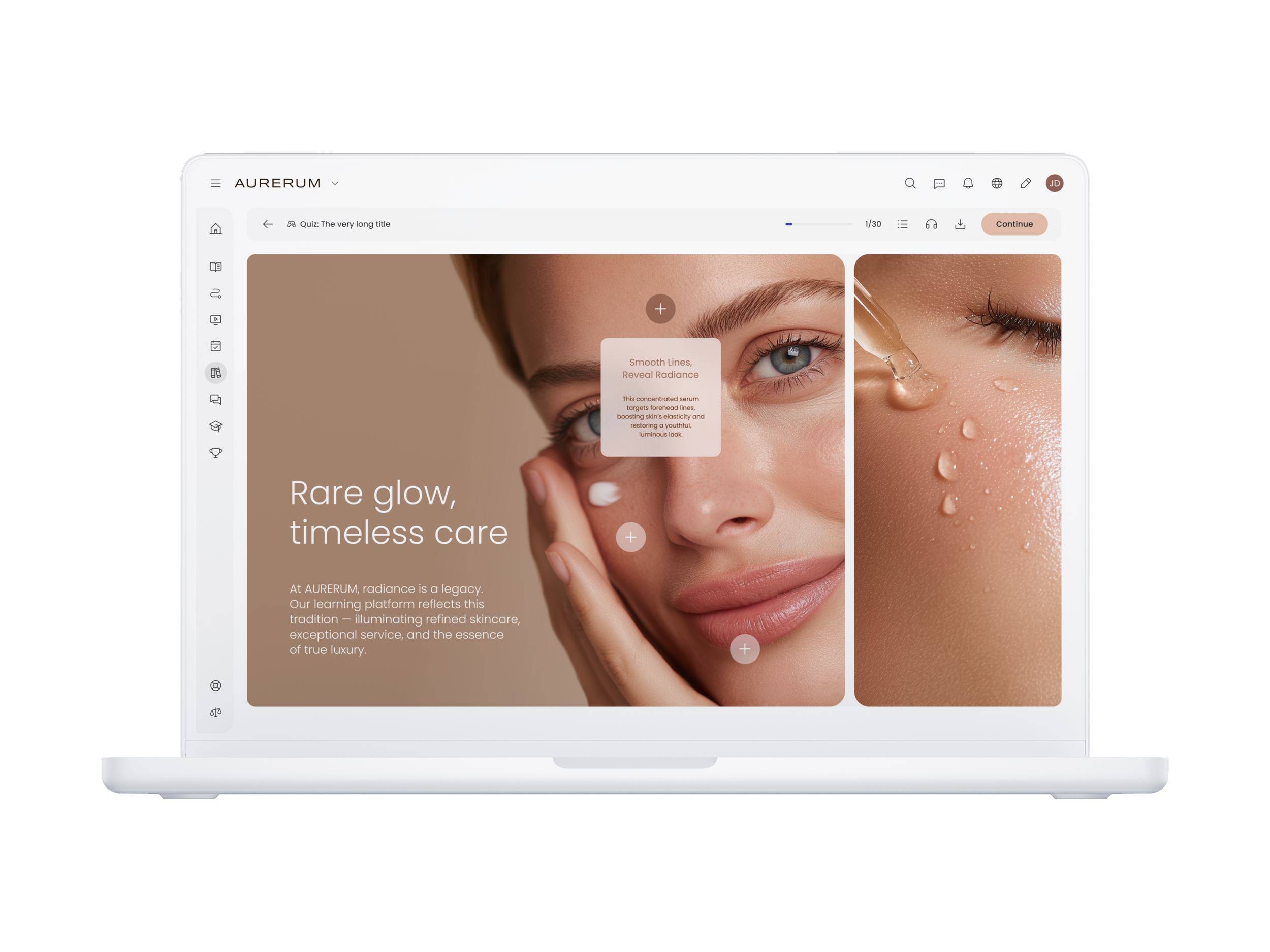
AI-Powered Lesson Creation from PPTX and PDF: A Must-Have LMS Feature for 2026
In 2026, organizations need to convert existing training materials quickly and efficiently.
AI-powered lesson creation has become essential in modern learning management systems, enabling teams to transform documents like PPTs and PDFs into interactive digital lessons in minutes.
By automatically extracting text, images, and structure from source files, AI can reduce manual work by 70–90%, allowing training teams to focus on designing engaging, learner-centered content instead of repetitive administrative tasks.
Research shows that AI-assisted content production can accelerate learning deployment by up to four times while cutting content creation costs by 40–60%. For companies operating across multiple teams, locations, or languages, AI lesson creation ensures speed, consistency, and the ability to update content instantly, making it one of the most valuable LMS features of 2026.
Key Benefits of AI-Powered Lesson Creation
70–90% reduction in manual work when converting PPTX and PDF files into digital lessons.
4× faster content deployment, supporting rapid updates for new products, processes, or policies.
40–60% lower content production costs through automation.
Ensures consistency across teams, regions, and departments, maintaining standardized learning experiences.
Supports faster localization and translation when integrated with AI multilingual tools.
Creates clean, structured lessons from existing documents without manual formatting.
Frees L&D teams to focus on creativity and instructional design, improving the quality of learning experiences.
AI Chatbots: A Must-Have LMS Support Feature for 2026
In 2026, organizations need instant, on-demand learning support across teams, locations, and time zones.
AI-powered chatbots have become an essential LMS feature, providing employees with immediate assistance for content questions, platform navigation, and troubleshooting at scale.
By offering 24/7 support, LMS chatbots reduce the workload of learning teams by up to 60% while increasing learner satisfaction by 40%. Research shows that employees engage 2.5 times more with platforms that provide conversational, interactive guidance.
AI chatbots also deliver personalized learning support, guiding employees through modules, certifications, or tasks, answering questions in real time, and ensuring consistent knowledge delivery across the organization.
Key Benefits of AI Chatbots in LMS Platforms
60% reduction in support workload through automated guidance and instant answers.
40% increase in learner satisfaction thanks to personalized, on-demand support.
2.5× higher platform engagement with conversational assistance available anytime.
Consistent messaging and knowledge delivery across all teams and regions.
Real-time support for employees on processes, tools, products, or workflows.
Guided learning paths and task assistance, helping employees complete modules efficiently.
Fully customizable to reflect organizational tone, terminology, and expertise.
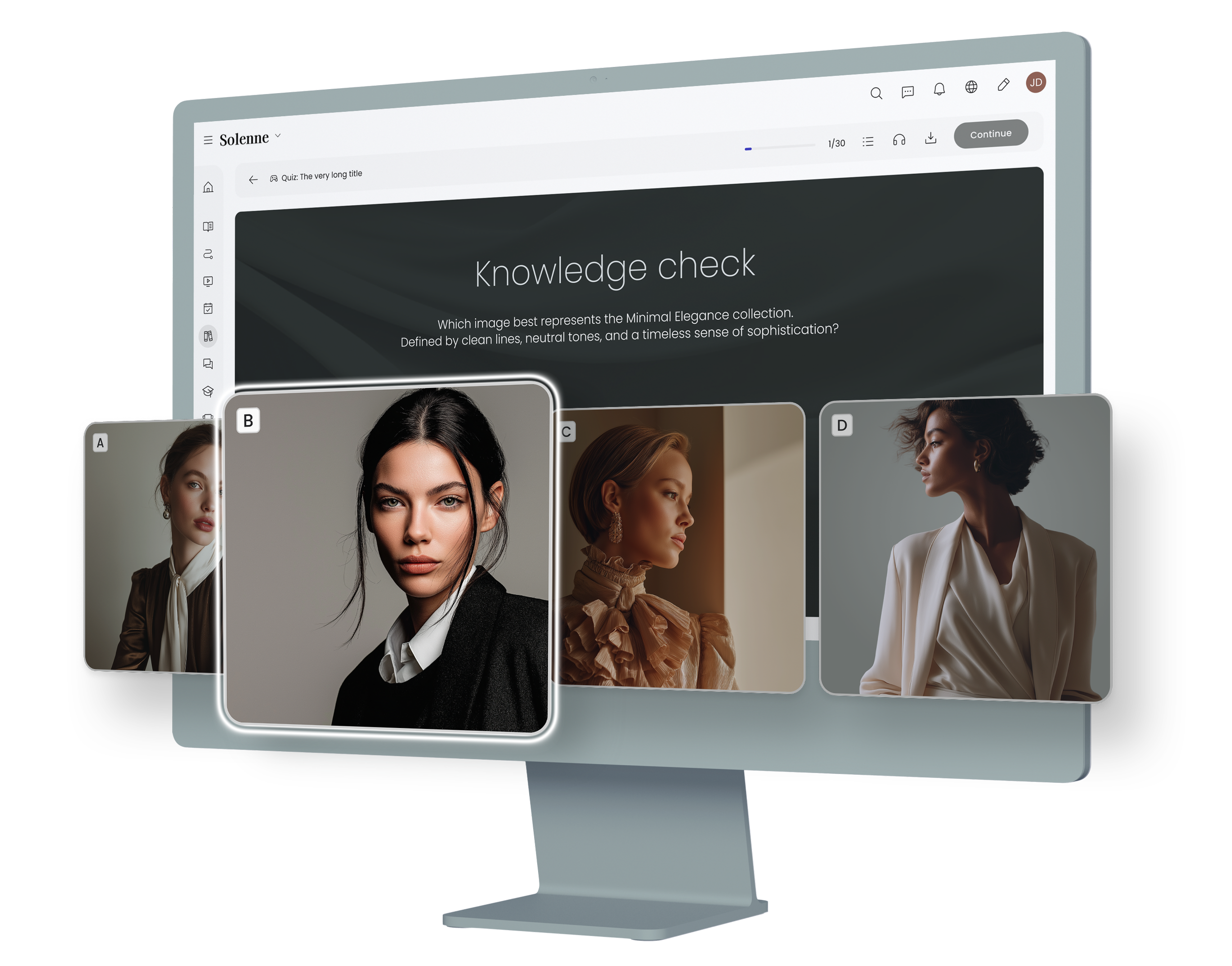
AI-Branded Slides: A Must-Have LMS Feature for 2026
In 2026, organizations need training content that is not only accurate and informative but also visually engaging and consistent with brand identity.
AI-powered branded slide generation allows teams to transform raw text into professionally designed learning slides in seconds, applying predefined templates, colors, fonts, and visual guidelines.
This automation can reduce content creation time by up to 80%, improve visual consistency across teams and locations, and ensure that every training module aligns with organizational standards. Research shows that well-designed, branded content can increase learner attention by 45% and boost knowledge retention by 30–40%, making visual design a critical factor in effective online learning.
Key Benefits of AI-Branded Slides in LMS Platforms
80% faster production of training visuals compared to manual slide design.
45% increase in learner attention when content follows consistent visual standards.
30–40% higher knowledge retention for visually cohesive, well-designed learning materials.
Ensures consistency across teams, regions, and departments, maintaining organizational standards.
Automatically converts raw content into polished, branded visuals, reducing manual effort.
Reduces reliance on designers or agencies, lowering content production costs by up to 50%.
Strengthens brand identity and professionalism across all training touchpoints.
The Learning Lab: Your Boutique LMS for Modern Learning
The Learning Lab is a boutique learning management system designed to deliver immersive, branded, and engaging online training experiences.
With a focus on personalization, interactivity, and mobile-first learning, it combines advanced LMS features such as microlearning, AI-driven adaptive learning paths, branching scenarios, video coaching, and multilingual automation with intuitive, visually appealing interfaces.
Built for organizations operating across teams, locations, or global networks, The Learning Lab empowers employees with fast, accessible, and engaging training that strengthens skills, ensures consistency, and boosts performance.
By integrating cutting-edge LMS features with streamlined design and personalization, The Learning Lab transforms learning from a compliance task into a strategic, impactful, and user-friendly experience that drives results.