
Boost Engagement with Brand-Driven Online Training
Building a Strong Brand-Driven Learning Culture
A strong brand-driven learning culture is one of the most effective ways to improve employee performance, consistency, and long-term organizational success.
Beyond mastering role-specific skills, employees need to internalize the organization’s values, mission, and culture to deliver a consistent and high-quality experience at every customer or client touchpoint.
Creating a brand-aligned learning culture means offering continuous, mobile-friendly training that blends storytelling, interactive exercises, and scenario-based learning. From onboarding to advanced skill development, training should connect core competencies with organizational values, making learning both practical and memorable.
When training is engaging, relevant, and closely tied to the company’s brand and culture, employees become confident, knowledgeable ambassadors who drive customer satisfaction, loyalty, and business impact.

Why Organizations Should Adopt a Brand-Driven Learning Approach
In today’s fast-paced business environment, products and processes evolve quickly, but the true competitive advantage comes from how consistently teams embody the brand and organizational values.
A brand-driven learning approach ensures employees not only master their roles but also understand the deeper story behind the company: its mission, culture, standards, and the experiences it promises to clients or customers.
By aligning training with brand identity, organizations create a consistent language and mindset across teams and locations, strengthen trust with customers, and enhance overall service and performance.
This approach transforms learning from a routine requirement into a strategic asset, empowering employees to deliver experiences that are on-brand, memorable, and impactful at every touchpoint.
The Benefits of Brand-Driven Learning
Adopting a brand-driven learning model helps organizations deliver more consistent, meaningful, and engaging employee experiences.
By aligning values, messaging, and behaviors across all teams and departments, employees understand not just what to do, but why it matters. This connection strengthens performance, engagement, and overall organizational impact.
For L&D leaders, the benefits of brand-driven learning are measurable:
Stronger employee engagement: Training that reflects the company’s mission and culture helps employees feel emotionally connected and motivated.
Improved knowledge retention: Consistent storytelling, visuals, and brand cues reinforce learning and help key messages stick.
Faster onboarding: New employees quickly grasp organizational culture, standards, and expectations.
Enhanced customer or client experience: Employees naturally embody company values, improving trust, satisfaction, and loyalty.
Higher performance and skill application: Learning aligned with brand and business goals ensures employees can apply knowledge effectively on the job.
Set Clear Learning Objectives Aligned with Brand Values
The foundation of any effective employee training program lies in clear, outcome-based learning objectives.
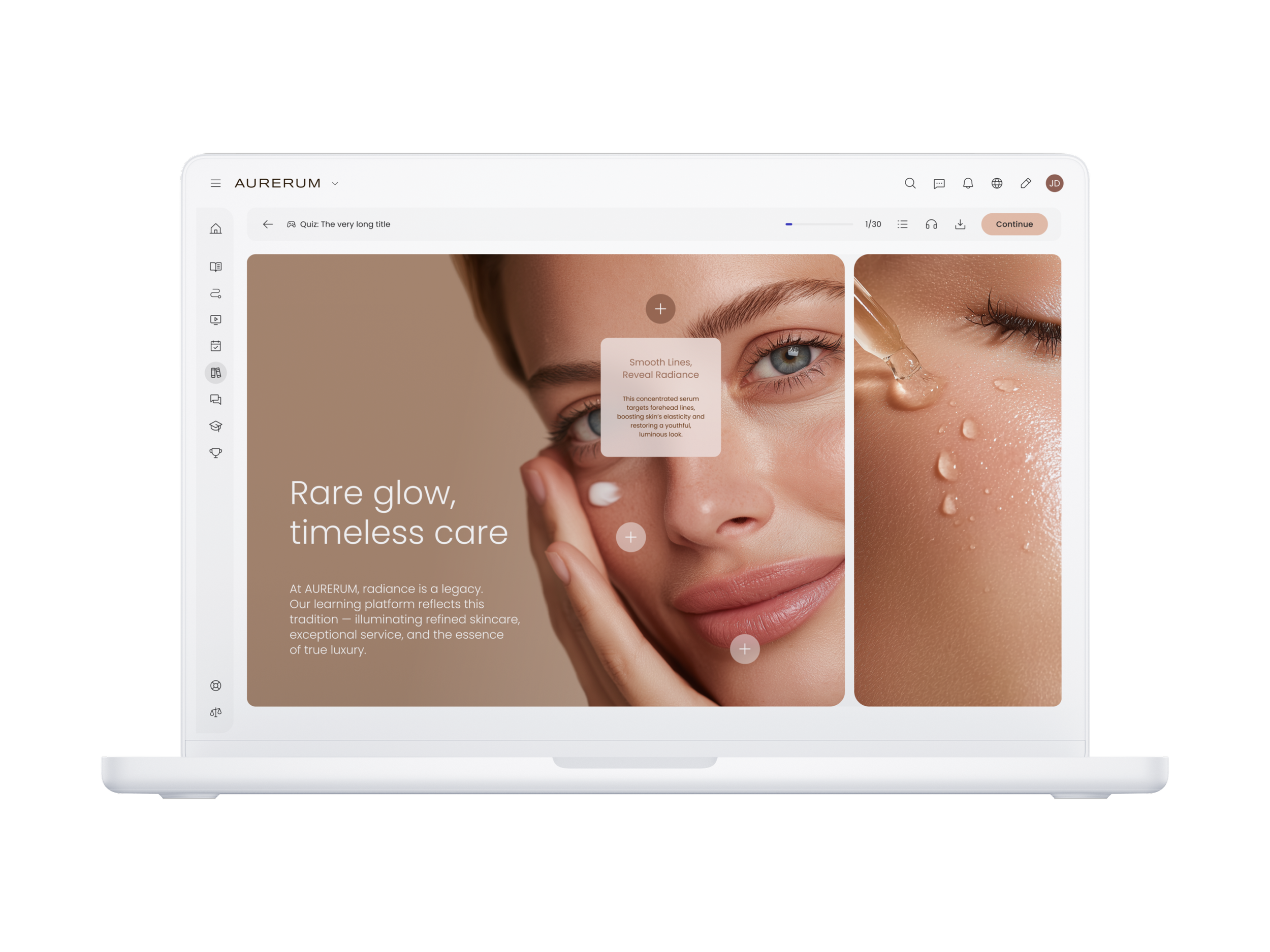
In a brand-driven learning framework, objectives should align not only with performance goals but also with the organization’s values, mission, and culture. This ensures that every training activity—whether digital modules, role-playing exercises, or interactive simulations—reinforces the behaviors and mindset that reflect the brand.
For example, a customer-focused company might emphasize service excellence, empathy, and consistency, while an innovation-driven organization may focus on creativity, problem-solving, and agility. Translating these priorities into clear learning goals ensures that training shapes both skills and organizational culture.
Tip: Collaborate early with marketing, HR, or brand teams during course design. Insights on tone, storytelling, and visual identity can help define what “on-brand behavior” looks like in everyday work, ensuring training is aligned, engaging, and impactful.
Create Engaging, On-Brand Learning Content
Once learning objectives are defined, the next step is to develop engaging, immersive content that reflects your organization’s values and culture.
Every image, video, and interactive element in your online training should reinforce your brand identity and resonate with employees.
How to create brand-aligned learning content:
Apply consistent design guidelines: Use standardized fonts, colors, visuals, and tone of voice across all modules to create a cohesive learning experience.
Leverage storytelling: Build narratives that connect employees emotionally to your company’s mission, history, and impact on customers or clients.
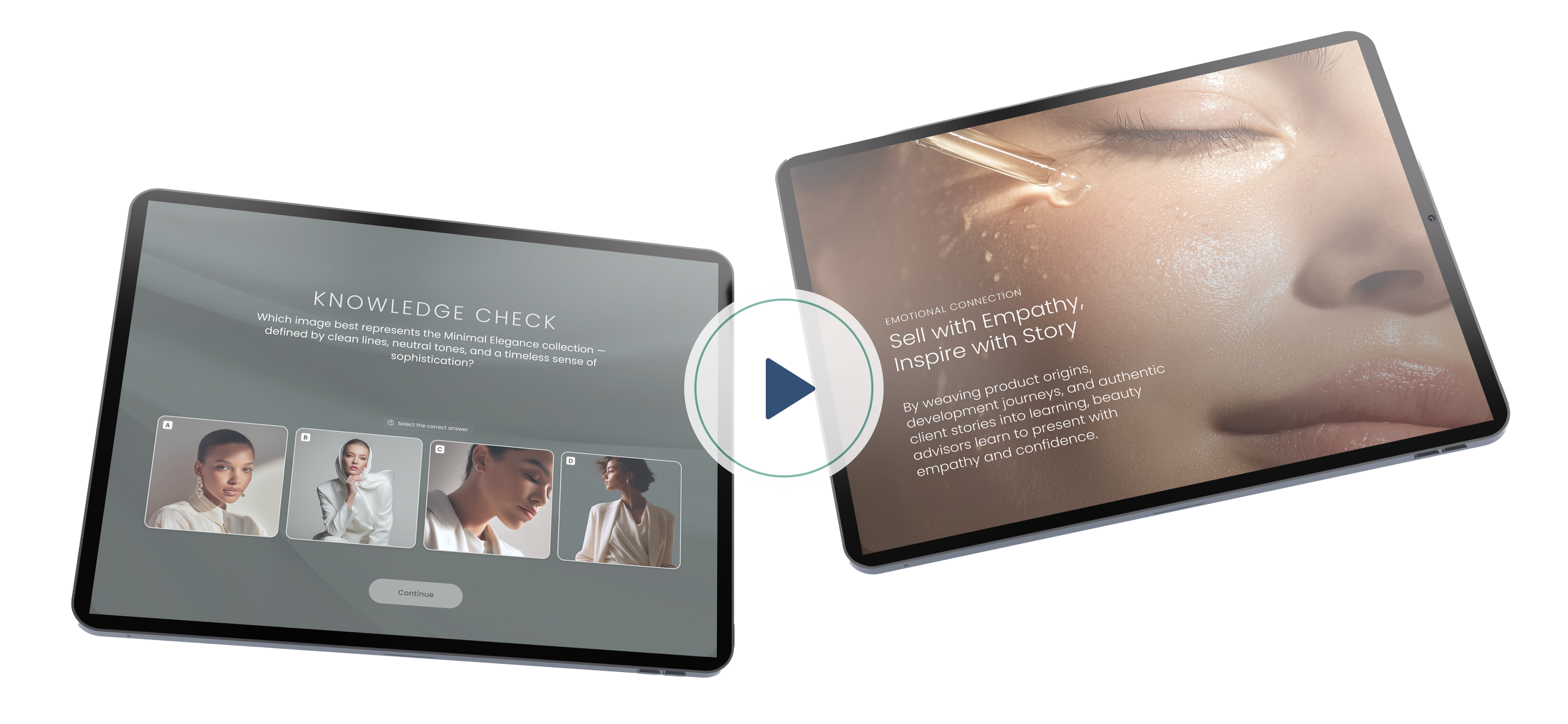
Vary content formats: Combine short videos, infographics, case studies, interactive quizzes, and branching scenarios to maintain engagement and support different learning styles.
Simulate real-world scenarios: Use role-playing or decision-based exercises that let employees apply knowledge in context, making training practical and aligned with organizational standards.
By following these principles, your training becomes an extension of your brand and culture, ensuring employees stay engaged while learning how to apply skills in alignment with company values.

Personalize Learning Paths to Strengthen Brand Alignment
Just as every customer experience is unique, so too should be every employee’s learning journey.
Personalized learning paths allow employees to focus on the skills, knowledge, and behaviors most relevant to their role, experience level, and interaction with the brand. Using data from assessments, past training results, or performance metrics, organizations can tailor each learner’s progression for maximum impact.
For example, a new hire may start with foundational modules on company culture and core service standards, while an experienced team member might focus on leadership, coaching, or advanced client-facing skills.
Personalization aligns with adult learning principles, recognizing prior experience, fostering autonomy, and making learning relevant to everyday work. This approach not only boosts engagement and motivation but also reinforces brand consistency, values, and organizational standards across all employee levels.
Encourage Collaboration and Feedback
Learning is most effective in social and collaborative environments. Encouraging teamwork and knowledge sharing helps employees internalize brand-aligned behaviors and fosters a strong sense of community.
Organizations can promote collaboration through digital discussion boards, virtual workshops, peer-to-peer mentoring, and team projects. Employees can share real-world examples of best practices, successes, or challenges, helping abstract values come to life and reinforcing collective learning.
Equally important is feedback and reflection. Incorporate regular check-ins, self-assessment exercises, and peer reviews into training programs. When employees evaluate how they apply organizational values in their daily work, they become active participants in strengthening culture, improving engagement, and reinforcing brand consistency across teams.
Centralize Learning: Implement a Knowledge Base
To ensure consistency and efficiency, organizations should centralize all learning materials in a branded digital hub or knowledge base.
A centralized system allows employees across departments, locations, or teams to access the same up-to-date training resources, guidelines, and instructional content. This ensures that everyone receives consistent messaging and skill development aligned with the organization’s values and brand identity.
Centralizing content also simplifies updates. When processes, policies, or product/service information changes, learning materials can be refreshed instantly, keeping employees informed and aligned.
Additionally, a centralized hub supports point-of-need performance support. Employees can quickly access micro-lessons, FAQs, or short reference guides on any device, making learning flexible, immediate, and integrated into their daily workflow.
Monitor Progress and Adjust as Needed
Sustaining a brand-driven learning culture requires continuous monitoring and improvement.
Leverage analytics tools within your LMS to track engagement, completion rates, assessment scores, and content usage. This data highlights areas where employees may struggle, such as low-completion modules or topics that need further clarification, allowing you to refine training strategies in real time.
In addition to quantitative data, gather qualitative feedback by surveying employees about how well the training reflects the organization’s values and supports their daily work. These insights help you adjust tone, content, and delivery methods to remain aligned with both learner needs and evolving organizational priorities.

Set Your Team Up for Long-Term Success
Brand-driven learning is not a one-time program; it is a continuous process that aligns employee development, performance, and organizational identity.
When employees deeply understand and embody your brand values, every interaction—whether with clients, colleagues, or stakeholders—becomes a reflection of that commitment.
Investing in a brand-driven learning culture delivers measurable benefits, including higher employee retention, stronger engagement, and improved customer or client satisfaction, all of which drive long-term organizational success.
By integrating clear learning objectives, personalized learning paths, storytelling, interactive experiences, and ongoing feedback, every training opportunity becomes a chance to develop skills, reinforce culture, and build brand advocacy.
Driving Excellence: How The Learning Lab Builds a Strong Brand-Driven Learning Culture
Product knowledge is important, but true organizational differentiation comes from teams who consistently translate brand values into every interaction.
The Learning Lab LMS is designed to help organizations create a strong, cohesive, brand-driven learning culture across departments, teams, and locations.
Through mobile-first modules, immersive storytelling, interactive scenarios, and on-brand design templates, The Learning Lab ensures that every employee—from new hires to experienced team members—internalizes the organization’s values, mission, and service standards.
The result: consistent experiences, higher employee confidence, improved engagement, and stronger business outcomes, as employees perform authentically and in alignment with the brand in every interaction.
Why a Brand-Driven Learning Culture Matters
Consistent brand experience: Aligns messaging and behavior across teams, departments, and locations.
Stronger customer or client trust: Reinforces emotional connection through consistent storytelling and service standards.
Embodiment of organizational values: Helps employees internalize company philosophy, culture, and quality standards.
Improved performance: Turns training into a daily habit rather than a one-off task, boosting real-world application.
Enhanced knowledge retention: Structured, continuous learning supports long-term understanding of complex processes or information.
Employee brand ambassadorship: Encourages staff to represent the organization authentically, not just perform technical tasks.
How The Learning Lab LMS Supports a Brand-Driven Learning Culture
Fully brandable interface: A white-label LMS mirrors your organization’s visual identity, tone, and messaging, ensuring training feels like a natural extension of your brand.
Mobile-first learning: Employees can access training anytime, anywhere, supporting learning on the go and flexible schedules.
InstaLearning & nano-modules: Short, high-impact lessons enable quick knowledge absorption and reinforce learning in fast-paced work environments.
Scenario-based learning: Interactive simulations let employees practice real-world situations, improving skill transfer and confidence.
Video-first content: Demonstrations, tutorials, and walk-throughs enhance knowledge retention and engagement.
AI-powered role-play: Employees can practice conversations, problem-solving, and client-facing scenarios in a safe, interactive environment.
Gamification elements: Leaderboards, badges, and challenges boost motivation and encourage consistent engagement.
Global rollout ready: AI-driven translation ensures consistent messaging and learning experiences across all teams and locations.
Integrated technical and brand training: Combines operational knowledge with organizational values and culture for holistic skill development.
Network Dashboards and analytics: Track completion, engagement, and performance to make data-driven training decisions.