
Cognitive Training for Product Knowledge
How Fashion Brands Can Improve Recall, Confidence, and Client Conversations
Why fashion retail training should move from passive reading to active memory practice?
Product knowledge in fashion retail is often treated as a content problem. Teams receive product sheets, collection notes, brand books, care guidelines, and selling points, then they are expected to remember everything when a customer steps into the store. In reality, that approach rarely works. Store staff do not need more information sitting in a folder. They need sharper recall, faster access to meaning, and the confidence to turn knowledge into conversation.
That is why cognitive training is becoming such a useful direction for learning and development in fashion retail. Instead of asking people to read and repeat, it focuses on how memory actually works in live situations. It trains recall, recognition, application, and confidence under pressure. This matters because product knowledge in retail is not just about features. It includes materials, fit, styling logic, care advice, brand codes, and the ability to explain value naturally during a real client exchange. Retail product training guidance also points to the importance of role specific learning and just in time support rather than generic content that sits far from daily work.
This shift also fits the broader evolution of workplace learning. Current learning trends emphasize more adaptive, bite sized, and role relevant experiences rather than static content libraries, which makes cognitive learning design especially relevant for fashion brands managing fast seasonal change and high service expectations. In a store, knowledge has to move fast. A client asks about fabric performance, another wants styling guidance, another needs reassurance on aftercare. There is no time to mentally search through a long training deck.
Cognitive training offers a smarter answer. It helps fashion brands design product learning around retrieval practice, spaced reinforcement, microlearning refreshers, scenario based recall, and manager coaching. The result is not only better memory. It is better service, stronger storytelling, and more credible teams on the floor.
Why product facts are forgotten so quickly
Most product training fails for a very simple reason.
It confuses exposure with learning. A store associate may read a product manual, attend a launch briefing, and watch a presentation, yet still struggle to explain the difference between two fabric blends a week later. That is not because the person is unmotivated. It is because memory weakens quickly when information is only consumed and not actively retrieved.
In fashion retail, this problem becomes even more visible because the volume of information is high and constantly changing. Teams are asked to remember collection themes, hero products, construction details, fit notes, color stories, care instructions, cross sell ideas, and customer objections, often within a short launch window. At the same time, retail work is busy, emotional, and interrupted. Knowledge is rarely absorbed in calm conditions. It is absorbed between tasks, during quick briefings, and under commercial pressure.
This is why passive training creates weak retention. Reading once is not enough. Listening once is not enough. Even understanding something in the moment is not enough. If learners do not retrieve information again, connect it to context, and apply it in realistic situations, the memory fades. Fashion brands often mistake documentation for capability. The product guide exists, so the knowledge must exist too. But the real test happens in the fitting room, at the cash desk, or during a product recommendation.
A more effective product knowledge model starts by accepting that forgetting is normal. The role of training is not to flood people with more facts. It is to help them remember the right facts at the right time with enough confidence to speak naturally.
What fashion brands should stop doing
Sending long product PDFs and assuming the work is done.
Overloading launch briefings with too many facts in one sitting.
Training everyone in the same way regardless of role.
Treating product knowledge as a one time event.
Measuring completion instead of recall and application.
If fashion brands want better product conversations, they need to stop designing training as content exposure and start designing it as memory support. Product facts are forgotten quickly because they are often delivered once and rarely activated again in ways that stick.
How recall training works in fashion retail
Recall training changes the logic of learning.
Instead of asking, what information should we give people, it asks, how do we help people retrieve and use the right information when it matters. This is where cognitive learning becomes powerful for store teams.
Retrieval practice is the core idea. Rather than rereading notes, learners are prompted to remember information from memory. That small shift is important. When someone has to actively recall the material, the memory becomes stronger and easier to access later. In a fashion retail context, that can mean asking a learner to name the key selling points of a new bag without looking at the sheet, describe the fit of a new silhouette in their own words, or explain the correct care advice for a delicate fabric.
This works particularly well because fashion selling is conversational. Associates do not perform by reciting product pages. They perform by selecting the right detail in the moment. A client may not ask for composition first. They may ask whether a fabric is comfortable in warmer weather, whether a blazer works for travel, or whether a shoe can be worn all day. Recall training prepares the learner to reach for meaning, not just stored text.
It also helps with confidence. When staff repeatedly practice retrieving product information, they stop sounding uncertain or over rehearsed. They start sounding credible. That difference matters in premium and luxury environments, where trust is often created through fluency and tone as much as through the information itself.
Retail learning guidance already shows that training is more effective when it is role specific and close to the flow of work. Cognitive training builds on that principle by making recall a daily behavior instead of a rare test.
Useful recall methods for store teams
Daily three question product recall cards before the shift.
End of day memory checks on one fabric, one hero product, and one client objection.
Flash challenge rounds where staff explain a product in thirty seconds from memory.
Compare and contrast drills between two similar items from the current collection.
Fast team quizzes that ask for application, not only definition.
Recall training works because it mirrors the real mental demand of the shop floor. Staff do not need to recognize product knowledge on a slide. They need to retrieve it quickly, clearly, and naturally in front of a customer.
Microlearning makes seasonal collections easier to retain
Fashion retail is seasonal by nature.
New collections arrive, key messages shift, and product priorities change throughout the year. This is one reason traditional training often falls behind. By the time a long module is completed, the selling focus may already have moved on. Microlearning is a better fit because it breaks knowledge into small, repeatable, easy to revisit learning moments. Broader workplace learning trends continue to favor short, adaptive, and role relevant learning formats, especially where speed and regular refresh matter.
For product knowledge, this format is especially useful. A seasonal collection does not need one large knowledge dump. It needs a rhythm of reinforcement. A short lesson on leather finishes today. A quick fit comparison tomorrow. A care advice refresher next week. A styling challenge after that. This kind of repetition helps move knowledge from short term awareness into long term recall.
Microlearning also respects store reality. Retail teams rarely have long uninterrupted blocks for formal study. But they can absorb a short product video before opening, answer a two minute quiz in the stockroom, or complete a quick refresher before a new launch lands on the floor. Retail training guidance highlights the value of mobile access and short learning moments for frontline teams who need support without leaving operations for long periods.
The best microlearning for fashion is not generic. It should be tightly linked to the current season, collection, category, and customer conversation. It should feel alive, commercial, and specific to what teams are selling now.
Strong seasonal microlearning ideas
One product a day lessons focused on material, fit, styling, and care.
Weekly memory refreshers for hero products and launch priorities.
Swipe based comparisons between old season and new season silhouettes.
Quick audio explainers from product experts or merchandisers.
Short visual quizzes using real product imagery from the floor.
Mini refresh campaigns before weekends, promotions, or client events.
Microlearning does not simplify product knowledge by making it smaller. It makes it more memorable by delivering the right information in the right size at the right moment. For seasonal fashion retail, that is exactly what teams need.

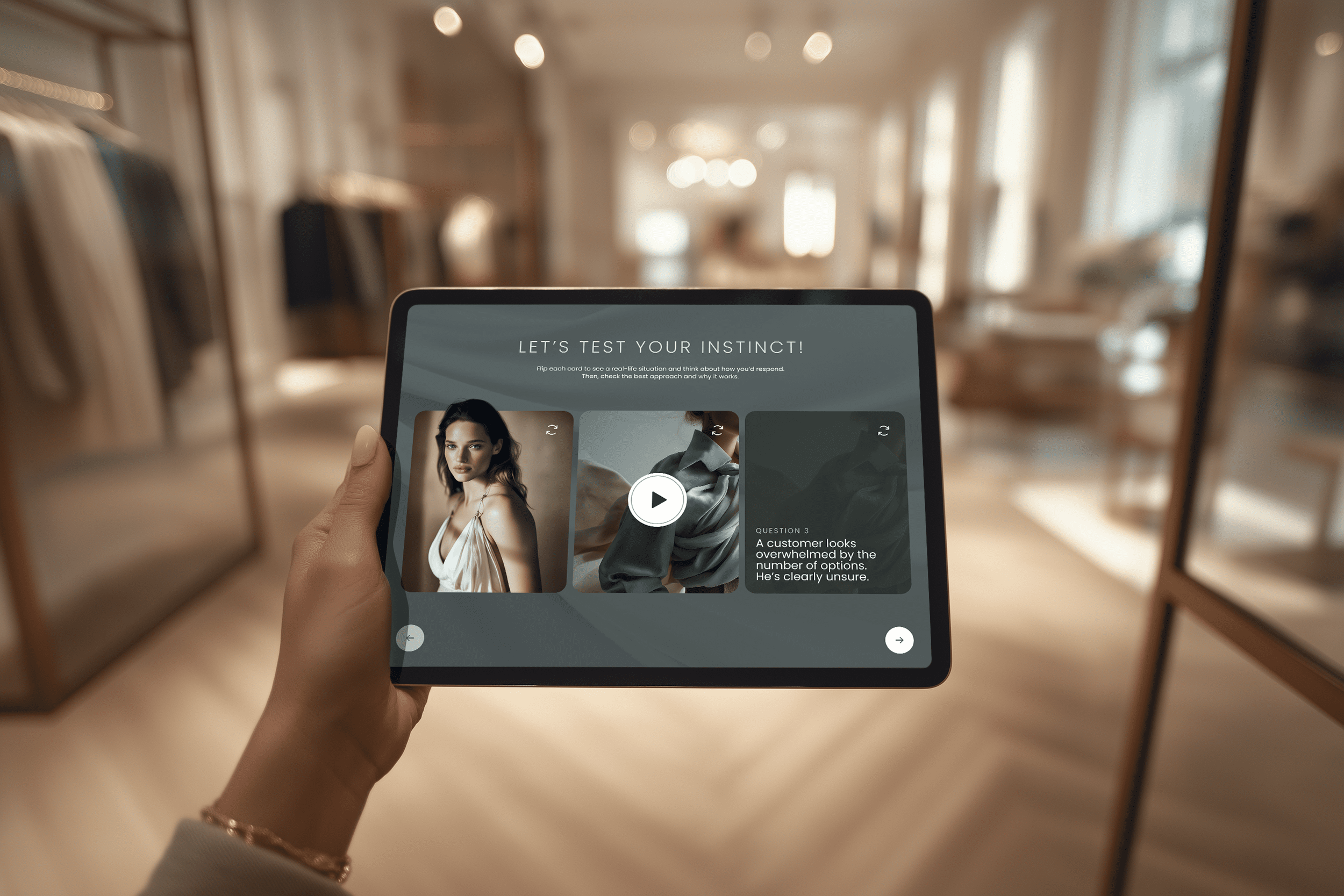
Scenario quizzes turn knowledge into selling conversations
Product knowledge only becomes valuable when it can be used in a customer interaction.
That is why scenario based quizzes are one of the smartest tools in cognitive training for fashion retail. They move learning away from passive recognition and into realistic decision making.
A traditional quiz might ask what a fabric contains. A scenario quiz asks which product is most suitable for a client traveling for work, what care advice should be given after purchase, or how to respond when a customer loves a silhouette but worries about comfort. These questions are more demanding because they ask learners to combine memory with judgment. They reflect how selling really works.
This approach is also more engaging. People remember knowledge better when it is tied to context, emotion, and consequence. A scenario feels closer to the floor than a list of facts, so the learner has a reason to think. They imagine the customer, the need, and the response. This mental rehearsal strengthens retrieval and improves confidence when a similar moment happens in store.
For fashion brands, scenario based learning can be built around many common selling moments. First approach. Discovery questions. Material explanation. Fit guidance. Styling recommendations. Price justification. Care concerns. Gift selection. Aftercare reassurance. Every one of these situations can become a quiz format that helps staff practice not only what they know, but how they use it.
Good scenario quiz topics for fashion retail
Recommending the right silhouette for a client need.
Explaining why one fabric suits one lifestyle better than another.
Responding to a care concern without sounding uncertain.
Suggesting complementary items based on look and function.
Handling objections around price, fragility, or fit.
Choosing the best language for a premium or luxury product story.
Scenario quizzes matter because they bridge the gap between memory and behavior. They turn product knowledge into practical judgment, which is exactly what store staff need when the conversation becomes real.
Manager coaching makes cognitive training stick on the floor
Digital learning can build memory, but manager coaching is what helps that memory become habit.
This is one of the most important parts of cognitive product training, and often the most neglected. A great learning design can introduce recall practice, micro refreshers, and scenario quizzes, but if the store manager never activates that learning in real work, retention weakens again.
Manager coaching matters because the shop floor is where knowledge is tested, refined, and repeated. A manager can hear whether a product story sounds natural, spot where an associate hesitates, and guide them toward stronger recall through short feedback moments. Workplace learning research also emphasizes the central role of coaching and manager support in making learning meaningful and connected to development.
This does not require long formal sessions. In fact, shorter and more regular coaching is usually better. A five minute check in before opening can reinforce the material from yesterday’s microlearning. A brief debrief after a client interaction can help the associate remember the right care guidance more clearly next time. A weekly floor observation can identify recurring knowledge gaps that should shape the next learning push.
This is where learning and development becomes truly blended. Digital training builds the memory path. Manager coaching strengthens the retrieval path in live conditions. Together, they create confidence.
Practical coaching habits for store managers
Ask one recall question in every morning briefing.
Observe one live product explanation per associate each week.
Use quick feedback after customer interactions to reinforce learning.
Ask team members to explain the why behind a recommendation, not only the what.
Turn common mistakes into short coaching moments for the whole team.
Link digital learning results to real floor support.
Cognitive training becomes powerful when it leaves the screen and enters the store. Manager coaching is the bridge that makes that happen. Without it, knowledge stays theoretical. With it, knowledge becomes visible, repeatable, and commercially useful.

Product knowledge becomes valuable when people can remember it under pressure
Fashion brands invest heavily in product creation, collection storytelling, merchandising, and customer experience.
Yet product training is still too often designed as if memory happens automatically. Teams are shown the facts, sent the documents, and expected to perform. That model is no longer enough for modern retail.
Cognitive training offers a better way forward because it respects how store learning actually works. People remember more when they retrieve knowledge actively, revisit it over time, apply it in realistic scenarios, and receive reinforcement from managers in the flow of work. This makes product learning more than information delivery. It turns it into a system for recall, confidence, and action.
That shift is particularly relevant in fashion retail because the customer conversation is rarely simple. An associate must connect style, function, fit, material, care, and brand value in seconds. They need to do that with fluency, not hesitation. They need to guide, not just inform. They need to sound credible, not memorized. Cognitive learning design helps build exactly that kind of capability.
It also aligns with where workplace learning is moving more broadly. Learning is becoming more adaptive, more role specific, more bite sized, and more connected to daily performance rather than isolated from it. Fashion brands that apply these principles to product knowledge will train teams that are not only more informed, but more agile and more convincing with clients. Retail guidance also supports the importance of role specific, mobile, and practical learning that supports the flow of work rather than pulling staff away from it.
The real goal is not to help store staff pass a product test. The real goal is to help them remember the right thing at the right moment with enough confidence to turn knowledge into trust. When fashion brands train for memory, not just exposure, product knowledge becomes a stronger commercial asset. That is when training starts to influence client experience, conversion quality, and the authority of the brand on the floor.
