
Engaging Learning: How to Create Memorable Training
From Beginner to Confident: Crafting Memorable Training Experiences
In the eLearning industry, creating impactful training isn’t just about sharing information—it’s about designing a complete learning experience that engages, inspires, and drives results.
This means delivering short, visually engaging, and interactive learning modules: think microlearning lessons, story-driven videos, practical demonstrations, and real-world scenario simulations that replicate authentic workplace situations.
When training is designed with a robust learning management system (LMS), advanced authoring tools, and multilingual support, it equips teams to learn faster, retain knowledge longer, and apply skills confidently in their roles.
Investing in effective corporate training, employee development programs, and interactive eLearning experiences ensures learners gain practical skills, workplace confidence, and improved performance outcomes.
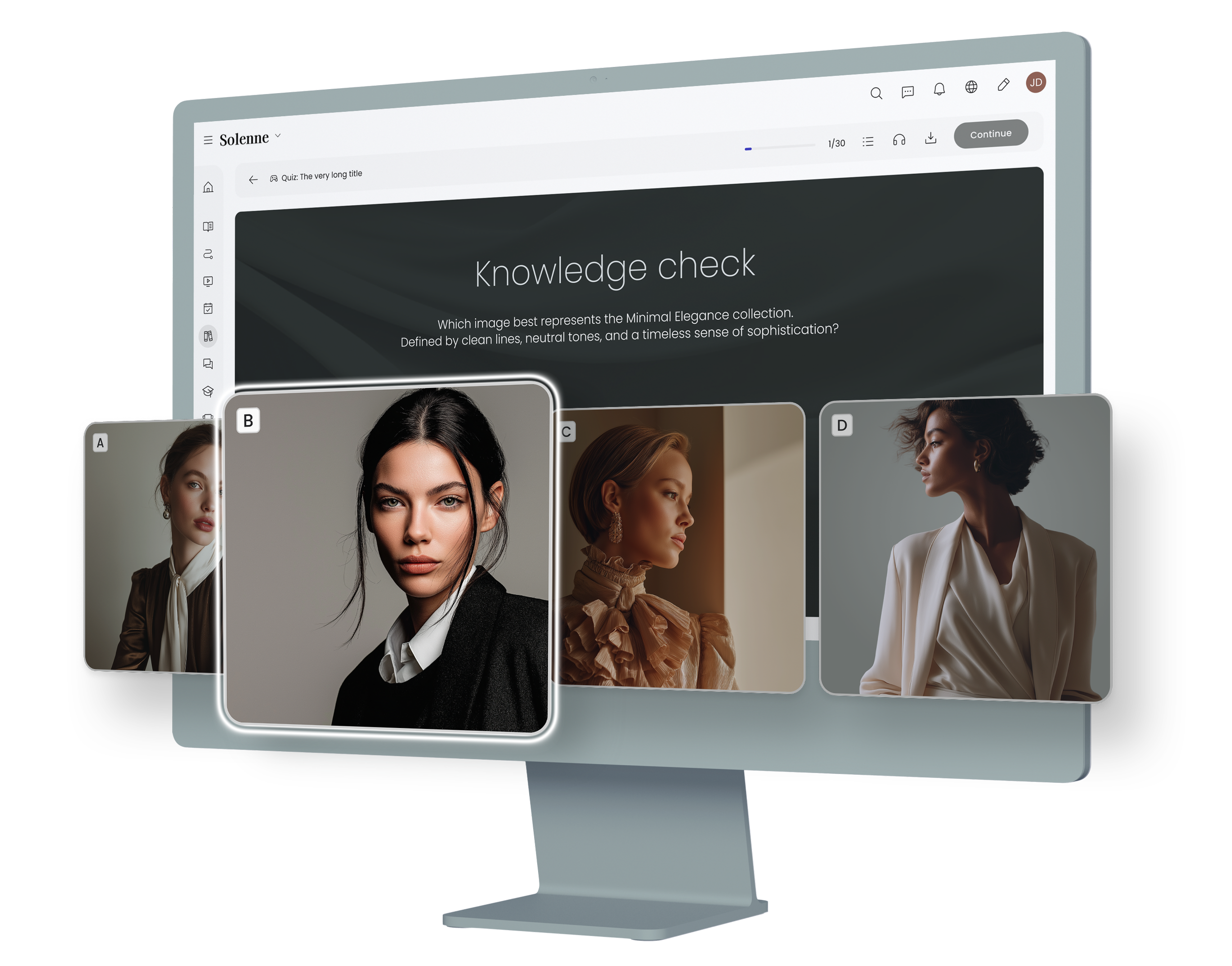
The Importance of Brand-Aligned Learning
For any organization, training is not optional—it is a strategic investment.
When learning content reflects the company’s values, tone, and visual identity, employees engage faster, retain more information, and deliver experiences that are consistent and professional.
A cohesive digital learning environment with tailored visuals, messaging, and branding acts as an extension of the company culture. It ensures that product knowledge, corporate philosophy, and customer service standards are aligned across teams.
The result is higher employee engagement, improved customer experiences, and measurable business outcomes.
Benefits of Brand-Aligned Training
+35–50% higher engagement when training content matches the company’s visual identity, design standards, and communication style
Up to 60% faster knowledge retention when educational materials use company-specific visuals, terminology, and examples instead of generic formats
+25–40% improvement in practical skills and service quality when employees learn through branded scenarios and storytelling rather than standard scripts
Companies with consistent learning ecosystems see +12–18% higher performance on new initiatives due to better-trained and confident employees
Cohesive training reduces errors by ~30%, particularly in procedural tasks, compliance steps, and product usage protocols
Customers or clients are 3 times more likely to trust an employee who demonstrates strong brand knowledge and uses company-specific language authentically
Up to 20% higher transaction value when employees apply knowledge consistently through coherent, scenario-based learning
Emotionally resonant learning experiences increase loyalty by 25%, strengthening connections between employees and the company
Mobile-first training modules lead to 2 times higher completion rates compared to text-heavy or non-branded formats
Teams trained in a consistent learning environment report +40% more confidence in applying skills and representing the company

Real-World Simulations: Practicing Authentic Customer Interactions
Training that relies solely on slides or text may teach theory but does not prepare employees for real-world situations.
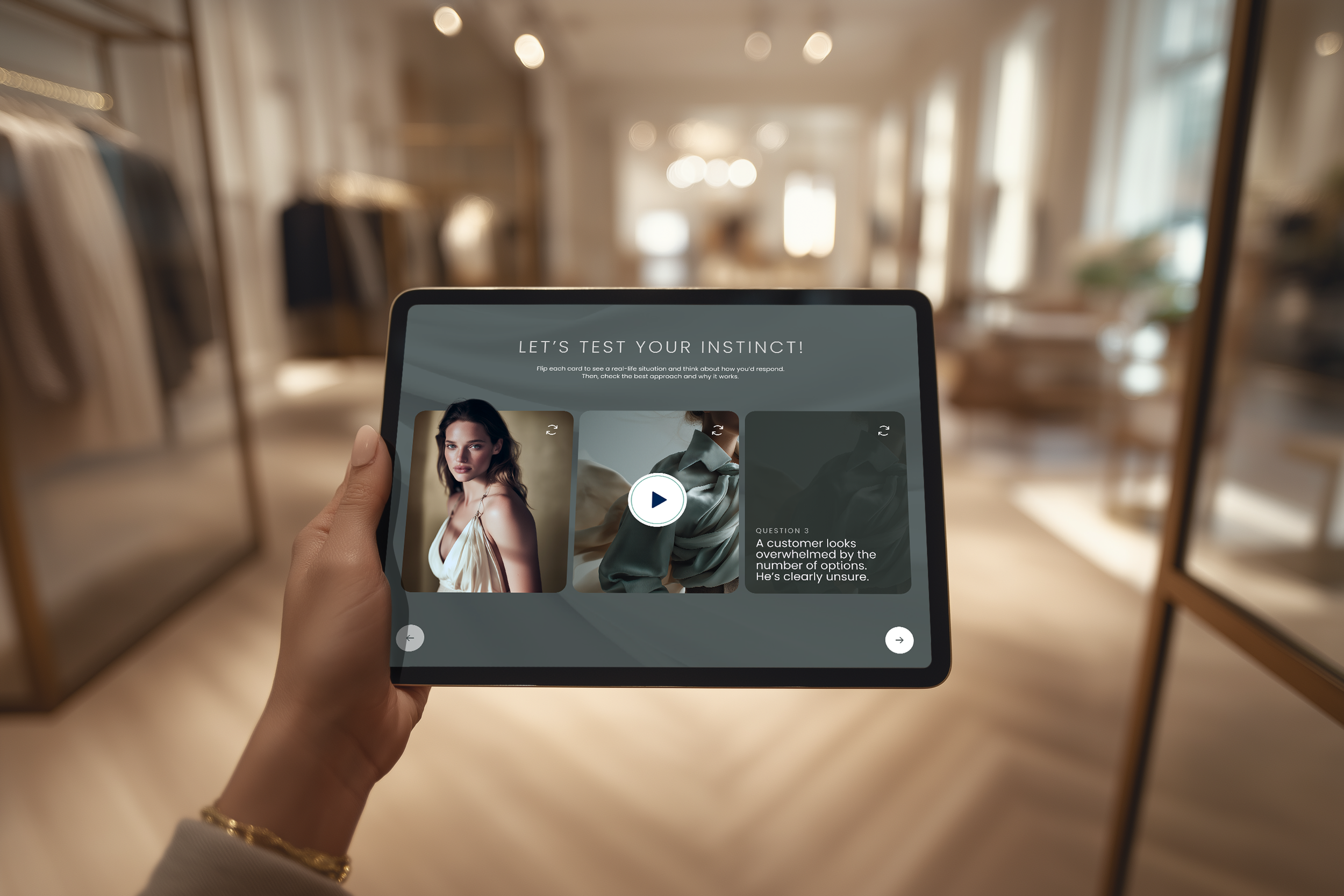
By using interactive branching scenarios, organizations can simulate authentic workplace interactions.
In these simulations, employees make decisions in practical scenarios—whether it’s handling customer inquiries, solving service challenges, or applying company procedures—and see how their choices impact outcomes and client satisfaction.
This immersive, decision-based training builds confidence, sharpens problem-solving skills, and ensures that every team member understands not just the facts but how to apply knowledge effectively in real situations.
Employees trained in realistic, scenario-driven eLearning report higher engagement, better retention, and improved performance, leading to more consistent and professional customer experiences.
Interactive Video Quizzes: Learning by Seeing and Doing
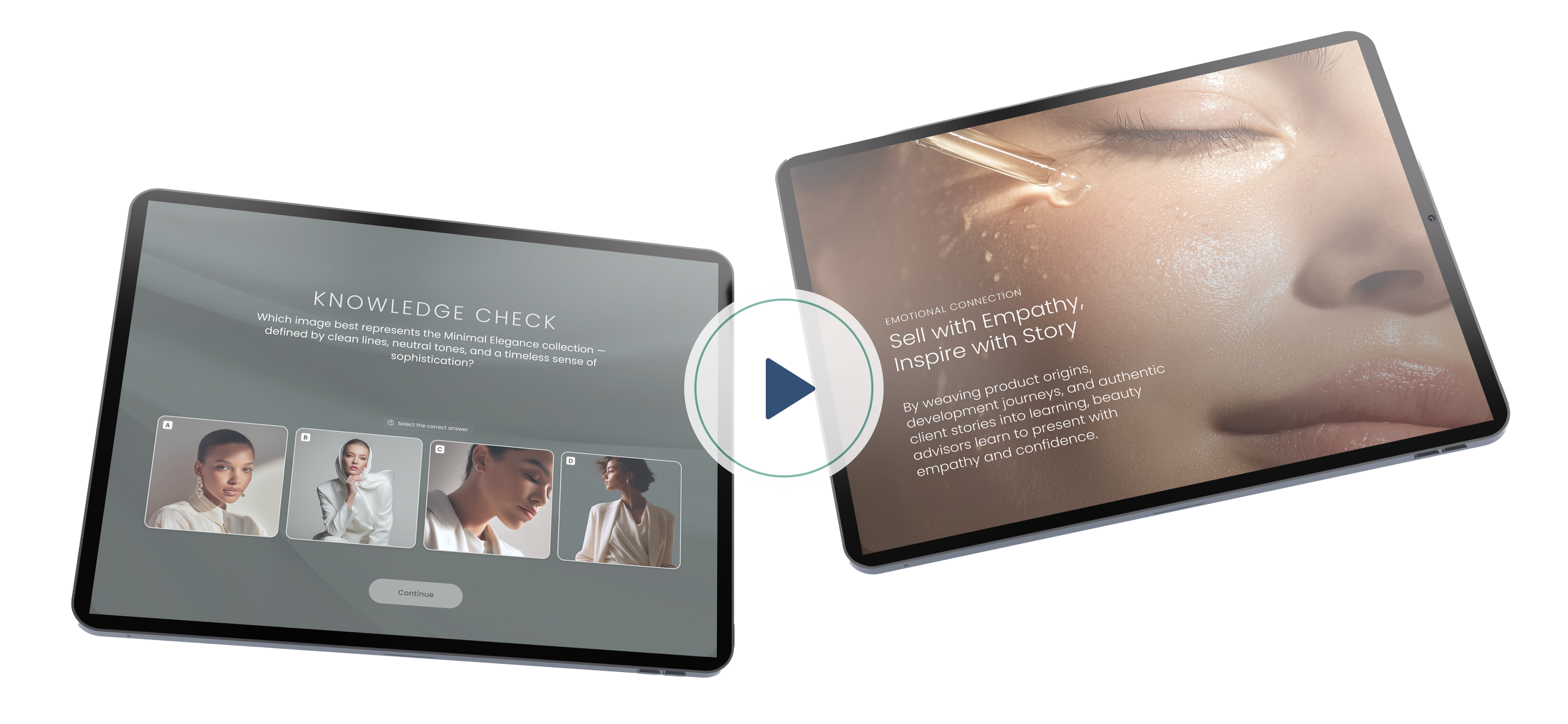
Instead of relying on static slides or text, video-based quizzes make training dynamic, modern, and immediately engaging.
For example, learners might watch a short video demonstrating a process, customer interaction, or workflow, and then answer questions based on what they observed.
This interactive learning approach improves employee engagement, knowledge retention, and practical application because learners don’t just read or listen—they see concepts in context and practice decision-making.
Video-based quizzes also help embed company-specific procedures, best practices, and professional behaviors, ensuring that training translates directly into real-world performance and improved customer or client experiences.
Interactive Video Quizzes: Boosting Engagement and Skill Retention
+45–70% higher learner engagement when using short interactive video quizzes compared to static slides or PDFs
Learners retain up to 60% more information when they see processes, workflows, gestures, or techniques in action rather than reading about them
35–50% improvement in practical skill transfer when employees practice real-world tasks through video-based scenarios
Training completion rates double when quizzes are interactive, visually engaging, and scenario-focused
Teams learn 30% faster when observing authentic workflows, movements, or procedural steps
Error reduction of ~25% in protocol-dependent tasks, including step sequences, compliance checks, and operational procedures
+20–28% improvement in client or customer satisfaction when employees practice realistic scenarios through video quizzes
Up to +15% increase in task or recommendation accuracy, thanks to visual recognition of workflows, tools, or step-by-step processes
Mobile-friendly video quizzes drive +55% more repeat training sessions, as learners enjoy the format and revisit content regularly
Employees trained with interactive video scenarios report +30–40% more confidence in applying skills during real-world interactions
Peer Sharing & User-Generated Content: Leveraging Collective Knowledge
Training doesn’t have to be one-way.
By encouraging employees to share their own work, videos, or project examples, a learning platform becomes a collaborative community.
This peer-to-peer sharing promotes creativity, spreads best practices organically, and helps reinforce company standards and workflows across teams. It also fosters ownership and engagement, turning learners into active contributors rather than passive recipients of content.
Organizations that embrace user-generated content in training report higher knowledge retention, teamwork, and employee satisfaction, while creating a continuous learning culture that scales expertise across the organization.
Microlearning & Mobile-First: Training That Fits Any Workflow
In fast-paced work environments, employees often have only a few spare minutes between tasks or meetings.
That’s why microlearning—short, visually rich, and easily digestible modules—is ideal for modern training programs.
Delivered on mobile devices, these bite-sized lessons allow staff to quickly refresh skills, review procedures, learn new processes, or reinforce key knowledge—all without disrupting their workflow.
Because the format mirrors familiar social media-style learning (scrolling, quick visuals, short bursts), it feels natural and easy to consume. This approach drives higher training completion rates, faster knowledge absorption, and immediate application of skills in real-world scenarios.
Storytelling & Company Heritage: Selling Value, Not Just Products
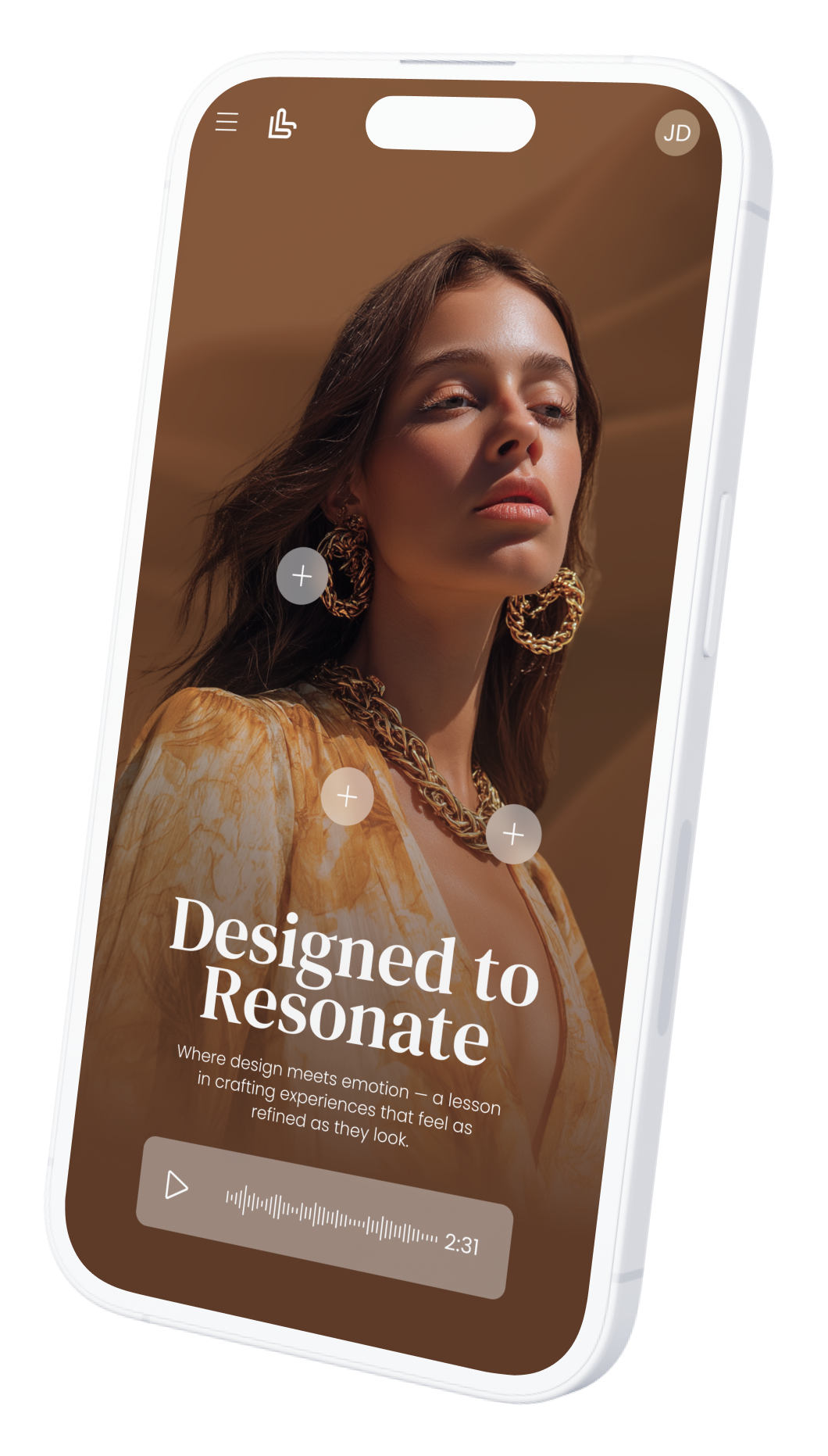
A product or service becomes powerful when it carries a story—whether it’s the inspiration behind its development, the values that shaped it, or the craftsmanship and expertise involved in delivering it.
Training that incorporates storytelling, behind-the-scenes insights, and company heritage allows employees to communicate more than just features or specifications.
When staff truly understand and connect with the company’s story and values, they can convey authenticity, inspire trust, and create memorable experiences for clients or customers. This approach transforms everyday interactions into meaningful, value-driven engagements that strengthen relationships and drive results.
Storytelling & Company Heritage: Driving Engagement and Performance
Stories increase memorability by up to 22× compared to factual information alone, according to cognitive psychology research
Employees trained in storytelling techniques achieve +15–25% higher conversion or performance in client-facing interactions
Emotional narratives boost knowledge recall by 55–70%, helping staff confidently explain benefits, features, and company values
Clients or customers are 2.5× more likely to take action when information is presented through meaningful stories rather than technical explanations
Training that incorporates origin stories, process journeys, or inspirational narratives can lead to up to +30% improvement in engagement or adoption of products/services
Behind-the-scenes content improves employee engagement by +45%, as staff feel connected to the company’s processes and mission
Heritage-focused training increases employee loyalty by 20–28%, reinforcing emotional attachment to the company or brand
Staff who understand the “why” behind their work provide 40% more personalized and effective interactions with clients or customers
Narrative-driven training improves cross-functional performance by +18–22%, thanks to clearer, more memorable learning arcs
Teams with strong storytelling skills consistently deliver higher customer satisfaction scores (NPS +10–15 points)
Conclusion: Training as a Strategic Business Tool
Effective corporate training is more than delivering information.
It’s about designing an immersive, emotionally resonant learning journey that reflects your company’s values, culture, and objectives. By combining storytelling, real-world simulations, interactive video learning, peer engagement, and bite-sized mobile-first modules, organizations can turn training into a strategic tool for building confident, knowledgeable employees aligned with the company’s vision.
The Learning Lab is designed to support this approach. It delivers a highly visual, fully customizable, and mobile-friendly learning platform that allows employees to learn through videos, demonstrations, interactive exercises, and short micro-modules.
With interactive features such as video quizzes, branching scenarios, knowledge cards, and user-generated content, The Learning Lab recreates realistic workflows and workplace scenarios, making training intuitive, engaging, and directly linked to on-the-job performance.
For global organizations, The Learning Lab also enables fast, multilingual rollout of content, ensures consistent messaging across teams and regions, and provides analytics to measure employee readiness, engagement, and performance.
The result is a strategic training ecosystem that boosts employee confidence, knowledge retention, engagement, and organizational alignment, delivering a learning experience that drives measurable business outcomes.