
Language Learning Personalization, Not Just Translation
How adaptive pathways, proofreaders, and culturally aware visuals improve multilingual training, learning and development, and retail excellence.
Language learning in companies is often treated like a distribution problem. A course is written once, translated into several languages, and pushed out to store teams, managers, and customer facing staff with the expectation that access alone will create capability. In reality, multilingual training works only when learners feel that the course is built for their level, their speaking needs, and their day to day context. Recent language learning research shows that personalized pathways, adaptive difficulty, and low pressure speaking environments improve confidence, support self regulated learning, and make practice more relevant to individual progress.
This matters even more in learning and development for retail excellence. Store teams need more than vocabulary lists and static translated screens. They need to greet, recommend, reassure, explain policy, handle service issues, and build trust in real conversations. Research on AI supported language learning shows that speech recognition, conversational practice, and personalized feedback can improve pronunciation, fluency, clarity, and willingness to practice because learners receive immediate guidance in a low stakes setting. The same body of research also shows that adaptive systems are most useful when they adjust to the learner’s level, pace, and specific areas of weakness instead of forcing everyone through the same path.
But personalization is only one side of course quality. The other side is credibility. Localization best practice makes clear that a personalized multilingual course still needs linguistic quality assurance, in context review, native language review, and functional testing before launch because grammar alone does not guarantee meaning, trust, or usability in the final course. A sentence can be technically correct and still feel wrong in a sales dialogue, a compliance reminder, or a product training scenario if the wording is unnatural, too literal, or out of place on the screen.
Visual design also changes the quality of multilingual learning more than many teams expect. Localization guidance recommends reviewing how imagery, symbols, colors, screen layout, and text expansion work in the final course because cultural appropriateness and interface clarity affect how content is understood and whether learners feel represented. In other words, strong multilingual training is not created by translation alone. It is created by personalization, proofing, and presentation working together.
Wwhy language learning needs personalization rather than simple translation, why proofreaders still matter in personalized courses, and how visuals and photos influence multilingual course quality in learning and development. The goal is practical. For training leaders, retail brands, and course teams, the opportunity is to create language learning that feels more human, more credible, and more effective from the first screen to the final speaking task.

Personalization builds language ability, not just content access
Translation makes content available. Personalization makes it usable.
That distinction is essential in language learning because learners do not progress at the same pace, struggle with the same sounds, or need the same vocabulary at the same time. Recent research on AI in language learning highlights individualized learning paths, adaptive progression, real time error detection, and personalized feedback as major drivers of better speaking development and higher learner engagement. The same research also shows that low risk practice environments can reduce speaking anxiety and increase willingness to speak, which is especially important for adults who hesitate to make mistakes in front of colleagues or customers.
For learning and development teams, this means a translated course is only the starting point. A multilingual learner at a beginner level needs guided practice, controlled vocabulary, slower difficulty growth, and targeted pronunciation support. A more advanced learner needs scenario based speaking tasks, richer vocabulary, and feedback that focuses on fluency, tone, and confidence rather than basic sentence formation. Research on AI supported speaking tools shows that speech recognition, text to speech support, speech to text analysis, and conversational agents can provide immediate corrections, level aware conversation practice, and tailored feedback on pronunciation, fluency, and clarity.
This is where adaptive pathways become valuable. Instead of asking every learner to follow one fixed sequence, a better course can route people based on entry level, job role, performance, and confidence. A store associate in beauty, fashion, or luxury retail may need language modules focused on welcome rituals, product storytelling, aftercare, and service recovery. A back office coordinator may need more emphasis on scheduling, reporting, and internal collaboration. Personalized pathways make the learning more efficient because they reduce irrelevant content and increase time spent on the learner’s real communication needs.
Speech practice is another critical difference between translation and personalization. Research on AI supported language learning consistently points to the value of immediate speaking feedback because learners can hear, repeat, compare, and self correct in the moment. This kind of practice is especially useful in corporate training because it creates a safer rehearsal space before live conversations on the sales floor, in customer service, or in manager coaching. In retail excellence, that can mean practicing how to greet an international customer, explain sizing, recommend a complementary product, or handle a return request with the right tone.
Level based progression matters for the same reason. If the difficulty is too low, learners disengage. If it is too high, they lose confidence. Research on personalized AI learning environments shows that adaptive systems work best when they match instruction to the learner’s current competence and adjust content as performance changes. In practical terms, this means courses should unlock more complex dialogues, more nuanced vocabulary, and more demanding listening and speaking tasks only when the learner is ready.
Useful design choices for personalized language training include:
Entry checks that place learners into the right starting level based on speaking, vocabulary, and comprehension needs.
Adaptive pathways that redirect learners toward more listening, more speech practice, or more review based on performance.
Job specific modules for customer greeting, product explanation, complaint handling, and service recovery in retail settings.
Speech practice that gives immediate feedback on pronunciation, fluency, and clarity rather than waiting for a final assessment.
Low pressure speaking environments that encourage repeated practice before live use on the job.
Progression rules that move learners from basic phrases to more complex conversations in a structured way.
The central point is simple. Translation can open the door to multilingual access, but personalization is what turns access into measurable language growth. For learning and development teams that care about real performance, adaptive pathways, speech practice, and level based progression should be treated as core design elements, not optional extras.
Language learning becomes more effective when it responds to the learner rather than forcing the learner to adapt to the course. Personalized training improves relevance, supports confidence, and prepares people for real speaking tasks in ways that translation alone cannot match.
Proofreaders protect trust, credibility, and learner confidence
Personalized language training still fails if learners do not trust the language they see on screen.
This is why proofreaders and localization reviewers still matter, even in courses shaped by adaptive technology. Localization quality guidance is clear that multilingual products need more than translation and grammar checks. They need linguistic review, visual review, in context review, native language review, and functional testing before launch.
The reason is straightforward. A phrase can be correct in isolation and still be wrong in context. Localization guidance notes that a word may pass grammar and spelling checks yet carry the wrong meaning once it appears as a button label, error message, or learner prompt inside the actual product. For multilingual language courses, that risk is even higher because the course itself teaches communication. If the learner sees awkward wording, mistranslated feedback, or unnatural dialogues, the credibility of the whole course weakens.
Proofreaders matter because they catch what automated systems often miss. A native language reviewer can spot tone mismatches, terminology inconsistencies, unnatural phrasing, and culturally off wording that a literal translation may not reveal. In a personalized course, where adaptive feedback and branching content produce many small text variations, this role becomes even more important because trust depends on consistency across all learner paths. If one branch sounds polished and another sounds machine translated, the learner notices.
In context review is equally important. Localization best practice stresses that reviewers should see the text where it actually appears in the live course or staging environment, not just in a spreadsheet. That is because meaning, layout, and function are connected. A feedback message that looks fine in a text file may be too long on screen, poorly timed after a speaking task, or confusing when paired with a visual cue in the interface.
Functional testing is the next layer of credibility. Localization QA guidance recommends checking whether the localized product works correctly in each locale, including date formats, number formats, keyboard input, rendering, and full user flows. In a language course, this matters for speaking tasks, text entry activities, quiz logic, subtitles, captions, and completion screens. A broken interaction or a clipped instruction damages learner confidence just as quickly as a mistranslated sentence.
For learning and development teams, the connection to trust is direct. Learners judge a course within seconds. If the language feels unnatural, the screen looks broken, or the instructions are unclear, they assume the learning itself is unreliable. Clear language, accurate localization, and consistent review protect course credibility and reduce learner frustration.
A strong localization QA process for personalized language courses should include:
Native language review for all visible course text, feedback states, and assessment messages.
In context review inside the final course or staging environment rather than in isolated export files.
Linguistic QA that checks tone, grammar, terminology, and meaning in realistic learning scenarios.
Visual QA that checks truncation, text expansion, and rendering across devices and screen sizes.
Functional testing for navigation, audio playback, captions, quiz logic, and local input behavior before launch.
Ongoing QA for seasonal updates, new modules, and revised feedback so quality does not decline over time.
Proofreaders are not an old step in a new workflow. They are a quality safeguard that keeps personalized learning believable. In language courses, that matters more than ever because the course is not just delivering information. It is modeling the language that learners are expected to use.
Personalization can make a course smarter, but proofreading makes it trustworthy. When localization quality is weak, learners doubt the content, question the feedback, and disengage. When native review and in context QA are strong, multilingual training feels credible, clear, and worth completing.
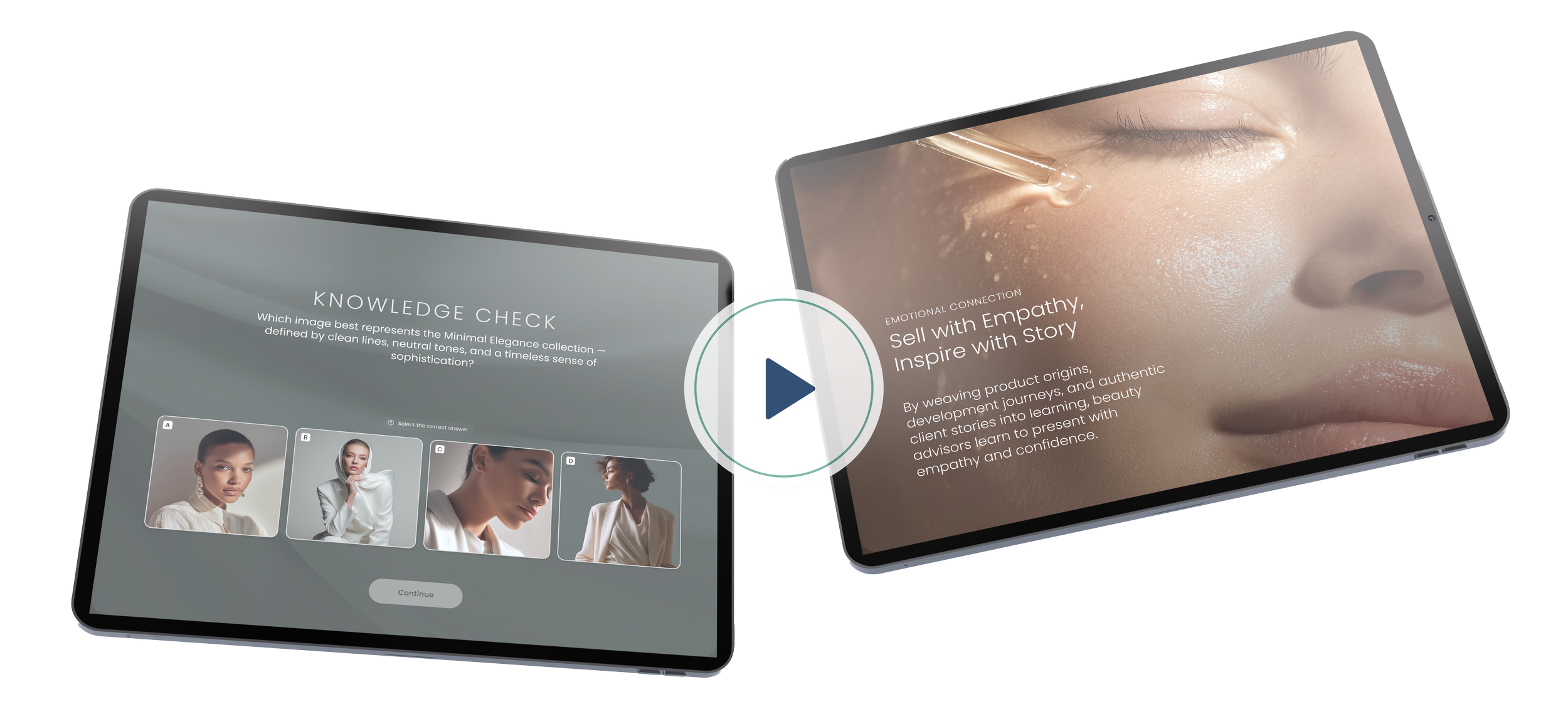
Visuals and layout shape multilingual learning quality
Words are only a part of multilingual course quality.
Images, photo choices, symbols, colors, spacing, and interface layout all influence whether learners understand the content and feel that it belongs in their context. Localization guidance recommends reviewing visual elements and final course appearance because cultural appropriateness and layout behavior can affect both comprehension and learner acceptance.
This matters in language learning because visuals often carry meaning alongside text. A photo may show how to greet a customer, how to present a product, or how to behave in a service interaction. If the setting, body language, clothing, or environment feels culturally distant or confusing, the lesson becomes harder to interpret. Localization guidance specifically recommends adjusting images and graphics so that people, settings, and cultural references resonate with local learners rather than reflecting only one market perspective. It also warns that colors, icons, and symbols can communicate different meanings across cultures, which means visual choices should be reviewed with the same care as wording.
Interface layout matters just as much. Localization best practice emphasizes testing the final course for layout issues such as text expansion, clipped labels, broken menus, and screen level rendering problems across languages and devices. This is not a minor design detail. In multilingual courses, text often grows or changes shape when translated. A well designed English screen may become crowded, misaligned, or visually unbalanced in German, Arabic, Italian, or Japanese. If learners have to struggle with broken spacing or unclear hierarchy, their attention shifts away from the learning task.
In retail training, visual relevance becomes even more practical. Photos and interface examples should match the learner’s work reality. Store staff respond better when product imagery, service moments, and role play visuals resemble the environments where they operate. A multilingual course about greeting customers, explaining promotions, or handling after sales service should show interactions that feel realistic, respectful, and locally appropriate. Localization guidance supports this approach by recommending cultural appropriateness review and examination of how content appears in the finished course, not only in source files.
Visual quality also influences trust. When learners see polished, locally relevant images and clean layout behavior, they interpret the course as more credible and better made. When they see culturally awkward visuals, inconsistent iconography, or broken page structure, they assume the course was not built with care. In learning and development, presentation affects participation.
A multilingual visual review checklist should include:
Review of photos for cultural relevance, local realism, and respectful representation.
Review of symbols, gestures, and colors for possible cultural misreading across target markets.
Testing of final screen layout for text expansion, overlap, truncation, and hierarchy issues.
In context review of visuals and copy together inside the final course.
Device testing to confirm readability and interaction quality across desktop and mobile screens.
Validation that scenario visuals match the learner’s work environment, especially in customer facing retail training.
Good visuals do not decorate multilingual learning. They clarify it. They make the course feel locally aware, easier to navigate, and more aligned with the learner’s world. In language training, where context is part of meaning, that role is even more important.
A multilingual course can have accurate translation and still feel wrong if the imagery, layout, or interface context does not support the learner. Visual review is therefore part of language quality, not separate from it. When visuals are culturally appropriate and layout is tested in the final course, learning feels clearer, more credible, and more human.
Better multilingual learning comes from personalization, proofing, and presentation together
The future of multilingual training in learning and development is not about translating faster.
It is about designing better. Language learning needs personalization because real learners bring different skill levels, different speaking anxieties, different job contexts, and different goals into the same course. Research on AI supported language learning points in one consistent direction. Adaptive pathways, personalized difficulty, immediate speaking feedback, and low pressure practice environments help learners build confidence, improve pronunciation and fluency, and stay engaged for longer. For retail excellence, that means language courses should prepare people for live service moments, not just test whether they can recognize translated phrases.
At the same time, personalization is not a substitute for quality control. The more dynamic a course becomes, the more important careful localization review becomes as well. Localization guidance continues to stress linguistic QA, native language review, in context review, and functional testing before launch because meaning, rendering, and usability all affect learner trust. In practical terms, proofreaders still matter because they protect the course from awkward phrasing, inconsistent terminology, broken feedback, and subtle context errors that damage credibility. When learners do not trust the language, they do not trust the learning.
Visual design completes the picture. Guidance for localization and multilingual elearning makes clear that photos, imagery, colors, layout, and final course rendering influence cultural relevance and ease of use. A course that looks clean, locally aware, and visually coherent feels more professional and more respectful. A course that ignores visual context feels imported rather than designed.
For L and D teams, the strategic lesson is clear. Do not treat translation as the final step in language training. Build language learning around adaptive pathways, speaking practice, and level based progression. Protect that experience with native proofing, in context QA, and functional testing. Then review visuals and layouts in the final multilingual course so the whole experience feels credible from the learner’s first click to the last speaking task. That is how multilingual training becomes more than translated content. It becomes a trusted learning experience that supports communication, performance, and retail excellence across markets.
