
Customizing Your LMS Into a Brand Experience
Why the best learning platforms in 2026 needs to feel like the a fun social media and not like a training school.
A learning platform is not neutral. The moment a sales advisor opens it, they subconsciously judge whether it belongs to the brand or whether it is “another corporate tool.” That first judgment decides attention, and attention decides learning. In luxury retail, where image, tone, and detail are the product, an LMS that looks generic sends the wrong message: it tells staff that training is separate from the Maison, not part of it.
Customization is the fastest way to make the platform feel legitimate. The advantage is structural: this platform is typically used only by internal teams, not by the public. That means your creative space is wide. You can build a more daring, playful, and immersive experience than you would ever deploy on a public website, as long as it respects brand identity, security, and usability. The only practical limit should be the Maison’s own standards:
the platform must be on-brand, accessible, and easy.
The most engaging learning culture starts before the first module. It starts on the log-in page, in the app name, in the navigation choices, and in the way the platform rewards curiosity. Make the LMS feel like a product your advisors would choose, not an obligation they must endure.
Customization is not decoration
It is brand legitimacy, learner engagement, and cultural alignment.
Many LMS projects begin with content and end with UI. That order is backwards. If the platform feels unfamiliar or “school-like,” staff will use it only when they are forced to. If it feels like the Maison, staff will explore it naturally, even in short breaks, even outside of peak training periods.
Customization in luxury is also a coherence exercise. Your e-commerce, social media, packaging, in-store rituals, and clienteling tone follow a certain aesthetic and rhythm.
The internal learning environment should not break that rhythm. The platform is part of the employee experience, and employees are the ones delivering the customer experience.
Use brand typography, iconography, spacing, and photography style to mirror brand communications.
Match tone of voice: headlines, labels, microcopy, and notifications should sound like the Maison.
Align with retail reality: speed, clarity, and minimal steps to access the right content.
Make it emotionally consistent: calm for watchmaking, energetic for sports luxury, warm for leather goods, clinical for skincare.
The LMS is not a container. It is a stage. In retail, your people perform the brand daily. The platform must feel like the same world they represent on the floor.
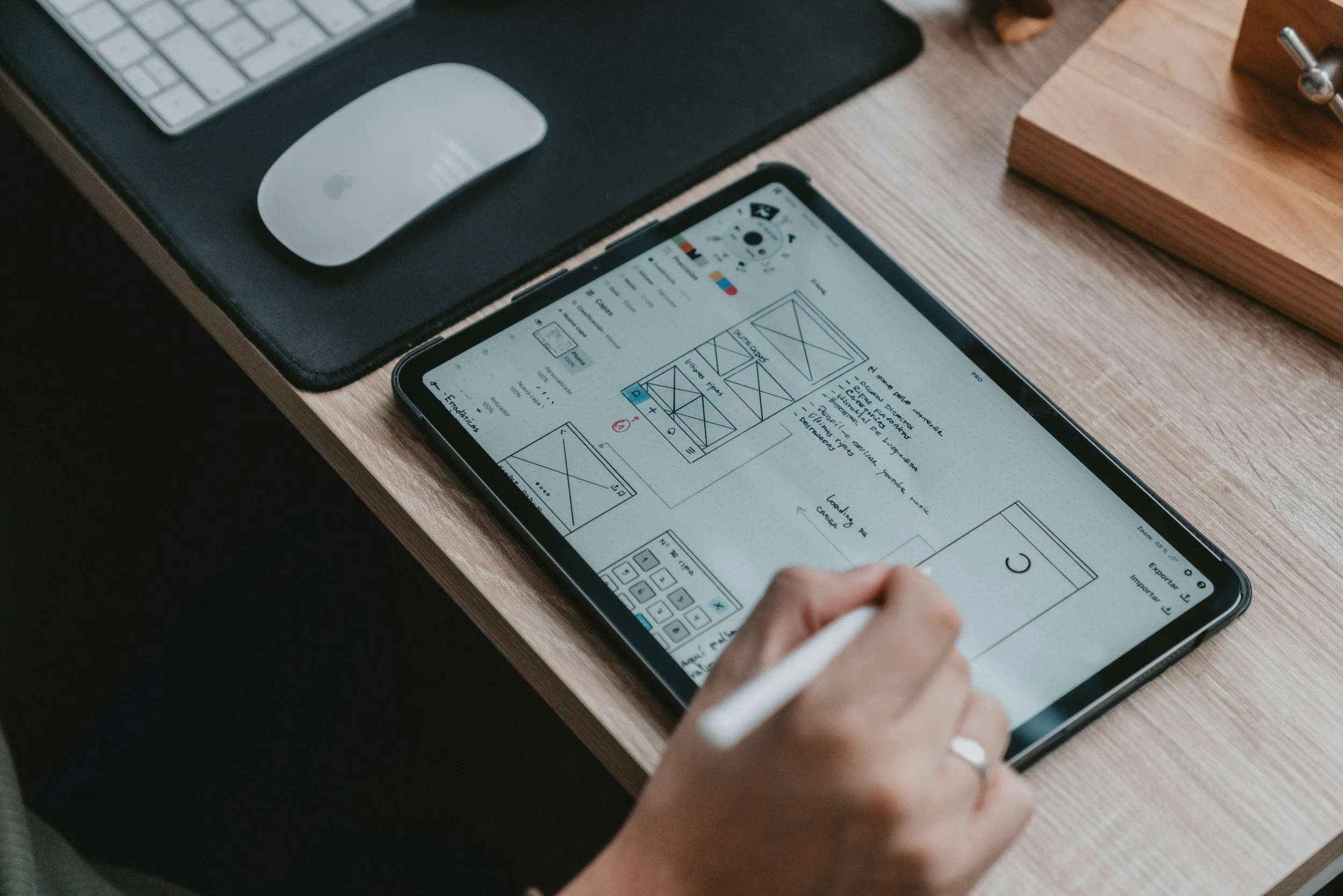
Infinite ideas, with one rule
Creative freedom is huge when the platform is internal, but the brand image is the boundary.
Because your LMS is mostly internal, you can build experiences that would be too niche for public audiences. This is where luxury training managers can do what it does best: transform a functional action into a ritual. Logging in is a ritual. Opening a module can be a ritual. Completing a challenge can be a ritual.
The risk is not being too creative. The risk is being creative in a way that contradicts the brand. Customization must always answer one question: “Would this feel natural if it were part of the Maison’s universe?”
Define a “brand boundary” checklist: elegant, discreet, premium, precise, playful, bold, depending on your identity.
Ensure accessibility: any ritual must still work fast, on low connectivity, with one hand, on small screens.
Build a provider partnership: customization only works if the vendor supports your ambition and maintains it over time.
The best customization is not the loudest. It is the most coherent. It feels obvious in retrospect, like it was always meant to be there.
The log-in page is your first learning moment
Make access feel like entering a universe, not entering a system.
A log-in page is usually a dead zone: logo, fields, “forgot password.” In luxury, it can be an invitation. This is where your playful examples become powerful, because they connect craft to action. The log-in ritual can carry meaning, and meaning increases attention.
Here are concept directions that keep craft at the center:
Watch brand: access by “charging” a vintage crown or rotating a digital winding mechanism to unlock.
Automotive luxury: a smooth accelerator gesture that “starts the engine” and opens the app.
Skincare or beauty: apply a digital lipstick stroke, reveal a layer, or complete a shade match to enter.
Luxury clothing: unlock by simulating a stitch knot, a buttoning gesture.
Eyewear: focus a lens, adjust a virtual frame, or align two shapes to “see clearly” and enter.
The ritual must be optional or fast-skip. You can delight without blocking. It should be a signature touch, not a daily obstacle.
Keep it short, around 2 seconds when used often, with an option to disable.
Ensure it works across devices, especially older phones.
Make it elegant, not childish: subtle animation, premium sound design if appropriate, clean motion.
If the login feels like the brand, everything after it inherits credibility. You have already won the first battle: attention.
Naming the platform like a product
Stop calling it “training” if you want adults to love it
Words matter. “Training” and “learning” often evoke school and hierarchy: someone teaches, someone is judged. Retail advisors are adults with expertise, pride, and a desire for autonomy. If you want voluntary engagement, the platform name should feel like an invitation, not a classroom.
A strong name also sets expectations. It tells users what the platform is for, and how it will feel.
Naming approaches that work:
Product-like utility names: “Focus” for eyewear, “On the Road” for automotive, “Atelier” for craft-led brands.
Universe names: “The Vault,” “The Studio,” “The Garage,” “The Lab,” depending on brand tone.
Function names based on content type:
Document-heavy reference library: “Encyclopedia,” “Library.”
Video-first learning: “Cinema,” “Studio.”
Inspiration and soft-skill storytelling: “Inspire,” “Craft.”
Practical naming rules:
Short, pronounceable, and culturally safe across regions.
Not too internal-jargon-heavy.
Name it like you would name a collection or a service. If the Maison would be proud to print it on a card, advisors will be proud to open it.
Home page design that respects retail reality
Few clicks, clear icons, and two speeds: “today” and “deep dive”
The home page is where engagement is won or lost. Retail time is fragmented. Advisors have micro-moments: 3 minutes before opening, 6 minutes after lunch, 90 seconds between clients. The LMS must work in those fragments.
A strong home page acts like a concierge: it offers what you need now, and it makes deeper exploration effortless.
Common, effective home page blocks:
“Today” card: the one priority for the day (Newest product documentation, Course reminder, information story).
Notifications: clean, minimal, actionable (not spam).
Search bar that actually works: fast access beats perfect browsing.
Navigation principles:
Everything reachable in 2 to 3 taps.
Icons recognizable without reading.
A tidy scrolling page with consistent content tiles.
Courses and lessons confined to a Learning area, so the rest of the app can breathe.
Recommended top-level sections:
Learning: courses, modules, lessons, onboarding paths.
News or Share: updates, brand communications, store briefs, campaign materials.
Play: quizzes, challenges, games, badges, rewards.
Profile: avatar, progress, awards, certifications, favorites.
Community (if applicable): peer posts, store challenges, feedback loops.
In-store excellence is built on clarity. If the LMS is cluttered, people avoid it. If it feels like a premium, well-curated dashboard, people return to it.

Gamification with taste
Quizzes and badges should feel like recognition, not like a child’s game.
Gamification in luxury must be done with restraint. The goal is not to turn learning into a cartoon. The goal is to create momentum, feedback, and pride. When it is done well, advisors feel seen. When it is done poorly, they feel patronized.
A “Play” section can work beautifully if it is designed like a brand experience:
Short quizzes tied to real scenarios (not trivia for trivia’s sake).
Challenges linked to store life: greeting excellence week, aftercare mastery, storytelling sprint.
Badges that reflect meaningful skills: “Discovery Expert,” “Craft Storyteller,” “Clienteling Pro.”
Visible progress: level indicators, streaks, and mastery milestones.
Recognition that motivates adults:
Tie badges to real privileges: early access to product briefings, invitations to masterclasses, internal spotlights.
Let users display awards on their profile with a refined avatar system.
Use brand language for levels: not “Beginner,” “Intermediate,” but terms aligned with the Maison (Apprentice, Artisan, Ambassador, etc., if appropriate).
In luxury, the best game mechanic is status. If recognition is elegant and meaningful, gamification becomes a cultural tool, not a gimmick.
Social learning and community, the 2026 reality
If your stores can share, your standards travel faster.
In 2026, learning is not only content-based. It is community-based. Retail teams learn as much from each other as they do from modules, especially when the learning is connected to real store situations.
If your brand culture allows it, a community space is one of the most powerful LMS customizations. It transforms the platform from a library into a living network.
What an effective community space can include:
Store challenges: visual merchandising challenge, greeting ritual challenge, clienteling follow-up challenge.
Peer sharing: photos or short videos of training moments, role-play clips, best practice templates.
Feedback loops: quick polls, “what clients are asking this week,” objections trending.
Recognition: monthly highlights, best practice awards, leadership comments that validate effort.
Safe interaction rules: tone guidelines, privacy and client confidentiality protections.
Community design principles:
Time-boxed interaction so it does not feel like social media distraction.
Clear moderation and brand tone guardianship.
A “learn and apply” orientation: every post should link to a behavior, a standard, or a lesson.
Standards spread through visibility. When advisors can see how other stores execute excellence, the brand becomes more consistent without adding more meetings.

The House Signature
Customization is not a luxury feature. In luxury retail learning, it is the entry price for engagement. If the platform looks and sounds generic, advisors treat it as generic. If it feels like the Maison, advisors treat it as part of their identity and craft. The platform becomes a place they return to, not a task they avoid.
Mapping the path from superficial branding to true experience design:
Start with legitimacy: align UI, tone of voice, and microcopy with the brand universe.
Turn access into ritual: the log-in page can be an elegant, optional signature gesture.
Name it like a product: avoid “school language,” choose names that set expectations and invite curiosity.
Build a retail-first home page: few clicks, clear icons, two speeds (today vs deep dive).
Separate functions: Learning for courses, Share for updates, Play for quizzes and badges, Profile for progress and recognition.
Use gamification with taste: recognition should feel premium, meaningful, and linked to real skill.
If applicable, add community: stores sharing best practices is how standards scale in 2026.
An engaging platform is not the result of better content alone. It is the result of a coherent experience: design, naming, navigation, rituals, and recognition working together. When the LMS becomes a brand space, learning stops feeling like “training.” It becomes part of how the Maison performs itself internally, so it can perform consistently for clients everywhere. That is how you build a learning culture that lasts, even in the middle of retail reality.
The Penceo touch
A dedicated will help a maison turn this vision into a concrete, scalable platform.
By combining strategy, learning expertise, and technical delivery in one coordinated approach. Experienced learning professionals can translate brand identity into a real LMS blueprint: naming, tone of voice, content architecture (Learning, Share, Play, Profile, Community), onboarding pathways, and the right mix of micro-learning, quizzes, and social learning so the platform is engaging without becoming noisy or off-brand. Then, technicians and an IT team can implement the customization safely and smoothly, from UI theming and navigation logic to the more ambitious scenarios like branded log-in rituals, interactive unlock gestures, avatar and badge systems, and community spaces, while keeping performance, security, and device compatibility under control. The result is not only a beautiful platform, but a coherent rollout plan, with governance (brand tone guardians, proofreaders, content owners), and a maintenance rhythm that keeps the experience consistent over time.
