
Blended Learning for Retail Brands: The 2026 Model
A retail-first approach that combines mobile learning, virtual training, and in-store coaching to keep standards consistent worldwide.
Blended learning is a training model that combines digital learning (mobile modules, videos, quizzes, scenarios) with human learning moments (virtual classes, workshops, coaching, live practice). In retail, it exists for one reason: to connect knowledge to behavior on the shop floor without breaking operations. A product launch cannot wait for the next quarterly classroom session, and a service ritual cannot be learned only from a PDF. Blended learning bridges this gap by making learning continuous, flexible, and applied.
In 2026, blended learning is no longer a “nice-to-have.” Retail brands operate across time zones, high staff mobility, seasonal peaks, and rapid commercial rhythms. Stores need training that fits into real time: short daily refreshers, live moments for alignment, and coaching to turn standards into habits.
Blended learning combines the accessibility of digital training with the impact of in-person experiences, helping knowledge get “acquired,” “applied,” “validated,” and “remembered.” That sequence matters: retail does not reward memorization, it rewards execution.
This is also why the platform matters as much as the content. The LMS or even better a dedicated app becomes the environment where:
Learning is practiced, information is shared, and where community and recognition build momentum.
In 2025-2026, most brands already have an LMS provider. The difference is whether that platform is truly retail-first: mobile, fast, branded, and connected to live training and coaching, not isolated from it.
Penceo’s advantage is the ability to design blended learning as a complete system, not a set of disconnected tools. Penceo positions itself as an eLearning services provider that covers strategy, learning experience design, instructional design, content production, and communications campaigns to drive adoption. That end-to-end scope is what makes blended learning work in practice: it requires aligned design, technology, rollout communication, and ongoing support.
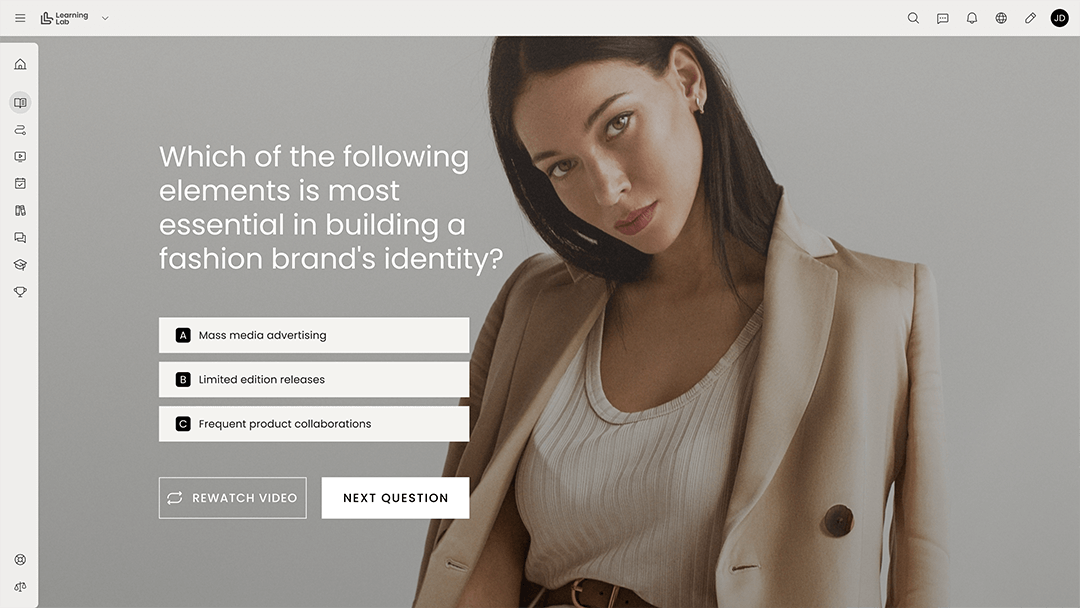
The best blended learning applications
A structured mix of formats that turns training into practice.
Blended learning is often described too vaguely as “online plus offline.” In retail, it is more specific: a deliberately sequenced journey that starts digitally, aligns people live, and ends in real application. By combining digital learning methods with in-person experiences, giving learners flexibility while still benefiting from human interaction and hands-on practice.
The purpose is not to add more training. It is to make training usable at the speed of retail:
Digital content carries knowledge, refreshers, and consistency.
Live sessions create alignment, energy, and shared standards.
In-store coaching makes learning stick through feedback and repetition.
Digital, self-paced: micro modules, product storytelling, service standards, quizzes.
Live, synchronous: webinars for launches, virtual classes for global alignment.
In-store, applied: role play, observation, coaching by managers and ambassadors.
Measurement: track progress and validate skills through blended certification (online tests + live validation).
Blended learning works because it respects how retail teams actually learn, in short bursts, reinforced by real conversation and real practice. It is not a compromise model. It is the model that matches the reality of stores.
The 2026 virtual approach
Remote training becomes “retail-standard,” not “second best.”
Virtual training in 2026 is not a pandemic leftover. It is a serious operational tool. It allows brands to align dozens or hundreds of locations without travel time, while still keeping human interaction and Q&A. Where live sessions are reinforced by digital modules and quizzes so learning continues after the event.
In practice, virtual training should not be a long lecture. It should feel like a launch room:
Short, high-clarity sessions
Interactive checks (polls, quizzes)
A clear translation for the store
Use live sessions for alignment moments: collection launches, new ceremony standards, campaign storytelling.
Always attach follow-ups: nano modules, quizzes, scenario exercises to reinforce retention.
Keep sessions inclusive across time zones: multiple slots, recordings, and localized recap posts.
Turn “virtual” into a habit: monthly rhythm beats one big event.
Remote training is effective when it is connected to a platform that captures the learning journey before and after the session. Otherwise, it becomes a one-off webinar that disappears in a week.
Devices are no longer optional
Smartphones, tablets, and back-of-house computers are the new training infrastructure.
A blended model collapses if stores cannot access it. In 2026, no retail network should leave teams without access to a smartphone experience, a shared tablet, or a back-of-house computer that can reliably load training content. This is not about “being modern.” It is about operational fairness: the store cannot be held to standards it cannot access.
But access is only step one. Step two is training people to use the tools correctly and comfortably:
How to find the right content fast
How to use search, bookmarks, “continue learning”
How to participate in community and feedback loops
Equip stores with a minimum device standard (per headcount and traffic level).
Train digital security: passwords and shared-device etiquette.
Make content truly mobile-first: short, readable, and fast-loading.
Create an “in-store routine”: daily 5 minutes, weekly practice, monthly live alignment.
Devices are not a tech problem. They are a learning culture decision. If a brand wants consistent global execution, it must make access universal and simple.
The app is the learning environment
One place for learning, information, and community.
Blended learning needs a home. In retail, that home must be an app-like environment that people open naturally, not only when forced. Blended learning is a journey that connects every touchpoint, including booking onsite events, following live workshops with digital exercises, and earning certifications through mixed formats.
This is the platform’s real role in 2026:
A learning space for modules and paths
An information space for updates and campaign materials
A practice space for quizzes and challenges
A recognition space for badges and certifications
A community space for stores to share and learn socially
Separate “Learning” from “News/Share” so courses don’t drown in announcements.
Build “Play” for quizzes, challenges, and recognition to keep momentum.
Add certification paths that combine online assessments with live validation.
In 2026, an LMS that only hosts courses is behind. The strongest retail platforms combine training, communication, and community so learning becomes part of daily store life.
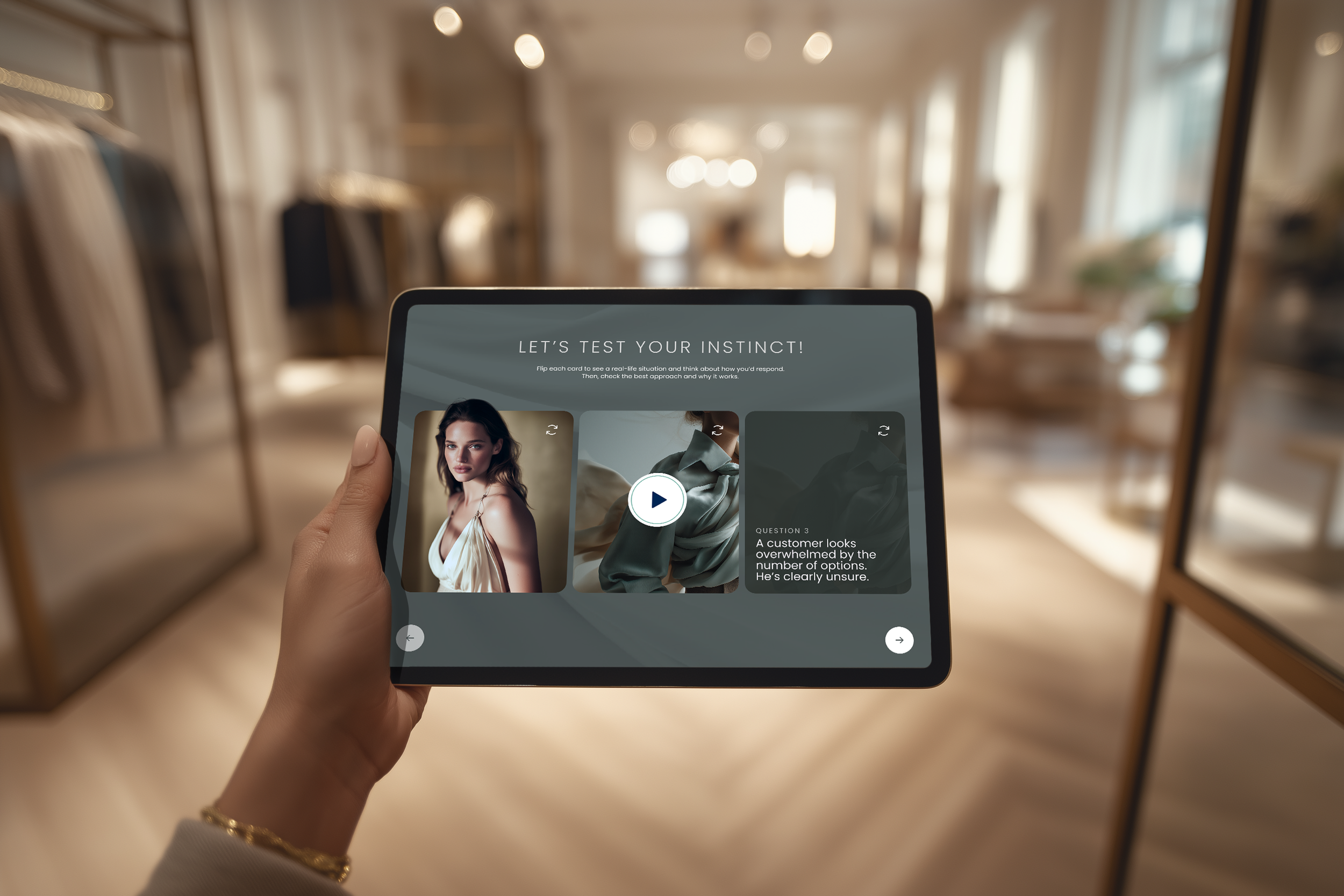
On-field coaching is the anchor
Managers, trainers, and ambassadors turn content into habits.
Digital learning can scale knowledge. Only humans can scale behavior. This is why blended learning needs on-field coaching and role-based support. Blended learning makes training “applied” through role-plays, discussions, or live events, not only absorbed.
The pivotal figures are consistent across retail:
Store managers and assistant managers (daily coaching)
Internal trainers (rituals, certification, brand tone)
External experts (specialized selling skills, product craft)
Ambassadors and long-tenured advisors (peer credibility and cultural transmission)
The best approach to blended learning coaching:
Build a coaching script for managers: observe one behavior, give one feedback, set one goal.
Use weekly store rituals: 10-minute role play, 5-minute product story, 3-minute objection drill.
Connect coaching to the app: assign modules, track completion, validate in-store practice.
Make ambassadors visible: they model “how the Maison sounds” and “how excellence looks.”
Coaching is not an add-on. It is the part of blended learning that protects brand standards when the store is busy, the team changes, and habits try to return.
Penceo’s way to make blended learning real
From strategy and design to content production and adoption campaigns.
Blended learning programs often fail for a simple reason: they are built as isolated pieces.
A platform without adoption is a library no one enters.
Content without coaching is a temporary burst of motivation.
Live sessions without follow-up disappear.
Penceo’s service offer is structured to address the full system: strategy, branding and identity, learning experience design, instructional design, content production, SCORM production when needed, and communications campaigns to drive participation. That combination matters because blended learning is as much about rollout and habit formation as it is about content.
Training experts map Maison needs: what must change, where, and how fast.
Experience design ensures the platform feels branded and engaging, not generic.
Instructional design turns brand standards into learnable sequences and scenarios.
Content and video production create assets that retail teams will actually watch and reuse.
Communication/advertising campaigns drive adoption, so learning becomes a rhythm, not a one-time project.
A blended program becomes scalable when the provider can support both the creative layer (brand experience) and the operational layer (rollout, rhythm, measurement). Penceo’s positioning is built for that end-to-end reality.

The 2026 blended blueprint
A model that respects retail speed, protects brand standards, and builds a learning culture.
Blended learning is the retail training model that matches how stores operate: fast, distributed, human, and always on. It combines digital learning with live sessions and in-store coaching so knowledge is not only delivered, but applied and reinforced over time. In practice, it works when it is designed as a journey: pre-work on mobile, live alignment for energy and clarity, digital follow-up for retention, and coaching for behavioral transfer.
A simple blueprint:
Define blended learning as a sequence, not a mix: acquire, apply, validate, remember.
Treat virtual training as a core format in 2026, always paired with interactive follow-up.
Make access universal: devices, connectivity, and user training are part of the learning strategy.
Build the app as an environment: Learning, Share, Play, Profile, Community, with clear boundaries.
Anchor everything with coaching: managers, trainers, ambassadors, and experts make standards live.
In 2025-2026, having an LMS provider is common. The advantage is not “having a platform.” The advantage is making the platform, the people, and the rituals work together, so learning becomes part of store culture. Penceo is well-positioned to support this because its services span strategy, branding and identity, experience design, instructional design, content production, and communications campaigns that drive adoption. When those pieces are connected, blended learning stops being a project and becomes a system that protects Maison standards worldwide
