
The Role of Video and Audio in Online Training
The Power of Video and Audio in Online Training: Driving Engagement and Performance
Video and audio play a critical role in online training by increasing learner engagement, improving knowledge retention, and supporting stronger performance outcomes.
These formats align naturally with how people consume information today, making learning more intuitive, accessible, and effective.
Through visual storytelling, instructional videos, and audio-based learning such as expert discussions and podcast-style content, complex topics become easier to understand and faster to absorb. Learners are more likely to stay focused and remember key concepts when information is delivered through dynamic and interactive media.
Used across e-learning platforms, virtual training programs, and digital learning environments, video and audio bring content to life by reinforcing key messages, demonstrating real-world application, and supporting consistent training delivery.
When integrated into a mobile-first learning experience, these tools enable learning in the flow of work, allowing learners to build confidence, strengthen communication skills, and apply new knowledge immediately. As a result, organizations can create more effective online training, improve employee development, and drive measurable performance improvements.
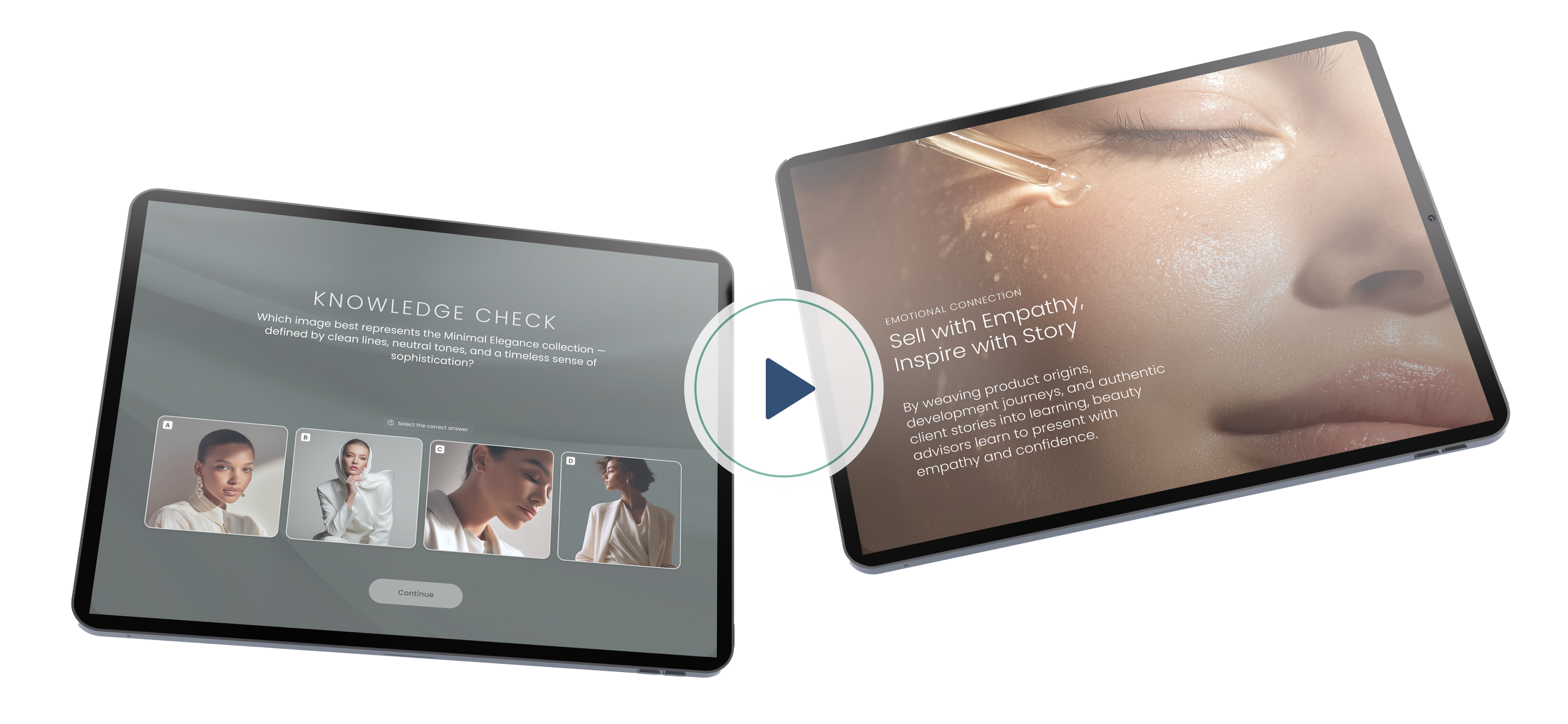
Why Video Is One of the Most Effective Tools for Online Training
Video-based learning is one of the most effective formats for online training because it reflects how people naturally observe, process information, and build understanding.
By presenting information visually and audibly, video supports faster comprehension and stronger learning outcomes across a wide range of training programs.
By combining visual content, audio cues, real-world context, and emotional engagement, video helps learners grasp complex topics, instructional processes, and key messages more quickly. This makes instructional videos, training videos, and on-demand video learning especially valuable for improving knowledge retention and learner confidence.
Research consistently shows that video learning significantly improves information retention when compared to text-only materials. As a result, video is widely used in e-learning, virtual training, and digital learning environments where clarity, speed, and practical application are essential.
Key Benefits of Video in Online Training
Improved knowledge retention
Learners retain significantly more information through video-based learning than through text-only content, making video a powerful tool for online training programs and digital learning.Increased learner engagement
Training videos capture attention and sustain focus more effectively than static materials, leading to higher participation in e-learning courses and virtual training.Faster comprehension of complex topics
Visual demonstrations and instructional videos help learners understand processes and concepts more quickly, reducing overall training time and accelerating skill development.Well suited for mobile-first learning
Video content is ideal for mobile learning, allowing learners to access training anytime and anywhere through learning management systems and online platforms.Stronger emotional and contextual connection
Story-driven video learning creates emotional engagement that improves memory retention and reinforces key messages within training programs.Better real-world application
Observing realistic scenarios through video training improves skill transfer, helping learners apply knowledge more effectively in real situations.Higher course completion rates
Well-designed video-based training modules consistently achieve higher completion rates, supporting better outcomes in online education and employee training.
Video transforms training into an engaging learning experience, enabling learners to absorb information faster, retain it longer, and apply new skills with confidence in real-world contexts.
Video Formats That Support Modern Online Learning
Video learning is no longer limited to a single format. It has evolved into a flexible set of digital learning tools designed to support online training, reinforce knowledge, and encourage continuous learning within daily workflows.
By using a mix of short-form video, interactive video content, and mobile-first learning experiences, organizations can improve learner engagement, strengthen knowledge retention, and support faster skill development. These formats make it easier for learners to access training when they need it and apply new information immediately.
Different video training formats serve distinct learning goals, including knowledge reinforcement, instructional guidance, storytelling, coaching, and peer-to-peer learning. When used together within e-learning platforms and learning management systems, video creates a more dynamic and effective online learning experience.
Key Video Formats and How They Drive Learning Impact
Video quizzes
Short training videos paired with embedded questions activate active recall, reinforce key concepts, and allow organizations to measure learning effectiveness in real time.Expert and leader interviews
Video interviews featuring subject matter experts or leaders add a human dimension to online learning, helping share insights, culture, and proven practices through authentic storytelling.Instructional and demonstration videos
Product and process videos visually explain features, workflows, and use cases, accelerating knowledge acquisition and building learner confidence.Video-based assessments
Learners record responses or demonstrations through video assessments, enabling skills practice, reflection, and personalized feedback within training programs.Microlearning video content
Short, repeatable microlearning videos inspired by social platforms deliver quick reminders and key facts, supporting just-in-time learning throughout the day.Curated video libraries
A centralized, visually organized video learning library within an LMS encourages exploration, self-directed learning, and continuous engagement with training content.Mobile-optimized video formats
Mobile-first video learning is designed for smartphones and tablets, making online training accessible anywhere and supporting learning in the flow of work.Interactive video experiences
Interactive videos include clickable elements, branching scenarios, and decision points that improve learner engagement and strengthen critical thinking skills.User-generated video content
User-generated learning videos empower learners to share best practices, real experiences, and peer knowledge, strengthening collaboration and community learning.
Together, these video learning formats transform video into an active learning engine that increases engagement, supports performance improvement, and brings online training programs to life on a daily basis.
Why Audio and Podcasts Are Powerful Tools for Online Training
Audio learning and podcasts are highly effective tools for online training because they fit naturally into busy, mobile-driven schedules.
Learners can engage with training content while commuting, exercising, or completing routine tasks, making continuous learning more flexible and accessible.
Unlike traditional screen-based formats, audio-based learning allows learners to absorb information without being tied to a device, improving knowledge retention, learning efficiency, and employee engagement. Studies show that people remember up to 65% of information delivered through audio learning, especially when combined with storytelling, expert insights, and real-world examples.
Podcasts and audio modules humanize online learning programs, communicate organizational culture, and reinforce key messages through tone, repetition, and emotion. They provide an engaging, low-pressure way for learners to build skills and knowledge anytime, anywhere, supporting professional development and digital learning initiatives.
Key Benefits of Audio and Podcasts in Online Training
Learn anytime without screens
Audio learning enables learners to engage with training content during low-attention moments such as commuting, exercising, or completing routine tasks, making continuous learning convenient and flexible.Stronger knowledge retention
Audio-based training supports up to 65% information retention, particularly when paired with storytelling, narrative formats, or expert insights, making learning more memorable.High engagement through storytelling
Story-driven audio activates emotion and context, improving memory retention, increasing learner engagement, and making online training more impactful.Ideal for mobile-first learners
Over 60% of learners access audio learning content via smartphones, making mobile learning a key strategy for digital training programs and e-learning initiatives.Reinforces organizational culture and messaging
Podcasts and audio modules convey tone, rhythm, and voice to create authenticity, strengthen brand identity, and communicate organizational values in employee training programs.Supports repetition without fatigue
Audio content is easy to replay, helping learners reinforce key messages and build skills over time without cognitive overload.Cost-effective and scalable
Producing audio-based training is faster and more scalable than video, making it ideal for frequent updates in corporate learning, online training, and professional development programs.Enhances multimedia learning
When paired with video learning, interactive content, or hands-on experiences, audio strengthens recall and reinforces key concepts, creating a more holistic e-learning experience.
Audio and podcasts turn training into a companion for learners, offering accessible, human-centered, and continuous digital learning that supports skill development and performance improvement anytime, anywhere.

Audio Formats That Bring Online Training to Life
Audio learning provides a flexible and effective way to deliver online training without relying on screens.
Learners can engage with training content anytime, making it ideal for continuous learning in busy, mobile-driven schedules.
From in-depth discussions to short, focused insights, audio formats adapt to the natural rhythm of daily work and personal routines. By using a variety of formats, organizations can deliver expert knowledge, reinforce organizational culture, and inspire learners in a human-centered, accessible way.
Incorporating podcasts, microlearning audio clips, and narrative-driven modules into digital learning programs ensures that learners can absorb information effectively, strengthen knowledge retention, and stay engaged across e-learning platforms and corporate training initiatives.
Key Audio Formats for Online Training
Long-form discussions
In-depth conversations with experts, leaders, or trainers explore strategy, processes, or industry insights. These formats are ideal for reflection, thought leadership, and deeper professional development.Short audio capsules
Brief, focused recordings of 1–3 minutes deliver key messages, tips, or quick reminders. These microlearning audio clips are perfect for just-in-time learning and reinforcing important concepts efficiently.Interview-style audio
Human stories and personal experiences from employees, professionals, or subject matter experts bring organizational culture, best practices, and expertise to life, creating relatable learning content.
Additional Audio Formats for Online Training
Instructional or process audio stories
Short, narrative-style recordings explain workflows, concepts, or strategies, making complex topics easier to understand and accelerating knowledge retention.Coaching and feedback audio notes
Personalized voice messages from mentors, managers, or trainers support skill development, reinforce learning, and provide real-time guidance.Daily or weekly audio briefings
Regular updates share priorities, announcements, or key messages, keeping learners aligned with training objectives and improving information recall.Guided scenarios and role-play audio
Simulated conversations and scenario-based audio exercises develop communication skills, critical thinking, and problem-solving, providing safe practice for real-world application.Curated podcast playlists
Organized audio series that combine multiple episodes around a theme or learning goal create immersive and engaging e-learning experiences.
Used together, these audio formats make online training human-centered, continuous, and accessible. They help learners build confidence, reinforce key knowledge, and apply skills effectively across digital learning programs and professional development initiatives.

How The Learning Lab Supports Video and Audio-Based Online Training
The Learning Lab is designed to support how employees learn today: through video learning, audio learning, and short, engaging moments integrated into daily workflows.
Rather than treating video and audio content as static resources, The Learning Lab turns them into interactive learning experiences that improve knowledge retention, boost learner confidence, and drive measurable performance outcomes.
Video and audio content is fully embedded into a mobile-first, digital learning experience. Learners can access instructional videos, expert interviews, and podcast-style modules anytime, anywhere, on smartphones, tablets, or desktops. Interactive video formats such as quizzes, branching scenarios, hotspots, and video assessments transform watching into doing, reinforcing knowledge and tracking skill acquisition. Audio formats like interviews, microlearning capsules, and coaching voice notes allow learning to continue without screens, supporting flexible mobile learning and continuous professional development.
The Learning Lab also offers a discovery-driven learning experience similar to a streaming library, encouraging learners to explore content independently. Short video and audio modules help reinforce key concepts daily, while user-generated content empowers employees to contribute knowledge, share best practices, and learn collaboratively, making online training programs more social, authentic, and evolving.
By combining video learning, audio learning, interactive content, and mobile-first design, The Learning Lab does more than host training materials. It transforms digital learning into a living, engaging learning experience that supports skill development, knowledge retention, and performance exactly when and where it matters.