
5 Tips to Develop an E Learning Strategy for a Beauty Brand
A practical framework to connect skincare and makeup expertise, consultation quality, retail excellence, brand storytelling, product launches, and omnichannel customer experience across stores and markets.
A beauty brand needs more than a course library. It needs a learning strategy that helps advisors speak with credibility, recommend with confidence, and deliver a brand experience that feels consistent across stores, counters, markets, and digital touchpoints. Search results tied to beauty advisor education and beauty product training already show the same pattern: strong programs connect product knowledge, consultation skills, objection handling, customer loyalty, and practical business literacy rather than treating education as product facts alone.
This is why strategy matters more than volume. Current workplace learning research shows that career progress is people’s number one motivation to learn, and organizations with stronger career development practices see higher engagement, promotions, and adaptability. Frontline training guidance also points to mobile learning, microlearning, multilingual access, blended formats, assessments, and manager involvement as core conditions for modern retail learning because store teams need training in the flow of work, not only in formal sessions.
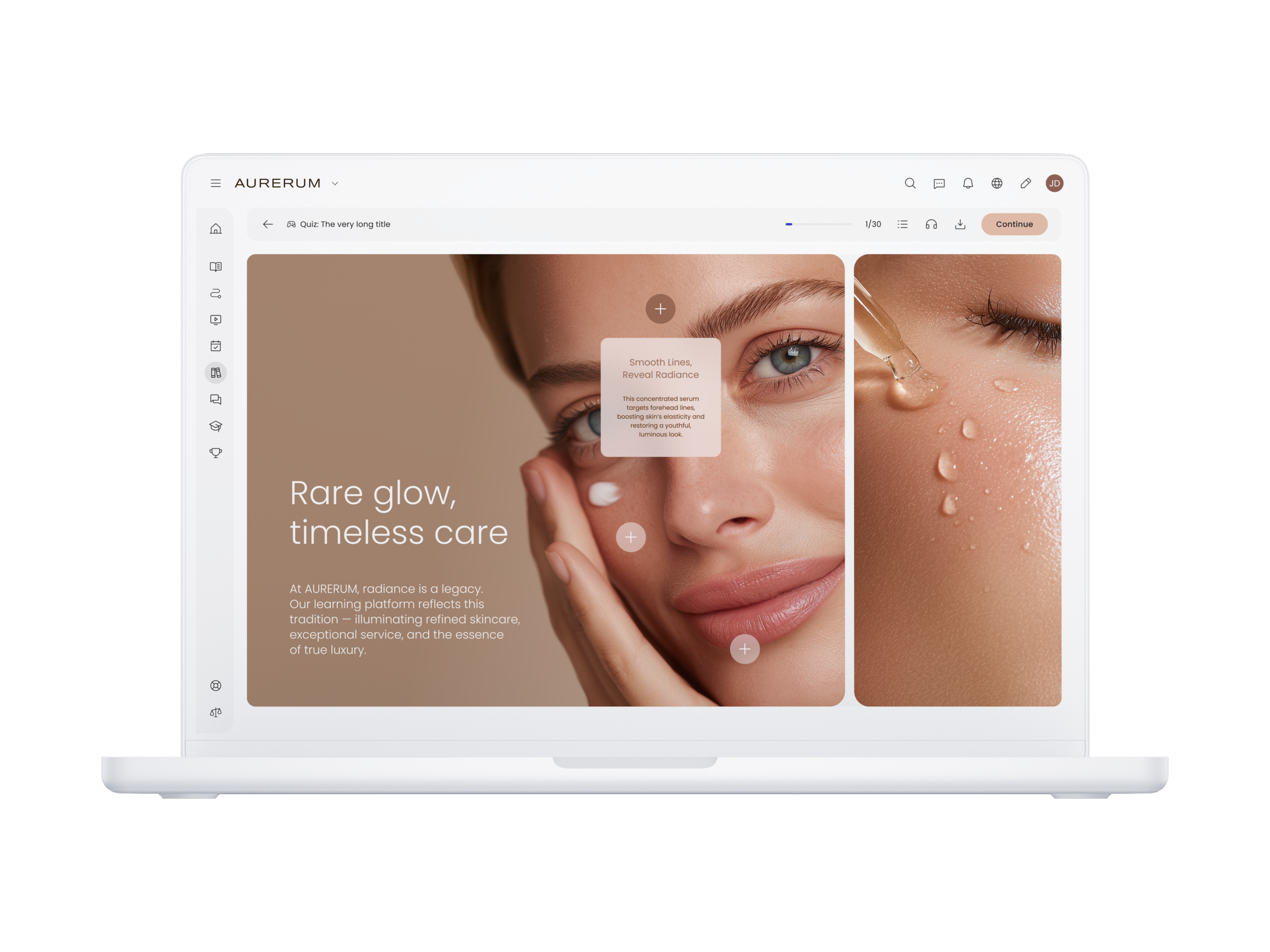
For beauty, this creates a very specific opportunity. A good e learning strategy can connect hero products, service rituals, consultation quality, launch readiness, and certification into one branded learning journey. A great one can do even more. It can make learning feel welcoming, personal, easy to navigate, visually premium, and professionally relevant. It can use Learning Lab LMS as the structured delivery environment and work with Penceo Creative Agency to shape the design language, campaign rhythm, and content system so the experience feels coherent season after season.
Start with business goals and define who the learners really are
The first mistake many beauty brands make is starting with content requests instead of business goals.
A team asks for training on a new serum, a foundation launch, or a consultation model, and the learning plan grows as a collection of separate modules. That usually creates activity, but not strategy.
A better approach begins with the commercial and brand outcomes the learning should support. In beauty retail, those outcomes often include stronger consultation quality, greater confidence in hero products, better shade and skincare recommendations, more credible ingredient storytelling, better omnichannel service, faster onboarding, and more consistent brand language across markets. Beauty advisor education sources highlight the importance of assessing customer needs, recommending the right products and shades, handling objections, and turning service moments into sales success, which shows how tightly learning is connected to commercial performance in this sector.
Once the business goals are clear, the next step is learner definition. Beauty brands do not have one audience. They have retail advisors, makeup artists, skincare specialists, boutique managers, field trainers, customer care teams, and often counter staff working in different environments with different levels of experience. Frontline learning best practice also emphasizes role based pathways because effective learning is closely tied to real job context rather than generic training for everyone.
That means a beauty brand should design separate learning paths for different roles and maturity levels. A new beauty advisor needs foundation knowledge and confidence. A top performer needs advanced consultation practice and deeper product storytelling. A manager needs coaching tools and visibility into team readiness. A field trainer needs campaign assets, facilitation guides, and regional consistency.
Strategic foundations to define first
Identify the business outcomes the training should support, such as consultation quality, product sell through, launch readiness, service consistency, or compliance confidence.
Map the main learner groups across retail, education, management, and customer support.
Separate beginner, developing, and advanced levels so the learning feels progressive and relevant.
Define what professional growth looks like for each audience, including certification, expertise markers, and manager recognition.
Clarify the role of stores, counters, digital commerce, and customer care in one omnichannel brand experience.
A beauty brand cannot build a serious e learning strategy until it knows what business performance it wants to improve and which learners need to change behavior to make that happen. Strategy starts with commercial clarity and learner precision, not with a pile of content requests.
Build a branded content system that feels personal, welcoming, and easy to use
Beauty training is highly visual, highly sensory, and highly emotional.
If the learning environment feels generic, dense, or difficult to navigate, the content loses impact before the learner even starts. This is why content strategy and content design should be planned together. The experience must feel like the brand.
Beauty product training guidance already points toward interactive learning experiences that include product benefits, ingredients, usage techniques, customer scenarios, video tutorials, gamified quizzes, role play simulations, and scenario based learning to build confidence and expertise. The same beauty training guidance also highlights certifications, recognition, and mobile first access so staff can learn at their own pace while still representing the brand consistently.
For strategy, this means every content type should have a clear role. Product knowledge should be easy to find and easy to revisit. Consultation skills should be practiced through scenarios and guided choices. Service standards should feel human and brand specific. Compliance should be simplified into practical decisions. The whole system should feel welcoming, not bureaucratic.
This is where Learning Lab LMS becomes useful as the structured home for the learning journey. It can hold the pathways, organize access by role, surface daily messages, and support certification logic. Penceo Creative Agency can then help turn the content system into a branded experience through visual templates, campaign rhythms, tone of voice guidance, video style, and interface storytelling that feel premium and consistent.
What the branded content system should include
A clear home page organized around roles, priorities, and next steps so learners do not feel lost.
Branded templates for product modules, consultation scenarios, launch briefings, and certification tasks.
Easy access to product knowledge by line, concern, hero ingredient, finish, shade family, or routine step.
Short welcome formats that help new learners feel guided rather than overwhelmed.
Personalized recommendations based on role, performance, or current commercial focus.
A visual language that reflects the beauty brand through imagery, tone, typography, and content rhythm.
Searchable reference areas for quick access to ingredients, claims, usage methods, and cross sell logic.
A strong beauty learning strategy is not only about what is taught. It is also about how the learning feels. If the experience is branded, clear, welcoming, and easy to use, the brand earns more attention, more trust, and better retention from the people who represent it every day.
Choose delivery formats that support mobile visibility, retention, and daily use
The most effective beauty learning strategy is not one long program.
It is a rhythm. Frontline learning guidance consistently shows that mobile learning, microlearning, blended learning, assessments, and continuous support are central to modern retail capability because people learn better when content fits the flow of work. For beauty teams, that is especially true because product updates, service rituals, and launch priorities change constantly.
A smart delivery strategy should therefore combine several layers. First, core pathways should build foundation knowledge on skincare, makeup, haircare, fragrance, service standards, and consultation logic. Second, daily and weekly micro moments should reinforce recall through messages, quick quizzes, short videos, and product spotlights. Third, live practice should validate knowledge through role play, shade matching discussion, routine building, and objection handling. This mix is more likely to stick because it blends digital repetition with real application.
Daily messages are especially useful. They keep the platform active, support campaign focus, and remind staff that learning is part of work rather than an event outside work. A daily message can spotlight one hero ingredient, one key routine question, one service phrase, one launch reminder, or one client concern. Microlearning research for frontline teams also points to short, mobile first moments as especially effective when they are easy to access during the day and linked to performance needs.
Gamification should also support this rhythm. In beauty, it works best when it reinforces progress and recognition rather than turning learning into noise. Beauty training guidance already highlights gamified quizzes and achievement based learning as effective ways to build confidence and maintain engagement. Used well, gamification can support routine, competition, and pride without weakening premium perception.
Delivery formats that work well for beauty brands
Mobile first micro modules for hero products, ingredients, and selling stories.
Daily messages with one product tip, one consultation cue, or one launch reminder.
Short video learning for application technique, texture explanation, and consultation modeling.
Scenario based quizzes for objections, shade concerns, ingredient questions, and service recovery.
Gamified streaks, badges, and seasonal challenges to keep momentum visible.
Live sessions for practice in diagnosis, recommendation, and ritual delivery.
Manager follow up moments that connect digital learning to real floor behavior.
Beauty learning becomes stronger when it moves from occasional training to daily reinforcement. Mobile visibility, bite sized refreshers, and well judged gamification keep knowledge close to the learner and easier to use when the client moment begins.

Organize learning around hero products, launch calendars, and professional growth
A beauty brand should treat education as a living commercial calendar, not a static curriculum.
Launches, hero products, category moments, seasonal campaigns, and new routines should shape what the learner sees and when they see it. This is one of the clearest ways to make learning feel useful and timely.
The strategic value of hero products is simple. They carry the highest storytelling burden and often the greatest commercial potential. If teams know those lines deeply, they perform better in consultations and speak with more authority. Beauty advisor training sources also show that strong programs teach product knowledge in ways that help advisors assess needs, recommend correctly, and build loyalty, which is exactly why hero products should sit at the center of the learning design.
A strong beauty strategy should therefore identify hero categories and build pathways around them. One path may focus on skin diagnosis and treatment logic. Another on complexion and shade confidence. Another on fragrance storytelling. Another on service and clienteling. Inside each path, the brand can move from foundation to specialist level and attach certifications that feel professionally relevant. Current workplace learning research supports this kind of structure because career progress and visible development are major motivators for learning engagement.
Certification matters here because beauty advisors want professional credibility, not only completion marks. A thoughtful certification system can help professionalize learners, encourage progression, and create pride in the role. This is especially important for brands that want their advisors to be perceived not only as sales staff, but as trusted beauty experts.
How to structure the yearly learning calendar
Define the hero products and hero lines that deserve the deepest learning support.
Build launch based campaigns that start before product arrival and continue after release.
Create progression pathways from foundation to specialist to expert level.
Attach meaningful certification to key categories such as skincare consultation, complexion expertise, ingredient fluency, or service excellence.
Use Learning Lab LMS to assign, track, and refresh the pathways by role, market, and campaign period.
Use Penceo Creative Agency to turn launches into beautiful learning campaigns with visual consistency, emotional storytelling, and reusable branded assets.
When learning is tied to hero products, launch rhythm, and professional certification, it stops feeling like a side task. It becomes part of how the brand grows expertise, confidence, and commercial performance across the year.
Measure impact beyond completion and build the strategy with the right partners
The final stage of an e learning strategy is measurement, but measurement should never begin and end with course completion.
Completion can tell you who opened the material. It cannot tell you whether the learner became more credible with customers, more accurate in recommendation, or more confident with hero products.
That is why impact needs broader indicators. Workplace learning research links strong learning cultures to engagement, promotions, career growth, and adaptability, which reinforces the idea that learning metrics should reflect business and people outcomes rather than attendance alone. Frontline learning guidance also points to assessments, analytics, and manager visibility as necessary elements of a modern retail learning model.
For a beauty brand, this means combining learning data with retail signals. Track completion, of course, but also track certification achievement, assessment accuracy, speed to readiness for launches, manager observations, consultation quality, and consistency across branches. If possible, connect learning campaigns to business indicators such as product focus sell through, service consistency, or reduced knowledge gaps during launches.
This is also where partnership matters. Learning Lab LMS can provide the structure for dashboards, learning paths, user segmentation, and campaign reporting. Penceo Creative Agency can help define the creative system behind the strategy so that content remains premium, emotionally consistent, and easy to refresh over time. A beauty brand that combines platform discipline with creative direction is much more likely to build a learning ecosystem that lasts.
Metrics that matter more than raw completion
Assessment accuracy on products, routines, and consultation scenarios.
Speed to launch readiness for hero products and key campaigns.
Certification completion by role and market.
Manager validation of consultation quality and service behaviors.
Repeated engagement with daily messages and microlearning touchpoints.
Evidence that product knowledge is easier to find and easier to use in store.
Stronger consistency in how teams explain the same product across branches.
A beauty e learning strategy is only as strong as its evidence. When the brand measures readiness, confidence, certification, and real use of knowledge, learning becomes easier to defend, improve, and scale.
The best beauty learning strategy turns product training into professional identity
A beauty brand should not think of e learning as a technical requirement or a content archive.
It should think of it as the system that turns product knowledge into confident consultation, launches into store readiness, and brand storytelling into daily customer trust. That is why strategy matters so much. Beauty teams need more than scattered modules. They need a learning ecosystem that is branded, easy to navigate, mobile visible, commercially relevant, and strong enough to support both expertise and growth.
Current workplace learning patterns make this even clearer. People are strongly motivated by career progress, and organizations that take development seriously create more engagement and stronger adaptability. Frontline learning guidance also shows that mobile first access, bite sized learning, assessments, role based pathways, multilingual reach, and blended support are no longer optional extras for retail learning. Beauty specific training content reinforces the same lesson from another angle: strong learning builds confidence through interactive product education, scenario based consultation practice, gamified quizzes, certifications, and flexible access that supports brand consistency and customer trust.
That is the opportunity for beauty brands in 2026. Build around business goals first. Define the learners clearly. Design a branded and welcoming content system. Make product knowledge easy to reach. Create daily learning rhythm through micro content, video, gamification, and reminders. Organize the calendar around hero products, launches, and professional certifications. Then measure impact beyond completion so learning can prove its value.
Learning Lab LMS can give this strategy a stable delivery structure, while Penceo Creative Agency can help shape the creative language, launch storytelling, and design logic that make the experience feel premium and memorable. When those pieces come together, education managers and commercial teams stop treating training as a support function. They start using it as a real growth driver.
That is the real goal of an e learning strategy for a beauty brand. Not simply to teach products, but to professionalize the learner, strengthen the customer experience, and help every advisor represent the brand with greater clarity, authority, and care.
