
Why Modern Brands Need a Learning-First LMS
How a Branded Learning Platform Accelerates Training and Drives Consistent Performance
Modern brands face constant pressure to deliver products, services, and experiences that meet evolving consumer expectations. Rapid growth in any sector—from fashion and sportswear to wellness and lifestyle—means teams must master knowledge quickly, align with brand standards, and apply insights consistently across locations and partners.
Generic learning platforms often fall short because they treat training as a static library of content rather than a strategic business tool. A branded learning platform addresses this by combining interactive learning, mobile access, and analytics-driven insights to ensure teams not only understand product information but also internalize brand values, messaging, and best practices.
Key benefits include:
Brand alignment and visual consistency – Training modules reflect the look, tone, and identity of the organization, so employees absorb not just facts but the cultural and stylistic expectations of the brand.
Engaging digital content – Video, interactive assessments, quizzes, and simulations make learning more memorable, helping teams apply knowledge in practical scenarios.
Mobile-first access – Learning can happen anytime, anywhere, enabling teams to engage with content during natural workflow moments and keep skills up to date.
Role-based learning journeys and blended programs – Tailored paths guide employees through content relevant to their responsibilities, combining digital modules with practical exercises and coaching for stronger retention.
Analytics and operational oversight – Reporting tools track progress, highlight knowledge gaps, and allow managers to optimize training rollout and team readiness efficiently.
By using a learning platform designed for brand consistency and operational effectiveness, organizations can accelerate team development, ensure everyone delivers a consistent experience, and turn learning into a measurable driver of performance.
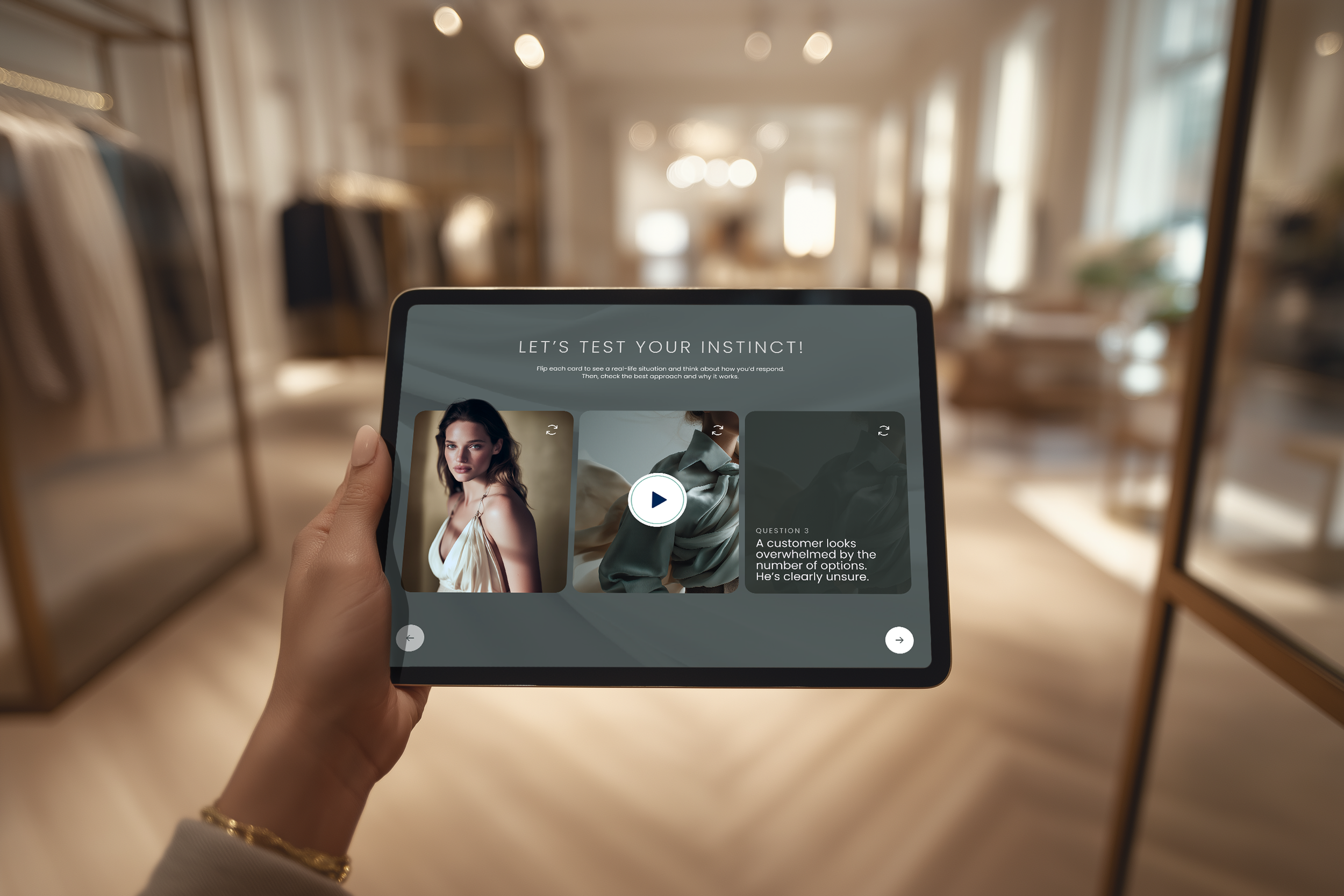
Brand Identity and Visual Experience in Learning Platforms
A modern LMS should reflect an organization’s brand identity and values before the first lesson begins. By integrating branding, customizable pages, branching pathways, and flexible course structures, an LMS transforms training into a fully branded learning experience rather than a generic platform.
Generic LMS solutions often feel neutral and interchangeable. While they may work for compliance or administrative training, they fail to engage teams in industries where brand consistency, visual codes, and cultural standards matter. A branded LMS mirrors the organization’s typography, imagery, navigation, tone of voice, and content structure, making learning feel immersive, relevant, and emotionally aligned with the brand.
Branching allows separate LMS pathways for different audiences—such as internal teams, regional offices, or external partners—while maintaining central oversight. Page builders give administrators creative control to design onboarding hubs, thematic modules, or campaign launches without sacrificing speed or quality. Custom course structures let organizations organize content logically by skill, category, role, or region, making learning intuitive and practical.
Brand integration in the LMS ensures training aligns with the organization’s identity and culture.
Branching paths provide audience-specific learning without losing central control.
Page builder tools enable polished and creative course design.
Custom course structures support intuitive organization of content that matches workflows.
The real impact is not just visual. A branded LMS increases engagement, knowledge retention, and user trust, creating a learning ecosystem that connects teams to the organization’s mission and strengthens overall performance.
Video Learning and Interactive Content
Effective learning works best through visuals, motion, and hands-on interaction. Video-based lessons, interactive assessments, scenario exercises, hotspots, and embedded quizzes transform passive watching into active skill development, helping learners absorb complex ideas faster and more effectively.
This approach is ideal for subjects that rely on demonstration and applied practice. Techniques, processes, workflows, or product details are easier to grasp through video, interactive elements, and scenario-driven storytelling than through long text or static slides.
Video modules are especially valuable during launches or updates. Embedded quizzes, decision points, and hotspots create active proof of understanding, ensuring learners can apply knowledge instead of just consuming content.
Interactive tools strengthen engagement. Flash cards, simulations, live assessments, and scenario challenges create moments where learners must observe, decide, and respond, building practical confidence and critical thinking.
Rich media also supports cultural and emotional learning. Videos and interactive exercises help teach tone, pacing, gesture, and communication, making lessons more engaging, memorable, and applicable in real-world situations.
Video modules highlight processes, movement, and practical techniques clearly
Interactive assessments turn learning into active participation
Scenario-based exercises develop problem-solving and decision-making skills
Collaborative features encourage peer discussion, feedback, and reflection
High-quality video and interactive content ensure learners gain deep understanding, applied skills, and confidence, while keeping training engaging, relevant, and impactful.

Mobile Access and Learning in Daily Workflow
Modern learners are not always at a desk. Fast-paced environments demand training that moves with them and integrates seamlessly into daily routines.
Short, engaging content, mobile access, push notifications, video demonstrations, and real-time analytics are essential for learning that is accessible, practical, and effective. Platforms that assume learners are stationary often fail to meet these needs.
Mobile access ensures lessons are available wherever the learner is. Offline functionality allows engagement without interruptions, while push notifications deliver timely reminders and updates that keep learning on track. Microlearning and nano learning formats break content into digestible, actionable bursts, helping learners retain information and apply it immediately.
Interactive mobile features also encourage continuous engagement. Video demos, scenario exercises, and quick quizzes make each session active rather than passive, reinforcing knowledge at the moment it is needed. Analytics allow managers or team leaders to monitor progress, assign paths, and provide real-time coaching, turning learning into a dynamic, measurable practice rather than a static requirement.
Mobile access lets learners engage anytime, anywhere
Microlearning delivers short, actionable lessons for rapid skill uptake
Push notifications provide timely updates and reminders
Real-time analytics support coaching, feedback, and progress tracking
When learning fits naturally into the daily workflow, it becomes part of the routine rather than an extra task. Mobile-first strategies make training efficient, consistent, and results-oriented, giving teams the tools to learn faster, retain more, and perform confidently.

Role-Based Learning Journeys and Blended Training
Not all learners require the same content. Personalized learning paths ensure training matches roles, responsibilities, and real-world application.
Platforms with role-based paths, adaptive learning, blended formats, and live sessions allow organizations to structure training efficiently while keeping it relevant. This approach supports diverse roles, from entry-level staff to team leaders or external partners, each needing different levels of depth, practical exercises, and skill reinforcement.
Structured learning journeys guide participants step by step, adapting content based on role, progress, and performance. Roles and permissions enable administrators to manage content creation, review, translation, and assignment efficiently, maintaining consistency and quality across the organization.
Blended training combines online modules, live webinars, interactive workshops, and coaching moments to bridge digital learning with hands-on practice. Hybrid adaptive learning personalizes the path further, ensuring each participant receives content that is meaningful and actionable without sacrificing overall standards.
Learning paths create clear, structured development journeys
Roles and permissions maintain quality and governance
Blended learning merges digital speed with practical coaching
Hybrid adaptive learning personalizes content while preserving consistency
When learning is structured, role-specific, and blended with real practice, teams gain knowledge faster, retain skills longer, and can apply them confidently. This approach ensures training is relevant, measurable, and performance-driven rather than generic or one-size-fits-all.
Reporting, Rollout Speed, and Operational Control
Modern learning platforms are not just about delivering content—they also provide speed, visibility, and control for teams managing training programs, updates, and performance tracking.
Advanced platforms emphasize reporting and analytics, project management, notifications, automatic translation, API integrations, and group-level insights. These tools let organizations monitor engagement, identify knowledge gaps, and scale training efficiently without losing oversight.
Agile rollout is critical for industries with fast-changing products or services. Platforms that support rapid content creation, updates, and global deployment ensure learning keeps pace with business priorities and organizational changes.
Reporting and analytics provide detailed insights on course completion, assessment performance, learning path progress, and content interaction, while administrator views make this information actionable for coaching, feedback, and optimization.
Notifications and reminders boost participation and engagement by delivering timely messages through email, in-app alerts, or push notifications. These features help teams stay aligned, track adoption, and measure the effectiveness of learning initiatives.
Global accessibility is enhanced through automatic translation and seamless integrations such as SSO and APIs. These features ensure content reaches diverse audiences consistently and connects smoothly with enterprise systems like HR platforms or project management tools.
Reporting tracks completion, comprehension, and performance
Project management tools streamline content creation and deployment
Notifications activate learners and reinforce engagement
Translation and integrations support global scale and consistency
When training is fast, trackable, and globally accessible, it becomes a strategic tool rather than a static resource. Organizations gain operational control, ensure consistent learning experiences, and turn education into measurable business impact.
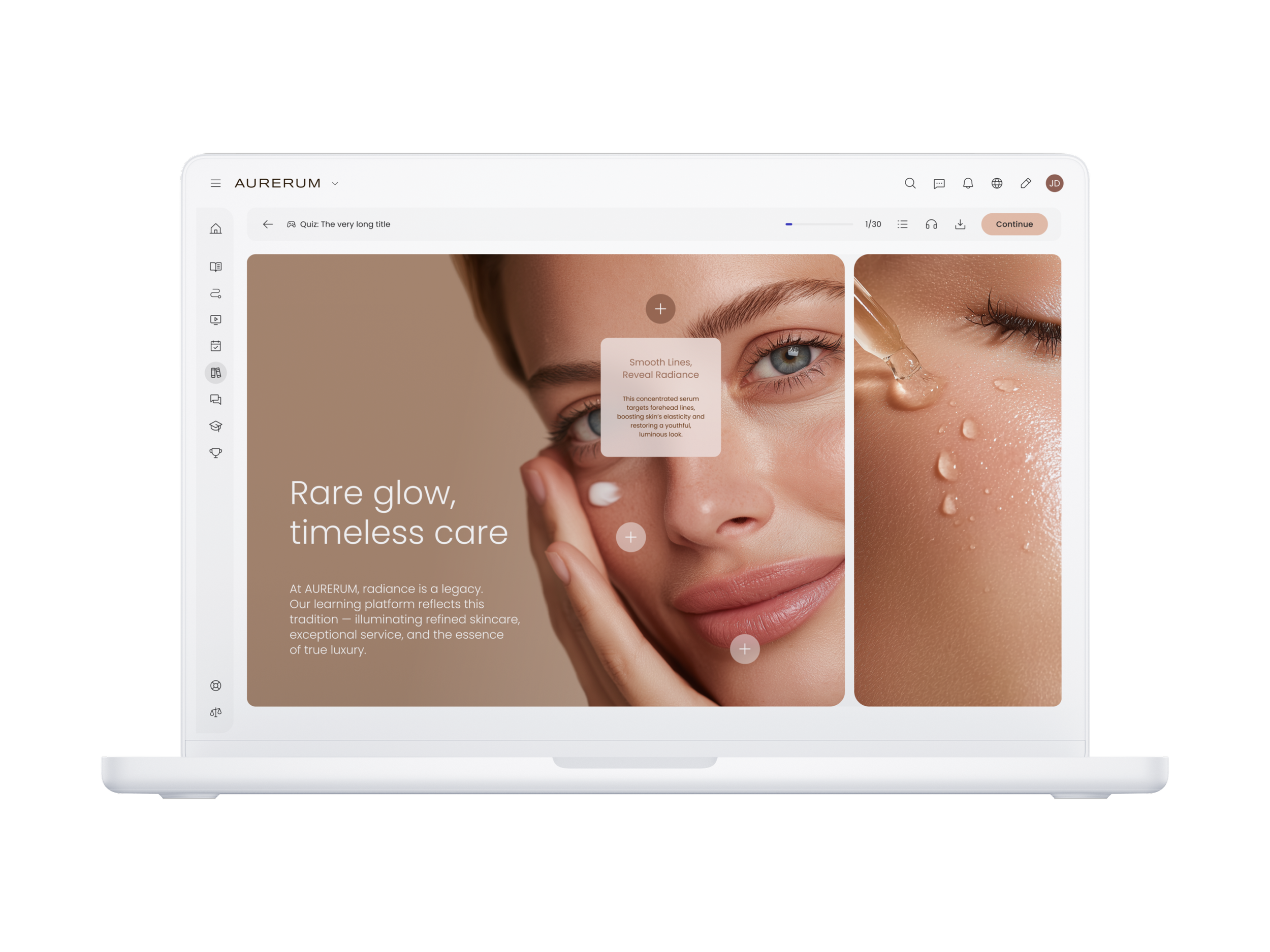
Modern sportswear companies need a learning platform that reflects the pace and demands of their industry. This sector is defined by fast product cycles, high visual standards, premium service expectations, and teams that benefit from mobile, branded, and practical learning integrated into daily workflows.
That is why a specialized LMS makes more sense than a generic platform. Features such as brand integration, video-based learning, mobile access, role-specific learning paths, blended delivery, analytics, notifications, and rapid content creation align closely with how sportswear companies train, launch products, and maintain performance standards.
The Learning Lab stands out because its capabilities are designed around execution and operational impact rather than simple content storage. It offers white-label branding, mobile learning tools, creative authoring, structured learning journeys, social interaction, and in-depth reporting—allowing teams to maintain brand consistency, accelerate skill development, and scale training efficiently.
For organizations that want both a flexible learning environment and a strategic approach to learning design, The Learning Lab provides the infrastructure and guidance needed to connect knowledge, storytelling, and operational performance. This combination ensures training is engaging, measurable, and directly aligned with business outcomes.