
Learning in Motion: Video-Based Training Today
Learning in Motion: How We Design Video-Based Learning
At The Learning Lab, we design video-based learning solutions as a central component of modern training strategies, not just as a supplementary format.
In fast-paced work environments where time is limited and attention is fragmented, video provides the most effective way to deliver engaging, memorable, and actionable training, particularly on mobile devices.
Short, visual, and emotionally compelling, video reflects how employees naturally consume content today. It enables learners to see skills, processes, stories, and behaviors in context, making knowledge easier to understand, retain, and apply in real-world scenarios.
By combining mobile-first design, interactive experiences, and storytelling techniques, we turn training into a dynamic learning journey. This approach integrates seamlessly into the workflow, helping employees apply knowledge with confidence and improve performance at the moment it matters most.
Short Video InstaLearning: Training at the Speed of Modern Work
Short, video-based InstaLearning is one of the most effective ways to deliver knowledge and skills in fast-paced environments where time is limited and attention is fragmented.
Bite-sized, mobile-first videos, typically under two minutes, allow employees to quickly absorb key concepts, processes, or best practices anytime, anywhere, whether between tasks or during short breaks.
Research shows that nanolearning formats can improve knowledge retention by 20 to 30% and increase training completion rates by more than 50% compared to traditional long-form learning.
By aligning learning with the natural rhythm of daily work, short video InstaLearning keeps teams continuously engaged with learning content, practical skills, and organizational knowledge, without disrupting productivity or workflow.
Video Assessment and UGC: Turning Learners into Active Contributors
Combining video assessment with User-Generated Content (UGC) transforms learning from passive consumption into active skill practice.
By recording themselves demonstrating key skills, scenarios, or workflows, learners reinforce knowledge through real-world application while building confidence and self-awareness.
Research shows that learning by doing can improve skill transfer by up to 75%, and peer-shared content significantly increases engagement, motivation, and credibility.
Video UGC also creates a powerful collaborative feedback loop: learners gain insights from each other, best practices emerge organically, and assessment becomes a motivating, interactive experience rather than a purely formal evaluation.

Interactive Video with Rich Hotspots: Learning by Exploring
Interactive videos with rich hotspots transform video from a passive medium into an active learning experience.
By clicking within the video to uncover details, comparisons, or key concepts, learners engage both cognitively and emotionally with the content.
Research shows that interactive video learning can boost engagement by 40 to 60% compared to traditional linear video, while also improving knowledge retention and practical application.
This format encourages learners to explore, experiment, and interact with information, making training more intuitive, memorable, and immediately applicable in real-world scenarios.
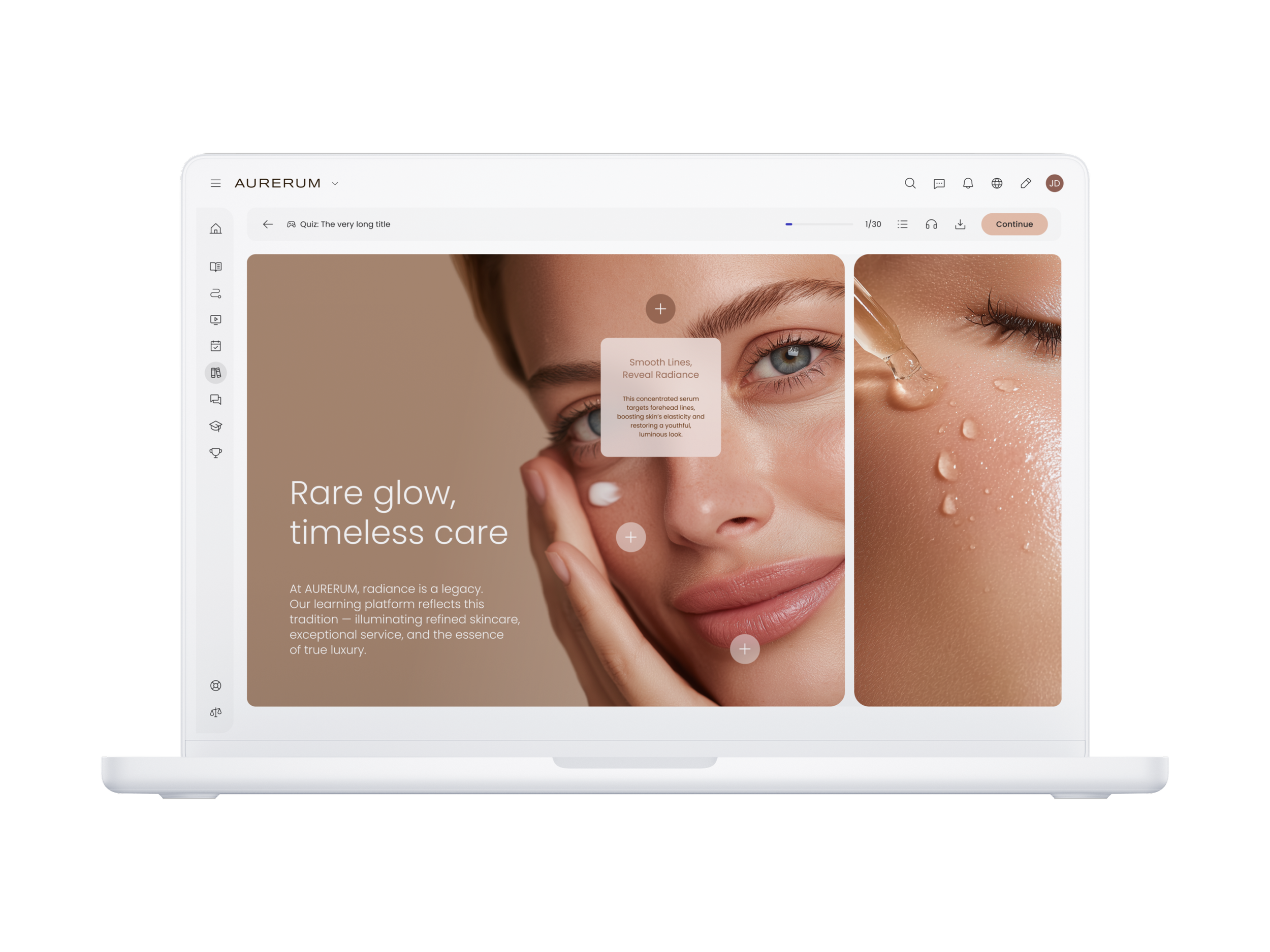
Image Hotspots with Video Pop-Ups: Visual Discovery at a Glance
Image hotspots with video pop-ups combine the power of high-quality visuals with short, contextual video explanations, creating an engaging, interactive learning experience.
By clicking on specific areas of an image, learners instantly access micro-videos that highlight features, processes, or key details.
Research shows that visual-interactive learning can improve knowledge recall by up to 65%, while hotspot-based content reduces cognitive load by delivering information exactly when and where it is needed.
Key benefits:
Faster comprehension: Visual cues paired with short videos accelerate understanding by 30 to 40% compared to text-only explanations
Stronger memory retention: Images combined with motion activate dual-coding, increasing retention by up to 60%
Ideal for detailed learning: Perfect for complex processes, product features, or technical skills where precision matters
Mobile-friendly exploration: Tap-based hotspots work seamlessly on smartphones and tablets, supporting learning in the flow of work
Reduced cognitive overload: Learners access information on demand, lowering drop-off rates by 20 to 25%
Enhanced experiential learning: Mirrors real-world exploration, making knowledge easier to apply immediately
This format transforms static visuals into interactive learning moments that are clear, engaging, and highly effective for skill development and knowledge transfer.
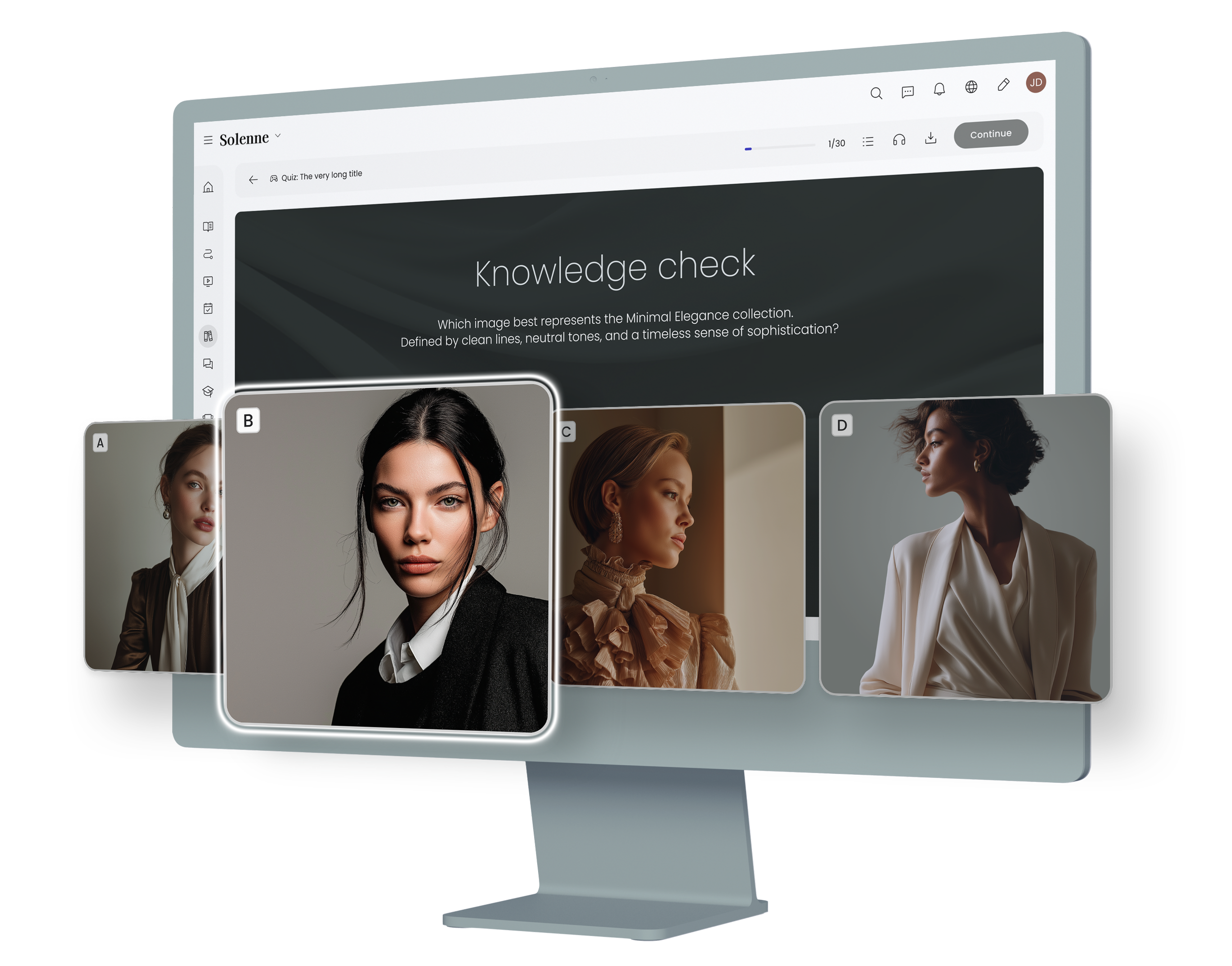
Video Quizzes: Turning Viewing into Active Decision-Making
Video quizzes embed knowledge checks directly into video content, transforming passive viewing into active learning and decision-making.
Instead of watching videos from start to finish, learners are prompted at key moments to answer questions, make choices, or react to scenarios. This keeps attention high, reinforces understanding in real time, and mirrors the critical thinking and decision-making required in the workplace. Research shows that interactive video formats can increase engagement by up to 2× and improve knowledge retention by 30 to 40% compared to linear video alone.
Key benefits:
Higher engagement: Interactive prompts reduce passive viewing and increase completion rates by 25 to 50%
Stronger retention: Immediate application boosts recall by 30 to 40% versus post-video quizzes
Active learning mindset: Learners think, decide, and reflect—closer to real-world scenarios
Real-time feedback: Instant responses clarify misunderstandings before they become habits
Shorter learning cycles: Embedded checks reduce the need for separate assessments, saving time
Versatile scenarios: Ideal for reinforcing concepts, workflows, problem-solving, and procedural skills
Video quizzes keep learners alert, involved, and accountable, turning every video into a practical learning experience rather than passive consumption.
Storytelling & Testimonials: Anchoring Learning Through Emotion
Storytelling and testimonials bring learning to life by connecting knowledge to emotion, identity, and real-world experience.
Authentic stories shared by experts, peers, or team members translate concepts, processes, and organizational values into meaningful narratives that resonate with learners.
Neuroscience shows that information delivered through stories is remembered up to 22 times more than isolated facts, making storytelling one of the most powerful tools to anchor learning, motivation, and engagement.
Key benefits:
Stronger memory retention: Story-based learning is remembered up to 22× more than isolated facts
Emotional engagement: Emotion-driven content increases engagement by 2–3× compared to rational-only formats
Value alignment: Testimonials reinforce culture, principles, and best practices through real voices
Credibility and trust: Peer and expert stories are perceived as more authentic than top-down messaging
Faster knowledge transfer: Real-life examples accelerate understanding and application
Connection and belonging: Sharing internal stories strengthens team identity and emotional engagement
Storytelling transforms training into experiential learning, where knowledge is not only understood but felt, remembered, and applied in meaningful ways.
Live Video Sessions & Group Discussions: Learning Through Dialogue and Connection
Live video sessions and group discussions bring human interaction back into digital learning.
By enabling real-time exchanges with trainers, experts, and peers, these formats transform learning from passive consumption into active dialogue and collaborative problem-solving.
Research shows that social and discussion-based learning can improve knowledge retention by up to 30% and increase learner engagement by 30 to 40% compared to on-demand-only formats.
Key benefits:
Higher engagement: Live, interactive sessions keep learners actively involved
Improved retention: Discussion-driven learning reinforces understanding and memory
Faster problem-solving: Real-time Q&A clarifies concepts and accelerates comprehension
Peer learning at scale: Group discussions allow learners to share experiences, insights, and best practices
Stronger community: Live interactions foster trust, connection, and a collaborative learning culture
Immediate feedback: Trainers and experts can adjust content in real time to meet learner needs
Live video sessions and group discussions turn learning into a shared, collaborative experience, deepening understanding, reinforcing confidence, and keeping teams connected beyond static content.
Video Chat Around Learning Content: Learning Through Conversation
Video chat integrated directly with learning content creates a continuous loop between learning, feedback, and coaching.
Whether asynchronous or live, these video exchanges allow learners, managers, and instructors to respond to specific modules, scenarios, or tasks in context.
By combining content with conversation, learning becomes interactive, personalized, and immediately actionable, helping learners develop skills faster and more effectively.
Key benefits:
Contextual learning: Feedback linked to specific content improves understanding and practical application by 25–30%
Faster skill development: Video-based coaching accelerates behavior change by up to 40% compared to written feedback
Higher participation: Learners are twice as likely to engage through video responses than text-only comments
Personalized coaching: Instructors can address individual strengths and gaps with precision
Scalable mentorship: One-to-one or small-group video exchanges extend expertise across teams and locations
Stronger confidence: Seeing and hearing feedback builds trust and reinforces professional presence
By embedding video chat within learning content, education becomes a dialogue, not a monologue, turning knowledge into confident action through continuous, human-centered interaction.
Conclusion: Learning in Motion: The Rise of Video-First Learning
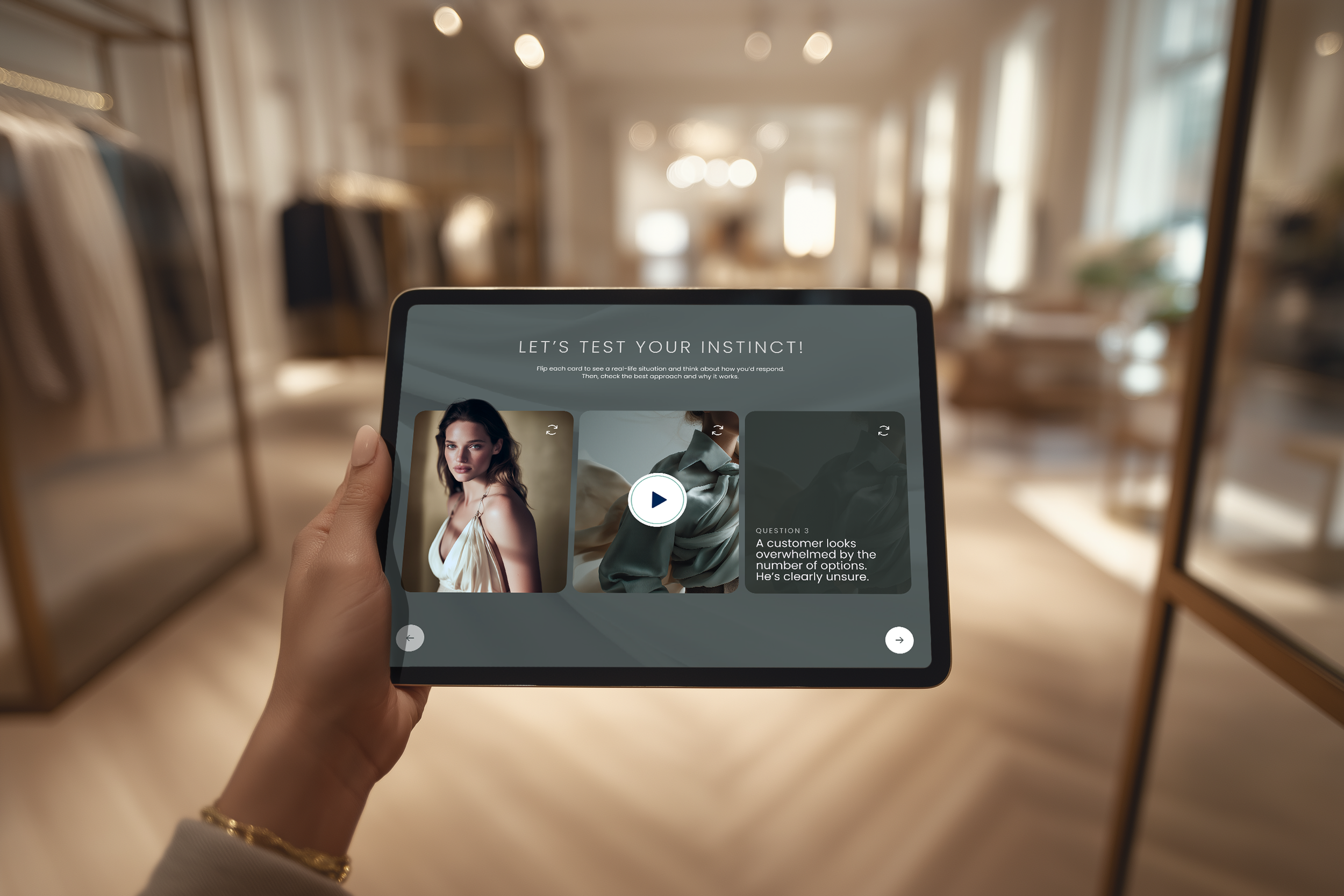
At The Learning Lab, video is not just a format—it is a dynamic language for modern learning.
By combining short, mobile-first videos, interactive elements, authentic storytelling, and continuous conversation, we transform passive viewing into active skill practice and knowledge application.
This approach anchors learning in real-world scenarios, builds confidence, and connects knowledge directly to performance outcomes.
In fast-paced environments where time is limited and results matter, video emerges as the most natural, engaging, and effective way to learn, share knowledge, and develop skills.