
Hard Skills, Soft Skills to Enhance Store Performance
How digital training and in person development can build hard skills, soft skills, and stronger retail performance.
Store learning is changing fast, and fashion brands cannot train people the way they did five years ago. Younger employees arrive with different expectations, faster learning habits, and a stronger need for development that feels useful, flexible, and personal from day one.
That shift matters for every fashion house with stores, corners, pop ups, or clienteling teams. The sales floor moves quickly, collections rotate fast, and customer expectations are higher than ever. A store associate may need to explain the story behind a new leather finish in one moment, manage a complex return in the next, and then collaborate with stock, client services, and visual merchandising before the day ends. Learning has to keep pace with that reality.
Research strongly supports this change. Deloitte reports that learning and development remains one of the top reasons Gen Z and millennials choose an employer, and its 2025 findings also show strong demand among younger workers for mentorship and practical learning, not just formal content. LinkedIn’s 2025 Workplace Learning Report adds that career progress is the number one reason people are motivated to learn, which means training is now tied directly to retention, engagement, and internal growth.
For fashion retail, the implication is clear. E learning should not be treated as a library of static courses. It should be part of a broader learning and development system that helps store people learn quickly on a platform, then deepen confidence through coaching, role practice, and in person exchange. Digital learning gives speed, consistency, and scale. In person training gives nuance, culture, and confidence. A modern fashion house needs both.
Hard skills first
Store excellence begins with product, policy, and precision.
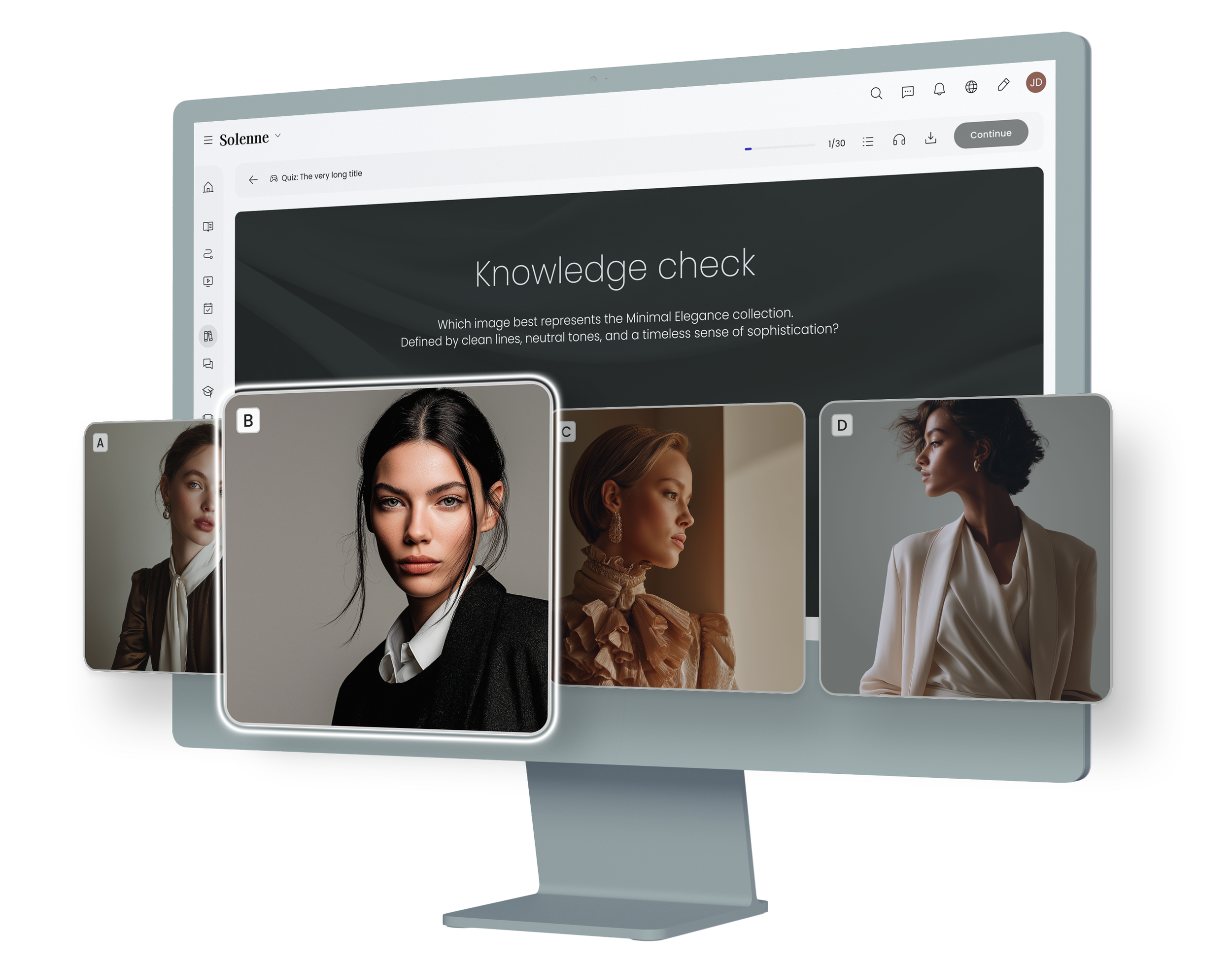
When learning teams talk about store training, the first instinct is often to focus on attitude, client experience, or brand storytelling. Those areas matter, but they only work when the hard skills are already strong. In a fashion house, hard skills are the foundation of trust. They include product knowledge, compliance, and technical training, and each of these affects how confidently a store employee performs in front of a customer.
Product knowledge is not just about memorising features. In luxury and premium fashion, it is about understanding construction, materials, fit, care, styling logic, seasonal narratives, and the emotional value of the piece. A store associate who truly understands the product does not sound rehearsed. They sound credible. They can explain why a fabric drapes in a certain way, why one bag deserves special care, or why a silhouette suits one lifestyle better than another.
Compliance training is equally important, even if it feels less glamorous. In stores, compliance touches claims about sustainability, care guidance, pricing, privacy, discount policy, returns, repairs, and customer data. If these points are handled badly, the brand can lose trust very quickly. Technical training then completes the picture. Teams need to know how to use POS systems, CRM tools, clienteling apps, stock systems, omnichannel processes, appointment booking tools, and after sales workflows without hesitation.
This is where a digital platform becomes powerful. Hard skills are ideal for e learning because they rely on structured knowledge, repeatable information, and frequent updates. Role specific retail content also works better when employees can access it quickly on mobile devices and revisit it in the flow of work. Research on retail learning points to the value of mobile, searchable, role specific support rather than generic training that sits far away from daily operations.
A strong platform should therefore include short product modules, video explainers, interactive policy scenarios, system walkthroughs, quick assessments, and collection refreshers. For example, before a new capsule launch, store teams could complete five short lessons on hero products, key materials, styling combinations, client objections, and care instructions. Before a policy change goes live, they could complete a three minute scenario that tests what to say, what to avoid, and when to escalate.
Practical applications
A product knowledge pathway for each collection, with videos, high resolution images, care notes, and styling stories.
A compliance series built around real store moments, such as privacy in clienteling, responsible product claims, and exception handling.
Technical training modules on POS, order management, store to home delivery, repairs, and CRM actions.
QR codes in back of house spaces that link directly to product or policy refreshers before the shift starts.
Five minute readiness checks that managers can use before launch week or peak trading periods.
The key idea is simple. Hard skills should live first on the platform because that is where consistency is strongest. When every store, in every market, receives the same core learning in the same format, the brand protects both service quality and operational discipline. E learning does not reduce standards. When designed well, it raises them.
If a fashion house wants store people to feel confident, they need a clear digital base. Product knowledge, compliance, and technical fluency should never depend on memory alone or on whether a manager happens to explain something well. Hard skills belong on the platform first, because precision is the starting point of premium service.
Soft skills grow through practice
The best service is human before it is efficient.
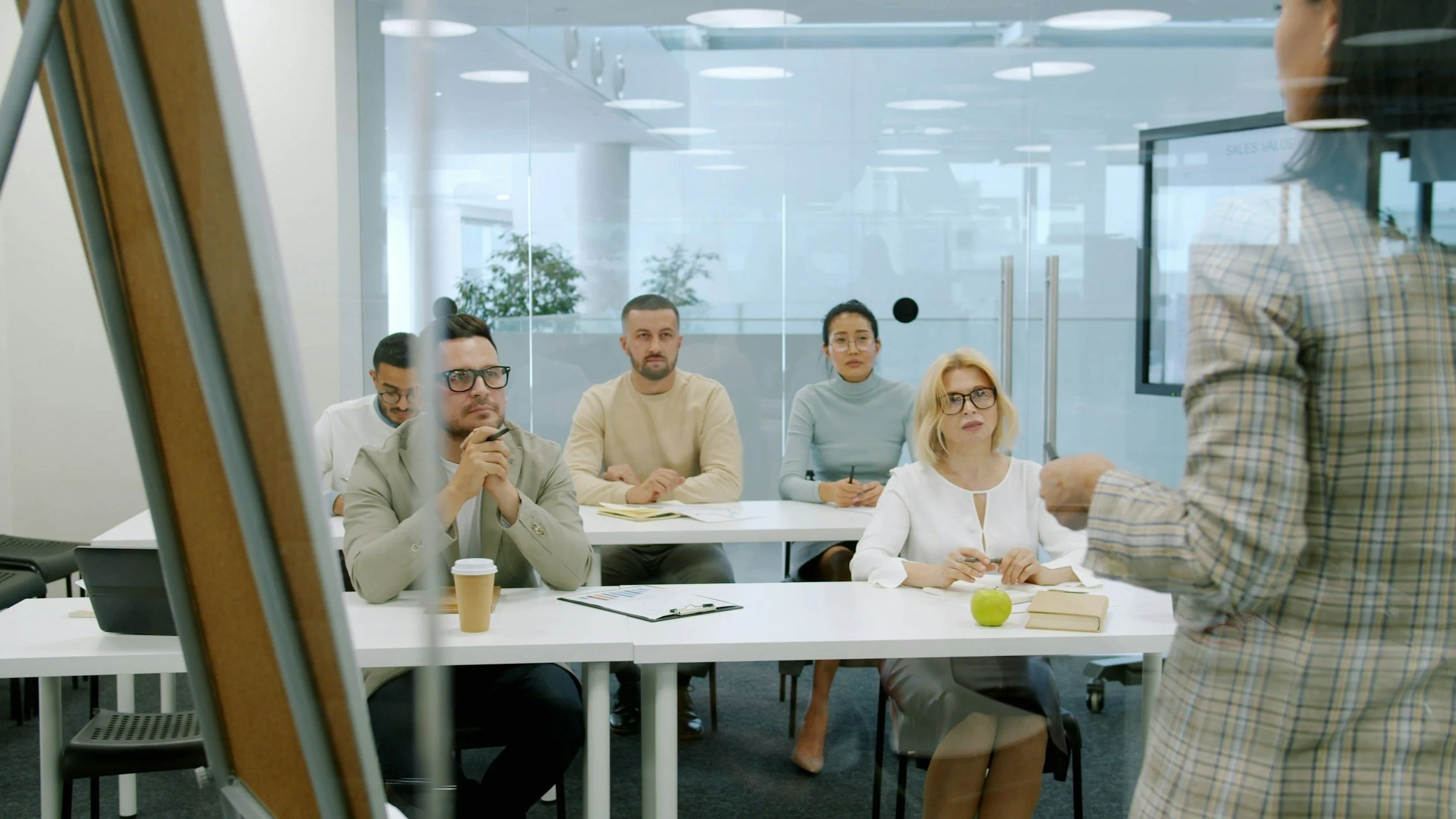
Once the hard skill foundation is in place, the next challenge is turning knowledge into human performance. This is where soft skills matter most. In stores, the difference between an average experience and a memorable one often comes down to coaching, communication, and collaboration.
Coaching matters because store learning does not end after onboarding. A new hire may complete every module on the platform and still need help understanding how to read a customer, how to adapt the tone of a product story, or how to recover after a weak interaction. That is why managers and senior peers are so important. LinkedIn’s 2025 report found that only 15 percent of employees said their manager had helped them build a career plan in the previous six months, which shows how often development fails in daily practice. In fashion retail, that gap is costly, because most service skills mature through observation, feedback, and repetition.
Communication is the second soft skill pillar. A store associate does not just describe products. They interpret the house. They welcome, listen, reassure, suggest, and close. They move between emotional storytelling and practical clarity. They explain value without sounding defensive. They handle objections without sounding robotic. This kind of communication cannot be built through slides alone. It needs live rehearsal.
Collaboration is often the most overlooked area, yet it shapes the customer journey every day. A single sale may involve the store team, stockroom, personal shopping, ecommerce, customer care, logistics, and after sales support. If those teams do not share information smoothly, the customer feels the fragmentation immediately. Collaboration practice helps people understand how their role fits into the wider brand experience.
This does not mean soft skills should stay off the platform. A digital learning system can still support them through manager guides, role play prompts, reflection tools, short examples of strong service language, and peer learning videos. But the real development happens when people meet in person, practice scenarios, and receive feedback in real time. Deloitte’s 2025 findings are especially relevant here, because they show that younger workers continue to value mentorship and practical experience very strongly.
Practical applications
Weekly ten minute coaching sessions between manager and associate after real customer interactions.
In person role practice for welcome, discovery, storytelling, objection handling, and service recovery.
Peer observation exercises where one team member shadows another and shares feedback.
Communication labs focused on tone of voice, confidence, listening, and luxury service language.
Cross team workshops before a launch, bringing together store, stock, client services, and visual merchandising.
These formats matter because soft skills are relational. You can learn the theory of listening online, but you learn the reality of listening when a customer is impatient, uncertain, emotional, or simply silent. You can study collaboration models on a screen, but you understand collaboration when a launch goes wrong and five teams must fix it together before noon.
Soft skills are not a softer version of hard work. They are the skills that transform knowledge into trust. In a fashion house, coaching, communication, and collaboration should be practised live, because service is not a document. It is a performance shaped by human presence.
The winning model is blended learning.
Where the platform teaches fast and the store teaches deeply
The most effective learning strategy for fashion retail is not digital only and not classroom only. It is blended learning, designed intentionally around how store people actually work. E learning should deliver what employees need to know quickly and consistently. In person training should help them apply that knowledge with confidence, judgment, and brand presence.
This approach also matches what younger generations expect from employers. They want learning that is accessible, modern, and easy to revisit, but they also want mentorship, feedback, and development that feels real. Deloitte shows that learning matters strongly to Gen Z and millennials, while LinkedIn shows that career growth remains the main driver behind learning engagement. That combination should shape every learning and development strategy in retail.
For a fashion house, a blended learning journey can begin before day one. New hires can access a digital platform with the essentials, such as house values, collection language, service promise, product basics, compliance rules, and systems orientation. Their first week in person should then focus on welcome rituals, store observation, product handling, live customer situations, and mentor support. The platform gives clarity. The store gives context.
After onboarding, the rhythm should continue. Every new collection can begin with digital pre learning, then move into physical handling sessions and storytelling practice on the floor. Every compliance update can start with a short platform scenario, then move into a morning briefing where the team discusses what the rule means in practice. Every technical system update can begin with a screen tutorial, then be reinforced during a guided shift.
Microlearning has a particularly strong role for store teams because time is fragmented and attention is pressured. Retail learning sources consistently highlight the value of short, mobile learning moments for frontline staff, especially when those moments are tied to specific tasks or product launches. But the platform should never try to replace every learning moment. Its role is to prepare, reinforce, and extend. Live learning still carries the emotional weight of the brand.
Practical applications
Pre shift mobile refreshers on one product family, one service ritual, or one policy update.
Monthly in person labs where teams touch products, rehearse client conversations, and compare styling approaches.
Mentor pairings for every new hire during the first ninety days.
Manager dashboards that show quiz results and completion data, used to guide coaching rather than only track compliance.
Quarterly learning campaigns built around a commercial priority, such as leather expertise, occasion wear, clienteling, or repair excellence.
A shared content flow where the platform launches the topic and the store brings it to life through discussion and rehearsal.
This model also respects the pace of fashion. Collections change, trends shift, teams rotate, and commercial targets move quickly. A blended system allows learning and development to be just as dynamic. It keeps the platform active, the store engaged, and the manager involved.
The question is no longer whether e learning works in fashion retail. The real question is whether brands are using it intelligently. The winning model is blended. Teach knowledge digitally, coach performance in person, and connect both through a rhythm that supports store reality rather than fighting against it.
The future of fashion learning is blended, practical, and deeply human
The future of learning and development in fashion stores will belong to brands that stop treating training as a one time event and start building it as an everyday system. That system must be modern enough for younger generations, practical enough for store reality, and human enough to reflect what luxury and premium service actually demand.
E learning has a central role in that future. It gives store teams speed, clarity, accessibility, and consistency. It helps a fashion house deliver the same product story, the same compliance standard, and the same technical process across many locations and markets. It supports onboarding, launch readiness, policy refreshers, and fast problem solving. It is especially useful for hard skills, because hard skills depend on accuracy, and accuracy improves when knowledge is easy to access and easy to repeat.
But e learning on its own is not development. Store people do not become exceptional because they complete modules. They become exceptional because those modules are connected to mentoring, observation, discussion, rehearsal, and feedback. They grow when a manager helps them refine a conversation, when a senior colleague shows them how to read a client moment, and when a team practises together before a new collection reaches the floor.
That is why the strongest model for a fashion house is blended by design. Research supports that direction. Younger workers place high value on learning, mentorship, and practical experience, while employees more broadly are motivated to learn because they want career growth and clearer development. For fashion brands, this means the platform should teach the essentials, and in person training should build confidence, culture, and judgment.
In the end, the goal is not simply to train store staff faster. The goal is to make them more prepared, more credible, and more connected to the brand they represent. When hard skills and soft skills are developed together, through digital learning and live practice, training stops being an obligation and becomes a competitive advantage.
