
Experiential Learning in Professional Training
The Benefits of Experiential Learning in Professional Training
Experiential learning, or learning by doing through realistic scenarios, role plays, simulations, and hands-on exercises, is one of the most effective approaches to boosting skills and knowledge retention.
Unlike traditional, theory-based training, experiential learning engages memory, emotion, and behavior, allowing employees to internalize key knowledge, practice decision-making, and build confidence in real-world situations.
By immersing teams in practical, context-driven exercises, such as scenario simulations, role-based problem-solving, or interactive challenges, learning becomes memorable and actionable. This approach accelerates retention, develops muscle memory, and ensures that skills transfer seamlessly to daily work tasks, ultimately improving performance, client or stakeholder engagement, and long-term outcomes.

What Is Experiential Learning?
Experiential learning is a hands-on approach to learning where knowledge, skills, and behaviours are developed through direct experience rather than passive instruction.
At its core, experiential learning emphasizes that people understand and retain information more effectively when they actively engage in realistic situations, reflect on outcomes, and then apply what they have learned. It is the opposite of purely theoretical or lecture-based training.
Common Experiential Learning Methods
Role plays and scenario-based exercises to practice real-world interactions
Simulations, either digital or in-person, to mimic work challenges
Hands-on practice with tools, products, or processes
Real-life tasks and guided field exercises that place learning in context
Reflection sessions to analyse successes, challenges, and areas for improvement
Why Experiential Learning Works
Strengthens memory and long-term retention
Builds confidence more quickly than passive learning
Develops real-world behaviours and skills, not just knowledge
Mirrors the practical challenges employees face in their roles
Accelerates performance improvement and workplace readiness
By providing safe, realistic, and guided experiences, experiential learning prepares employees to apply their skills effectively, refine decision-making and problem-solving abilities, and improve engagement and productivity in any industry.
Why Experiential Learning Transforms Professional Training
Experiential learning through role plays, simulations, hands-on exercises, and guided coaching significantly improves knowledge retention and real-world skill application.
Research shows that experiential methods drive over 75 percent retention, compared to only 10–20 percent for passive learning formats such as reading or lectures (National Training Laboratory).
In any professional environment, this approach leads to deeper subject mastery, increased confidence, and more consistent application of skills.
When employees practice through realistic scenarios—whether explaining a product, managing client requests, or delivering a service—they learn faster, remember longer, and provide higher-quality outcomes that reflect professional standards.
Faster Skill Transfer: Achieve Competence Up to Twice as Quickly
Hands-on practice significantly accelerates the journey from learning to mastery.
Research from the Brandon Hall Group shows that learners who rehearse skills in realistic scenarios achieve competence up to twice as fast compared to traditional, theory-based methods.
In any workplace, this means new employees become fully productive sooner, confidently applying techniques, making decisions, and performing tasks to a high standard from day one.
By practicing in practical, real-world situations, teams internalize behaviours faster, reduce onboarding time, and improve performance and outcomes far more effectively than with passive learning alone.
Boost Confidence by 40–50% Through Hands-On Practice
Experiential learning has a dramatic impact on employee confidence. Research shows that practicing skills through scenario-based exercises, role plays, simulations, and live coaching can increase confidence by 40–50 percent.
In any professional setting, this confidence translates into more effective interactions, smoother task execution, and stronger stakeholder engagement.
When employees feel prepared and self-assured, they perform tasks with ease, apply knowledge consistently, and deliver higher-quality outcomes. This not only improves performance metrics but also enhances customer or client satisfaction and overall operational success.

Boost Performance by 20–25% Through Experiential Training
Combining experiential learning with digital training has been shown to increase employee performance and results by 20–25 percent, according to industry benchmarks.
When employees practice skills in realistic, hands-on scenarios, knowledge becomes confidently applied, decision-making improves, and communication becomes persuasive and effective.
This approach ensures that employees can engage clients or stakeholders meaningfully, make informed recommendations, and deliver high-quality results, driving measurable performance improvements while maintaining authenticity and alignment with organizational standards.
Building Stronger Emotional Connections Through Experiential Learning
Experiential learning creates a powerful emotional bond between employees and the organization or brand.
When teams engage in hands-on experiences, such as meeting experts, exploring behind-the-scenes processes, practicing real tasks, or participating in guided workshops, the brand narrative becomes personal, meaningful, and memorable.
This emotional connection inspires authentic engagement, helping employees communicate with passion, embody organizational values, and deliver experiences that reflect the company’s philosophy.
Research shows that emotional engagement drives stronger loyalty and performance. One survey found that emotional appeal has 1.5 times the influence on brand-oriented actions compared to product or technical features alone. Another study identified emotional attachment as explaining up to 76 percent of the variance in customer loyalty.
When employees feel connected to the brand, their interactions resonate with authenticity, turning everyday tasks into memorable experiences that strengthen relationships and drive long-term success.

More Engaged and Motivated Teams Through Experiential Learning
Experiential learning formats boost employee motivation and engagement by 20–30 percent, according to multiple workplace learning studies. This is because the learning experience is social, interactive, memorable, and directly tied to real-world tasks and situations.
Research shows that employees who learn collaboratively and through hands-on activities report higher engagement, a stronger sense of belonging—up to 2 times greater, and increased job satisfaction. These factors are key drivers of both performance and retention.
In any professional environment, this translates into teams who feel more connected to their work, the products or services they deliver, and the outcomes they influence. Experiential learning strengthens workplace culture, reduces turnover, and fosters a motivated, high-performing workforce across departments, locations, or markets.
social
interactive
memorable
Directly connected to real workplace experiences
This helps reduce employee turnover and reinforce a strong, consistent culture across teams and locations.
Immediate Behaviour Change Through Experiential Learning
Experiential learning is one of the fastest ways to turn knowledge into action. Research shows that employees who practice skills in realistic scenarios adopt new behaviours up to 4 times faster than those trained with traditional, passive methods.
By rehearsing key tasks and workplace interactions, such as handling client challenges, delivering presentations, cross-functional collaboration, or following standard procedures, teams improve behaviours immediately rather than waiting weeks.
In any professional setting, this results in smoother interactions, more confident decision-making, and consistent application of best practices from the first day of training.
Key Examples of Skills Practiced
Handling client challenges or objections
Storytelling and effective communication
Cross-selling or upselling relevant products/services
Customer or stakeholder engagement routines
Operational or service procedures

Why The Learning Lab LMS Excels at Experiential Learning
Experiential learning is most effective when digital tools make practice, immersion, and real-world application seamless.
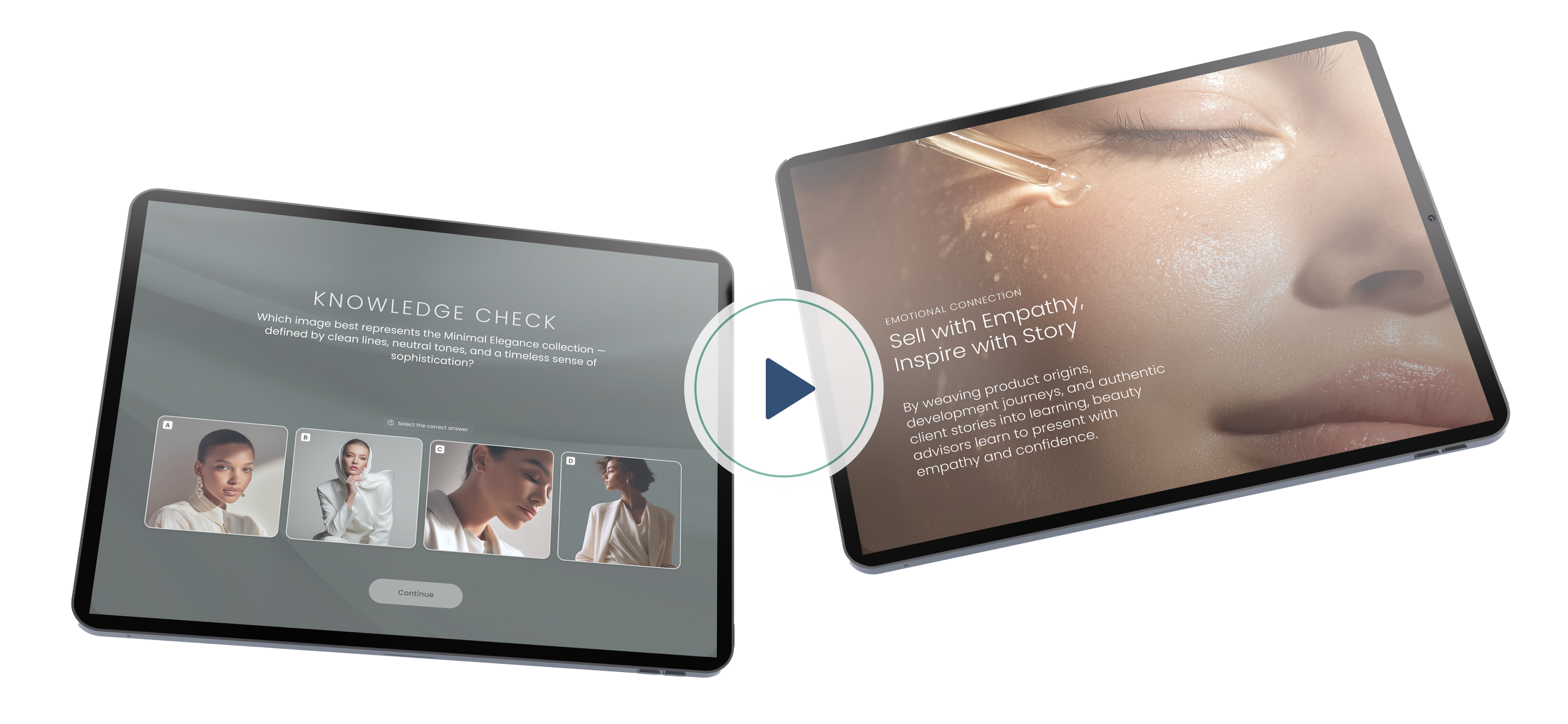
The Learning Lab LMS is designed specifically for this purpose: a workplace-first learning platform that integrates microlearning, simulations, coaching workflows, community interaction, and engaging storytelling into one unified system.
Across industries, it transforms every skill—from technical knowledge to client interactions, operational routines, or service excellence—into dynamic, practice-driven learning experiences.
With interactive modules, branching scenarios, mobile-first challenges, and AI-powered guidance, the platform ensures employees not only learn what to do, but actively practice how to do it—consistently, confidently, and in real-world contexts.
Why The Learning Lab LMS Supports Experiential Learning
Mobile-first practice for learning anytime, anywhere—before, during, or after work
Branching scenarios to rehearse real workplace situations and decision-making
Gamified challenges that turn knowledge and skills into engaging, interactive competitions
AI simulations and role-play exercises for client interactions, technical procedures, or service sequences
Video-based assessments to practise skills and receive actionable feedback
Microlearning carousels for quick refreshers and just-in-time coaching
Hands-on missions and checklists aligned to real tasks and workflows
Community collaboration features to share insights, best practices, and expert knowledge
Adaptive learning paths that align skills with roles, experience levels, and performance gaps
Premium authoring tools for creating immersive, branded learning experiences quickly
The result: faster skill transfer, improved performance and outcomes, more consistent execution across teams and locations, and employees who feel engaged, confident, and connected to the organization’s mission and values.