
Employee Training Trends and Innovations in 2026
Top 5 Trends and Innovations Transforming Employee Training in 2026
Employee training is rapidly evolving in 2026, driven by innovative learning technologies, changing workforce expectations, and the growing demand for personalized professional development. Organizations across industries are rethinking how employees learn, adapt, and grow in their roles.
Key trends shaping the future of workplace learning include gamification, which turns training into interactive and engaging experiences, and AI-powered personalized learning, delivering content tailored to individual learning styles and job responsibilities. Microlearning is gaining popularity as a flexible approach, offering short, focused lessons that integrate seamlessly into busy work schedules.
Emerging virtual reality (VR) and augmented reality (AR) training tools are providing immersive experiences, allowing employees to practice critical skills, improve decision-making, and simulate real-world scenarios safely. In addition, sustainability and corporate responsibility training is becoming increasingly important, equipping teams with knowledge about eco-conscious practices and ethical business standards that resonate with both employees and customers.
These trends are transforming employee development and professional growth, helping organizations build more skilled, adaptable, and motivated teams while staying competitive in an ever-changing business landscape.
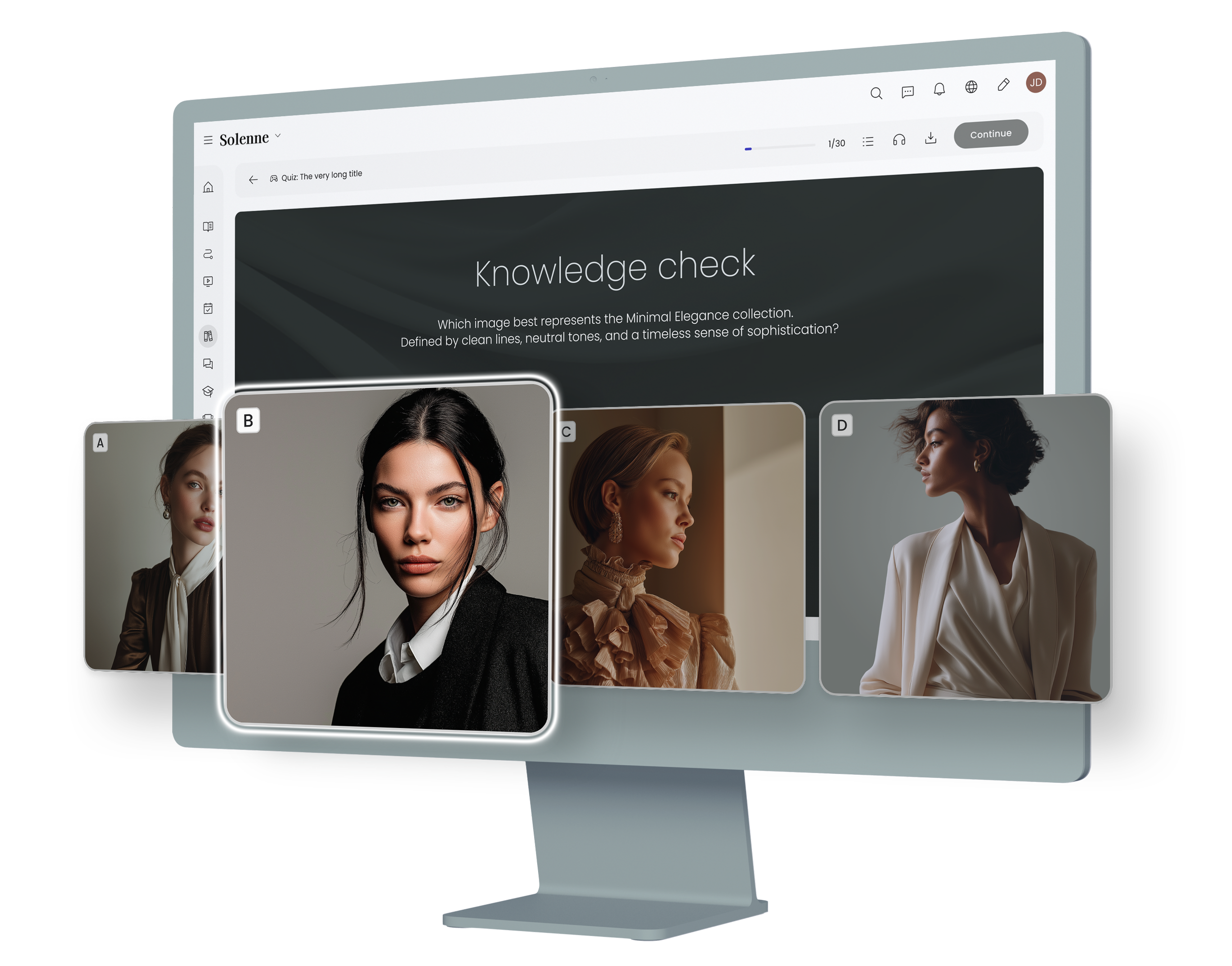
1. Branching Scenarios: An Interactive Approach to Employee Learning
Branching scenarios are a cutting-edge eLearning technique that allows employees to practice decision-making through interactive storytelling. By presenting learners with multiple choices that lead to different outcomes, this method creates a highly engaging and immersive learning experience.
This approach is particularly effective for improving knowledge retention, fostering critical thinking, and encouraging practical skill application. Branching scenarios can be applied across industries—from compliance training in corporate environments to customer service simulations, making theoretical concepts tangible and actionable.
The benefits of branching scenario training extend to both learners and organizations. By placing employees at the center of decision-making, this technique promotes active learning, increases engagement, and helps learners practice skills in a safe, risk-free environment, resulting in better performance on the job.
Additionally, branching scenarios accommodate diverse learning styles, making them suitable for professional development programs across departments and experience levels. Using authoring tools such as Articulate Storyline or Adobe Captivate, instructional designers can easily create branching paths, add interactive elements, and integrate multimedia content including videos and animations. Interactive videos, in particular, enhance learning by immersing participants in realistic situations, deepening comprehension and emotional engagement.
By leveraging these tools, organizations can design high-impact eLearning modules that keep learners motivated, invested, and better equipped for real-world challenges.
Key Benefits of Branching Scenarios in Employee Learning
Enhanced Engagement: By placing learners at the center of interactive scenarios, this approach encourages active participation and keeps employees invested in their development.
Improved Knowledge Retention: Practicing decision-making in realistic situations helps learners retain information longer and apply it effectively on the job.
Adaptable Learning: Branching scenarios are versatile, catering to different learning styles, industries, and professional roles.
Safe Skill Practice: Employees can experiment and learn from mistakes in a risk-free environment, building confidence before applying skills in real-world situations.
Simplified Design Process: Modern authoring tools and interactive multimedia, such as videos and animations, make creating branching scenarios easier for instructional designers.
Overall, branching scenarios are a powerful strategy for elevating eLearning and employee training, making learning more engaging, effective, and memorable while supporting professional development across diverse workplace settings.
2. Transforming eLearning: The Advantages of Modern Authoring Tools
For years, SCORM files have served as the standard for delivering eLearning content across Learning Management Systems (LMS). While dependable, traditional SCORM packages often limit interactivity, creativity, and learner engagement.
The rise of modern authoring tools has revolutionized how organizations design, manage, and deliver employee training and professional development. These tools simplify course creation while enhancing efficiency, engagement, and learning effectiveness. Moving beyond static SCORM files enables organizations to deliver interactive, immersive, and brand-consistent training experiences.
Key Benefits of Modern Authoring Tools:
Time-Saving Development: Pre-designed templates and full-course layouts accelerate course creation without sacrificing quality.
Enhanced Engagement: Integrated quizzes, multimedia content, and interactive elements create a more dynamic and impactful learning experience.
Global Accessibility: Automatic translation and localization ensure training resonates with employees across regions.
AI-Driven Efficiency: Artificial intelligence suggests content improvements, automates repetitive tasks, and streamlines workflows.
Streamlined Management: Built-in project management features allow teams to collaborate, track progress, and meet deadlines effectively.
Scalable Learning Programs: Easily adapt and expand training materials to meet evolving organizational and workforce needs.
By adopting creative authoring tools, organizations can deliver high-quality, interactive, and scalable eLearning, empowering employees to engage, retain knowledge, and apply skills effectively in the workplace.

3. Nano Learning: The Future of Quick and Effective Employee Training
In today’s fast-paced work environment, employees consume information differently, often favoring short, easily digestible content that can be accessed anytime, anywhere. Nano learning meets this need by delivering brief, targeted lessons designed for on-the-go learning.
This approach is highly effective across industries, allowing learners to quickly acquire critical skills or knowledge without interrupting their daily workflow. By presenting information in bite-sized, visually engaging formats, nano learning ensures employees can upskill efficiently in short moments, improving both performance and confidence.
Rather than relying on lengthy courses, nano learning delivers focused, actionable content, such as key procedures, best practices, or quick reference guides. Frequent exposure to concise, relevant material enhances knowledge retention and reinforces learning over time. By aligning with modern consumption habits, nano learning increases engagement and helps employees stay up-to-date with essential information.
Key Benefits of Nano Learning:
Quick and Convenient: Access essential knowledge in seconds, ideal for short learning sessions.
Visually Engaging: Bite-sized content presented in interactive, scrollable formats improves attention.
Focused Learning: Targeted bursts of information enhance knowledge retention and practical application.
On-the-Go Training: Supports learning in short periods without disrupting workflows.
Aligned with Modern Habits: Matches the way employees consume information today.
Nano learning is more than a convenience—it empowers employees to learn effectively whenever and wherever they need, ensuring they can access the right knowledge at the right time.
4. Team-Based Learning (TBL) for Online Employee Training
Team-Based Learning (TBL) is an effective framework for employee development and professional training, combining collaboration, practical application, and interactive tools to create engaging, learner-centric experiences.
When adapted for online environments, TBL enables teams to learn together, apply knowledge in real-world scenarios, and receive feedback in a digital, flexible format.
Key Elements of Online TBL:
Permanent Online Teams: Employees are organized into consistent, diverse teams to encourage collaboration. Teams interact via forums, chat groups, and virtual breakout rooms, building camaraderie while tackling training challenges.
Pre-Class Preparation with Targeted Content: Learners prepare using pre-recorded videos, interactive modules, and relevant resources tailored to their roles and organizational objectives. Pre-class preparation ensures participants come ready to actively engage with material and discussions.
Interactive Readiness Assurance: Teams and individuals complete quizzes and knowledge checks to assess understanding. Discussion boards and chat groups allow for collaborative problem-solving and knowledge refinement.
Blended Learning for Real-World Application: Practical exercises simulate workplace challenges, encouraging teams to collaborate on solutions through discussion boards or live video sessions. This bridges theory and practice, improving skill application and job readiness.
Live Expert Sessions and Q&A: Subject-matter experts host live webinars, demonstrations, and Q&A sessions, offering guidance, best practices, and actionable insights for employees to apply in their roles.
Community and Peer Engagement: Dedicated forums and chat spaces facilitate ongoing dialogue, where employees can share insights, successes, and strategies, fostering a culture of continuous learning.
Personalized Online Coaching: Managers or trainers provide one-on-one or small group feedback via video calls, supporting individual growth, refining skills, and helping employees achieve performance and professional development goals.
Benefits of Online Team-Based Learning (TBL) for Employee Training
Customised and Relevant Content: Pre-recorded videos, interactive modules, and role-specific resources ensure training is aligned with organizational goals, providing employees with relevant knowledge and skills.
Engaging Collaboration: Team-based exercises encourage active participation, strengthen team cohesion, and foster a culture of collaborative learning.
Practical Skill Application: Real-world scenarios allow employees to practice critical tasks, apply concepts in context, and build job-ready competencies.
Flexible Learning: Short, targeted modules can fit into employees’ schedules, enabling on-the-go learning without disrupting daily workflows.
Expert Insights: Live sessions with subject-matter experts deliver actionable guidance, industry best practices, and inspiration for professional development.
Supportive Learning Environment: Peer engagement, discussion forums, and online coaching create a nurturing ecosystem where employees can ask questions, share ideas, and receive feedback.
How Organizations Can Implement Online TBL:
Video Messages: Share motivational talks, updates, or procedural announcements directly with employees.
Discussion Boards: Facilitate knowledge-sharing and collaborative problem-solving on role-specific topics.
Blended Learning Platforms: Combine self-paced eLearning modules with live team interactions for a richer learning experience.
Live Expert Sessions: Invite managers, trainers, or industry specialists to host Q&A sessions, demonstrations, and workshops.
Personalized Online Coaching: Offer one-on-one or small group support to address individual challenges and support employee growth and skill development.
Adapting Team-Based Learning for online employee training enhances engagement, improves knowledge retention, and equips teams with the skills and confidence needed to excel in their roles. By leveraging tools such as video messages, discussion boards, live sessions, and coaching, organizations can create dynamic, interactive, and effective training programs that support both professional development and organizational success.

5. Leveraging Storytelling for Online Employee Training
Storytelling is a powerful method for engaging learners, making online training more immersive, memorable, and impactful. By weaving narratives into learning experiences, storytelling helps employees connect with key concepts, organizational values, and real-world applications.
In any industry, storytelling transforms traditional training into an interactive and meaningful journey. Instead of presenting abstract information, narratives place learners in realistic scenarios, encouraging them to apply knowledge, make decisions, and understand outcomes. For example, employees might follow a story that demonstrates effective problem-solving, customer interaction, or project management, allowing them to see the relevance of training in practical contexts.
Integrating storytelling with online learning tools, such as interactive videos, branching scenarios, and gamified modules, further enhances engagement. Learners remain motivated as they experience challenges, explore outcomes, and see the direct impact of their decisions in a safe, virtual environment.
Key Benefits of Storytelling in Online Training:
Emotional Connection: Strengthens engagement by connecting learners to organizational values and goals.
Practical Application: Demonstrates real-world scenarios, helping learners apply concepts effectively.
Enhanced Retention: Memorable narratives improve knowledge retention and long-term learning outcomes.
Increased Motivation: Gamified storytelling elements keep learners invested in progress and skill mastery.
Consistency and Alignment: Ensures training content aligns with organizational standards and professional development goals.
Storytelling is more than a teaching technique—it is an essential strategy for creating engaging, effective, and results-driven online training programs. It allows employees to internalize knowledge, connect emotionally, and apply skills confidently in their roles.
Conclusion
Storytelling and modern eLearning strategies are transforming online employee training, making it more engaging, practical, and impactful. By integrating narratives, organizations can create emotional connections, align learning with real-world scenarios, and ensure employees are not only informed but also motivated to apply their knowledge.
Incorporating tools like interactive videos, gamified modules, branching scenarios, and team-based learning enhances knowledge retention, supports professional development, and encourages active participation. These approaches help employees build confidence, develop essential skills, and perform effectively in their roles.
Embracing storytelling and innovative training methods is a key step toward delivering high-quality, scalable, and results-driven learning experiences. By doing so, organizations can create a workforce that is knowledgeable, engaged, and prepared to contribute meaningfully to organizational goals and success.