
Building Effective Training Strategies That Work
Training Reimagined: How to Build an Advanced Team Training Strategy
Building a high-impact training strategy means moving beyond one-time courses and basic knowledge sharing toward a continuous, hands-on learning approach.
Effective training is rooted in real workplace scenarios, combines core skills with practical application and storytelling, and supports employees directly in the flow of work.
By leveraging mobile-friendly learning, short and frequent training sessions, interactive exercises, coaching, and ongoing feedback, organizations can ensure knowledge is not only learned but effectively applied.
When training is aligned with daily work realities and supported by modern tools and best practices, it becomes a powerful driver of employee confidence, skill development, team performance, and measurable business results.

Driving Team Performance with Advanced Training Strategies
Advanced training is no longer just about memorizing information it is about building employee confidence, adaptability, and practical, real-world skills that can be applied on the job.
High-performing organizations design training programs that replicate real workplace scenarios, support employees in the flow of work, and reinforce learning through continuous practice, coaching, and feedback.
Research shows that experiential and activity-based learning can improve employee performance by 20 to 30%, while mobile-friendly, just-in-time training boosts knowledge retention by up to 40%. When training is closely aligned with daily work realities, it becomes a powerful driver of productivity, team performance, customer satisfaction, and long-term business results.
Key Benefits of Advanced Training Strategies
Higher Performance
Well-designed training programs can improve employee performance by 10 to 20% percent by enhancing engagement, problem-solving, and practical skills application.Improved Knowledge Retention
Interactive, hands-on learning boosts knowledge retention by 30 to 40% compared to traditional training methods.Faster Time to Competence
Scenario-based and experiential training accelerates onboarding and reduces ramp-up time for new team members by 25 to 35%.Enhanced Customer and Client Experience
Consistent training equips employees to deliver better service, improving client or customer satisfaction by 15 to 25%.Increased Confidence
Ongoing coaching, practice, and feedback lead to more confident, independent, and high-performing employees.Better Team Alignment
Structured and flexible training ensures teams operate with consistent knowledge, messaging, and processes across departments or locations.Measurable Business Impact
Advanced training strategies link learning outcomes directly to key performance indicators such as productivity, efficiency, client satisfaction, and retention.
Advanced training turns knowledge into measurable results, equipping teams with the skills, mindset, and confidence needed to excel in their roles and drive sustainable business growth.
Why Core Knowledge is the Foundation of Team Performance Across Industries
In any industry, whether in technology, healthcare, professional services, or manufacturing, having deep knowledge of products, services, or solutions is the cornerstone of credibility, confidence, and overall performance.
Clients and customers today are informed, curious, and selective. They expect teams to explain not only what a product or service is but why it matters, how it addresses their needs, and what differentiates it from alternatives.
Strong knowledge empowers employees to communicate effectively, answer questions with confidence, and provide personalized recommendations.
Research consistently shows that well-trained teams with solid foundational knowledge drive higher engagement, stronger client trust, and improved long-term loyalty, making knowledge one of the most powerful levers for organizational performance.
Key Benefits of Strong Knowledge in Employee Training
Higher Performance and Productivity
Employees with strong knowledge of products, services, or processes can improve performance by 10 to 30% depending on the industry.Increased Customer or Client Trust
Over 80% of clients report that knowledgeable staff significantly influence their decisions and satisfaction.Higher Revenue and Business Impact
Confident explanations, recommendations, and cross-selling can increase transaction value or project outcomes by 15 to 25%.Enhanced Client or Customer Experience
Well-informed teams consistently deliver better service, boosting satisfaction scores by 20% or more.Reduced Errors and Miscommunication
Strong understanding of offerings lowers mistakes, missteps, and dissatisfaction by 5 to 10%.Faster Onboarding and Time to Competence
Structured training programs accelerate learning and reduce ramp-up time for new hires by 25 to 35%.Stronger Storytelling and Differentiation
Knowledge enables employees to communicate the value, benefits, and unique features of products or services, driving engagement and emotional connection.Confidence with Complex Solutions
For industries with technical or complex offerings, deep knowledge allows teams to explain features and benefits clearly, reducing hesitation and increasing adoption.Consistency Across Teams and Locations
Standardized training ensures consistent messaging, skills, and processes across departments, regions, or global offices.
Across all industries, knowledge is not just information—it is a strategic asset. When integrated into continuous, interactive, and mobile-friendly training programs, it becomes a powerful driver of employee confidence, performance, and exceptional client experiences.

Industry and Market Awareness: A Strategic Advantage for High-Performing Teams
Beyond core knowledge, understanding industry trends and market dynamics is a key driver of team performance across any sector, from technology and healthcare to professional services and manufacturing.
Awareness of market trends, customer behavior, competitive landscapes, and cultural shifts enables employees to communicate with confidence, relevance, and authority.
Clients and stakeholders increasingly expect professionals to understand not just the products or services they offer, but also the broader business and market context.
When teams are trained to develop industry and market awareness, their conversations become more insightful, recommendations more accurate, and the organization’s credibility and strategic positioning stronger.
Key Benefits of Industry and Market Awareness in Team Training
Stronger Credibility and Trust
Over 75% of clients and stakeholders report higher confidence in teams that demonstrate awareness of industry trends and market context.More Relevant and Personalized Guidance
Teams with strong market awareness can improve outcomes by 10 to 20% by tailoring recommendations and solutions to current trends and client expectations.Higher Engagement with Informed Clients
Professionals who understand the market can engage more effectively with informed clients, customers, or stakeholders who research before interacting.Improved Upselling and Cross-Selling
Understanding industry positioning and competitive differences allows teams to increase revenue or project impact by 15 to 25%.Faster Adaptation to Change
Continuous market and industry training reduces the time needed for teams to adjust to new products, services, innovations, or processes by 20 to 30%.Better Handling of Competitor Comparisons
Knowledgeable teams respond confidently to competitor questions or alternative solutions, improving conversion and adoption rates.Alignment with Organizational Strategy
Industry awareness ensures teams consistently represent the organization’s strategic direction, goals, and value proposition across departments and regions.Enhanced Storytelling and Thought Leadership
Employees move beyond task execution to acting as trusted advisors, consultants, or guides for clients, customers, and stakeholders.Future-Proofing Teams
Continuous learning about industry trends, market dynamics, and emerging opportunities keeps teams relevant in fast-moving sectors and evolving markets.
Industry and market awareness transforms training from operational instruction into strategic empowerment. When teams understand both the core knowledge of their work and the broader context in which they operate, they deliver more credible insights, stronger outcomes, and measurable performance improvements.
Process Mastery: Turning Structure into Consistent Team Performance
Across industries, mastering structured processes is what transforms good intentions into repeatable and measurable results.
A clear, well-designed workflow helps teams move confidently through every stage of their tasks, from initial engagement and discovery to solution presentation, problem-solving, and final delivery, while remaining authentic and client-focused.
When employees understand how to execute processes effectively, not just the individual tasks, interactions and outcomes become smoother, more consistent, and more impactful. Research shows that structured methodologies and process training significantly improve team performance, productivity, confidence, and client satisfaction, especially in complex or high-stakes scenarios.
Key Benefits of Process Mastery in Team Training
Higher Performance and Results
Teams trained on structured processes can improve outcomes by 15 to 30%, achieving more consistent and measurable results.More Consistent Client and Stakeholder Experience
Process mastery reduces performance gaps between top performers and average team members by 20 to 25%, ensuring smoother and more reliable interactions.Stronger Needs Assessment
Effective questioning, active listening, and discovery techniques improve the relevance of recommendations and solutions, boosting success rates by 10 to 20%.Improved Handling of Challenges
Teams trained in structured approaches manage objections, issues, and complex scenarios more confidently, increasing successful outcomes by 15% or more.Higher Value Delivery
Following a clear process for presenting solutions and upselling or cross-functional opportunities can increase transaction value, project impact, or business outcomes by 10 to 25%.Faster Onboarding and Ramp-Up
Structured frameworks accelerate learning for new team members, reducing time to full productivity by 25 to 35%.Greater Confidence and Autonomy
Employees feel more secure and independent when they understand the process, reducing hesitation, stress, and errors.Stronger Organizational Alignment
A shared workflow ensures teams consistently follow best practices, messaging, and standards across departments or locations.Measurable Performance Improvement
Process mastery links directly to key performance indicators such as productivity, client satisfaction, efficiency, and retention.
Process mastery provides teams with a reliable framework without turning their work into rigid scripts. When embedded through continuous, interactive training, scenario-based exercises, and real-world practice, it empowers employees to deliver confident, consistent, and high-performing results every day.

Client Management Excellence: Building Long-Term Value Through Meaningful Relationships
In any industry, effective client or customer management is no longer just a follow-up task. It is a strategic driver of growth, loyalty, and long-term business success.
High-performing teams are trained to build lasting relationships through client knowledge, consistent communication, personalization, and seamless interactions across multiple touchpoints.
Strong client management transforms one-time interactions into repeat business and long-term partnerships. Research consistently shows that retaining existing clients or customers is far more profitable than acquiring new ones, making client management a critical component of employee training and overall organizational performance.
Key Benefits of Strong Client Management in Team Training
Higher Client or Customer Retention
Improving client retention by even 5% can increase profitability by 25 to 95%, making long-term relationship management a high-impact strategy.Stronger Lifetime Value
Well-managed relationships can boost client or customer lifetime value by 30 to 50% through repeat engagement and loyalty.Improved Repeat Engagement
Clients or stakeholders who receive personalized follow-ups are two to three times more likely to return or continue collaborating.More Effective Relationship Management
Teams trained in structured client management approaches increase success rates on repeat interactions by 15 to 25%.Enhanced Personalization
Over 70% of clients and customers expect personalized experiences; trained employees deliver more relevant and meaningful guidance.Better Use of CRM and Data
Client management training improves adoption of CRM systems, data quality, and actionable insights by 20 to 40%.Stronger Emotional Connection and Trust
Consistent, thoughtful interactions foster trust, loyalty, and long-term engagement with the organization.Reduced Dependency on Promotions or Incentives
Loyal, well-managed clients are less price-sensitive and more motivated by value, quality, and service.Consistency Across Teams and Channels
Training ensures a seamless client experience across all departments, locations, or digital and in-person touchpoints.
Strong client management transforms everyday interactions into relationship-driven growth. When embedded into continuous training and supported by the right tools, data practices, and behaviors, it empowers teams to nurture trust, loyalty, and long-term business performance.
Communication Skills: The Human Engine of High-Impact Team Performance
Across industries, strong communication skills are what turn knowledge and expertise into meaningful connections.
How teams listen, ask questions, explain solutions, and adapt their language directly shapes trust, confidence, and successful outcomes. In today’s environment of informed clients, stakeholders, and high expectations, communication is no longer a “soft” skill—it is a core driver of performance.
Research shows that effective communication significantly enhances team productivity, client satisfaction, stakeholder engagement, and loyalty, especially in complex or high-stakes scenarios where clarity, empathy, and storytelling are critical.
Key Benefits of Strong Communication Skills in Team Training
Higher Performance and Results
Clear, empathetic communication can improve team performance and outcomes by 15 to 25%.Improved Client or Stakeholder Satisfaction
Over 70% of clients and stakeholders report that the quality of communication strongly influences their overall experience.Stronger Trust and Credibility
Active listening, clear explanations, and thoughtful interactions build trust and credibility, which are critical drivers of engagement and long-term relationships.Better Needs Assessment
Effective questioning and dialogue improve understanding of client or stakeholder needs, increasing the relevance of recommendations and solutions by 10 to 20%.Reduced Misunderstandings and Conflict
Strong communication minimizes friction, reduces errors, and improves the success of problem-solving and objection handling by 15% or more.Higher Value Delivery
Professionals who clearly communicate benefits, not just features, can increase the impact, adoption, or perceived value of products, services, or solutions by 10 to 20%.More Consistent Organizational Experience
Training ensures tone, messaging, and communication practices align consistently with organizational standards across teams, departments, and locations.Greater Employee Confidence
Well-developed communication skills reduce hesitation and stress, empowering teams to engage naturally and effectively.Stronger Long-Term Relationships
Clients, customers, and stakeholders are more likely to return or maintain engagement when they feel understood and valued.
Strong communication skills sit at the heart of high-performing teams. When developed through continuous training, role-play, feedback, and real-world practice, they empower employees to create meaningful interactions, turning every conversation into an opportunity for trust, differentiation, and lasting results.
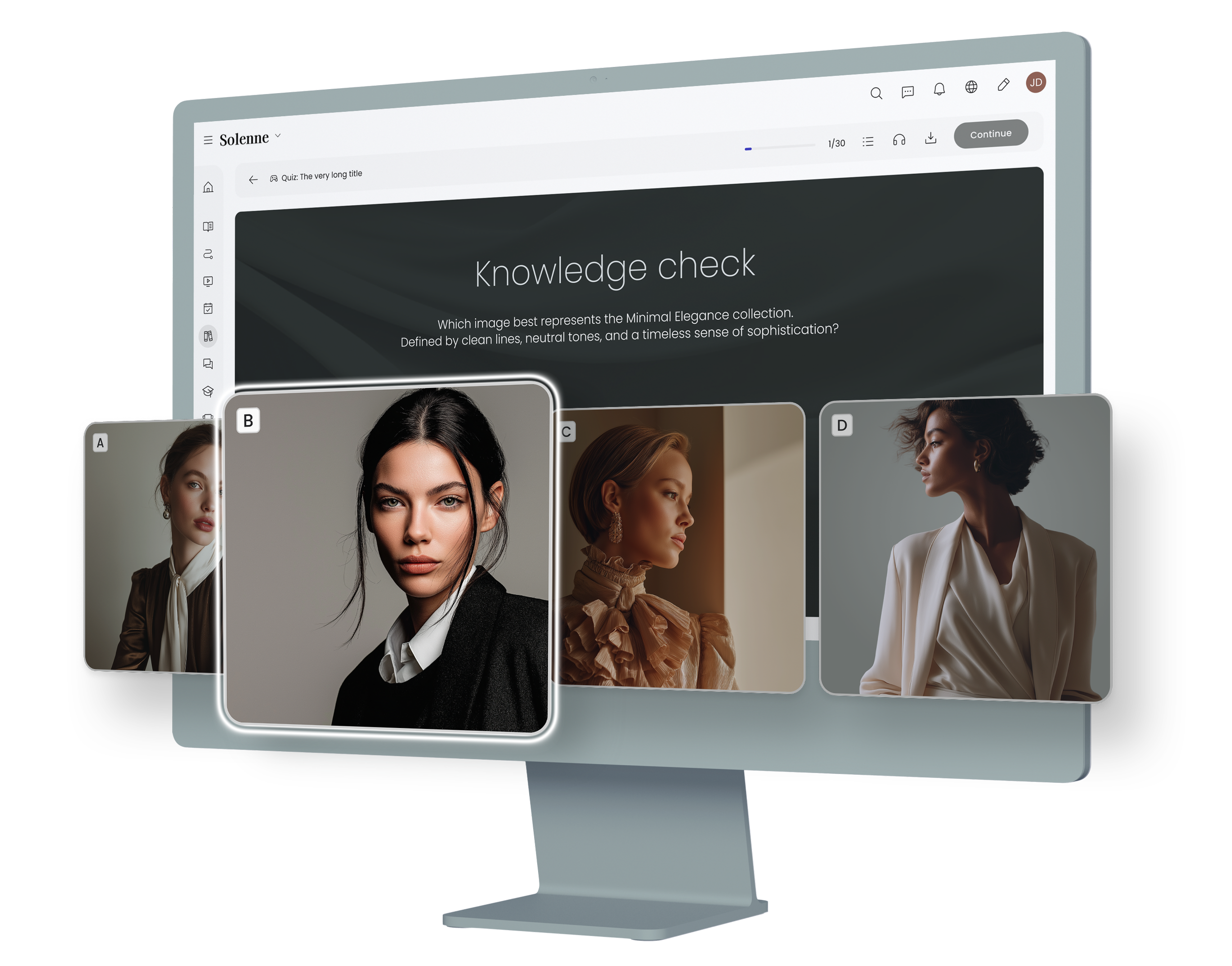
How to Build an Advanced Training Strategy: From Knowledge to Measurable Performance
Building an advanced training strategy means moving beyond isolated sessions toward a structured, continuous, and results-driven approach that develops both skills and performance.
Effective training integrates core knowledge, process mastery, communication skills, and relationship management into a cohesive learning journey, equipping teams with the tools they need to excel.
When training is designed around real-world scenarios, supported by mobile-friendly tools, and reinforced through coaching, feedback, and hands-on practice, it drives measurable improvements in performance, consistency, and long-term business outcomes. Advanced training transforms learning into a strategic driver of organizational success.
Key Pillars and Benefits of an Advanced Training Strategy
Clear Alignment with Business Goals
Training aligned with organizational KPIs such as productivity, quality, retention, and client satisfaction can improve team performance by 15 to 30%.Continuous Learning Instead of One-Off Sessions
Ongoing training programs increase knowledge retention by 30 to 40% compared to single, isolated sessions.Activity-Based and Scenario-Driven Learning
Experiential and hands-on training enhances skill transfer to real-world tasks by 30 to 50%.Mobile-Friendly, In-the-Flow Learning
Just-in-time, mobile-accessible training reduces time away from work while increasing adoption and engagement by 20 to 35%.Integrated Core Knowledge, Processes, and Soft Skills
Training programs that combine technical knowledge, process mastery, and soft skills outperform content-only approaches by 20% or more in key performance metrics.Coaching and Feedback Loops
Teams that receive regular coaching and constructive feedback demonstrate 25 to 30% higher performance than those without ongoing support.Consistency Across Teams and Locations
Standardized training frameworks reduce performance gaps between departments, teams, or regions by 20 to 25%.Faster Onboarding and Ramp-Up
Structured training programs reduce time to full productivity for new employees by 25 to 35%.Measurable Learning Impact
Advanced training strategies link learning outcomes directly to organizational metrics, enabling continuous optimization and performance improvement.
An advanced training strategy is not about adding more content—it is about designing a system where learning, coaching, and performance reinforce each other. When training is continuous, contextual, and measurable, it empowers teams to deliver confident, consistent, and high-impact results every day.

Conclusion: How to Build an Advanced Training Strategy
Building an effective training strategy is not about adding more content. It is about creating a continuous, connected learning ecosystem that supports teams where performance truly happens—on the job, with clients, customers, or stakeholders.
By aligning training with business objectives, grounding learning in real-world scenarios, and balancing core knowledge, process mastery, communication skills, and relationship management, organizations can drive consistent, measurable results.
When supported by mobile-friendly tools, activity-based learning, and ongoing coaching and feedback, advanced training becomes a powerful performance enabler. It empowers teams to deliver confident, engaging, and high-impact outcomes every day.