
Converting Employee Transitions into Scalable Training Assets
From Employee Turnover to Talent Acceleration: A Smarter Training Approach
Workforce turnover has become so common in customer-facing environments that it fades into the background. People leave. Schedules are adjusted. Another onboarding deck is distributed. The same phrase is repeated: “It’s normal for this sector.”
That sentence may be comforting, but it is also costly. Turnover is not simply an HR statistic. It is a direct reflection of whether an organization can consistently reproduce its Brand standards across locations, seasons, leadership changes, and generations of employees.
The most damaging consequence is not hiring fatigue. It is inconsistency. The Brand voice becomes uneven. Service rituals drift. The experience begins to depend on who happens to be present, rather than on clearly defined standards.
When this happens, training is often framed as an expense that is difficult to justify. The reasoning sounds familiar: “Why invest if they might leave?” Yet this logic creates a self-fulfilling cycle. Under-training increases pressure. Pressure without mastery leads to disengagement. Disengagement drives departures. Each departure resets confidence and performance.
Turnover should be treated as a learning variable — something to design for, not excuse. With a strong LMS and structured elearning pathways, organizations can capture knowledge before it walks out the door, standardize excellence, and shorten time-to-competency. The Learning Lab can function as a continuous reset mechanism: reinstalling standards, refreshing habits, and rebuilding pride with every new cohort.
It is also important to challenge the opposite assumption. Very low turnover is not automatically healthy. It can mask stagnation, outdated service behaviors, and complacency that quietly weakens results.
The workforce has changed. Emerging generations bring speed, digital fluency, and a demand for authenticity. They also question hierarchy and traditional career pacing. The response cannot be nostalgia — it must be system design.
Organizations that build structured training ecosystems — where excellence is learnable, progress is visible, and leadership capability is developed — turn turnover into a stress test their Brand can consistently pass.
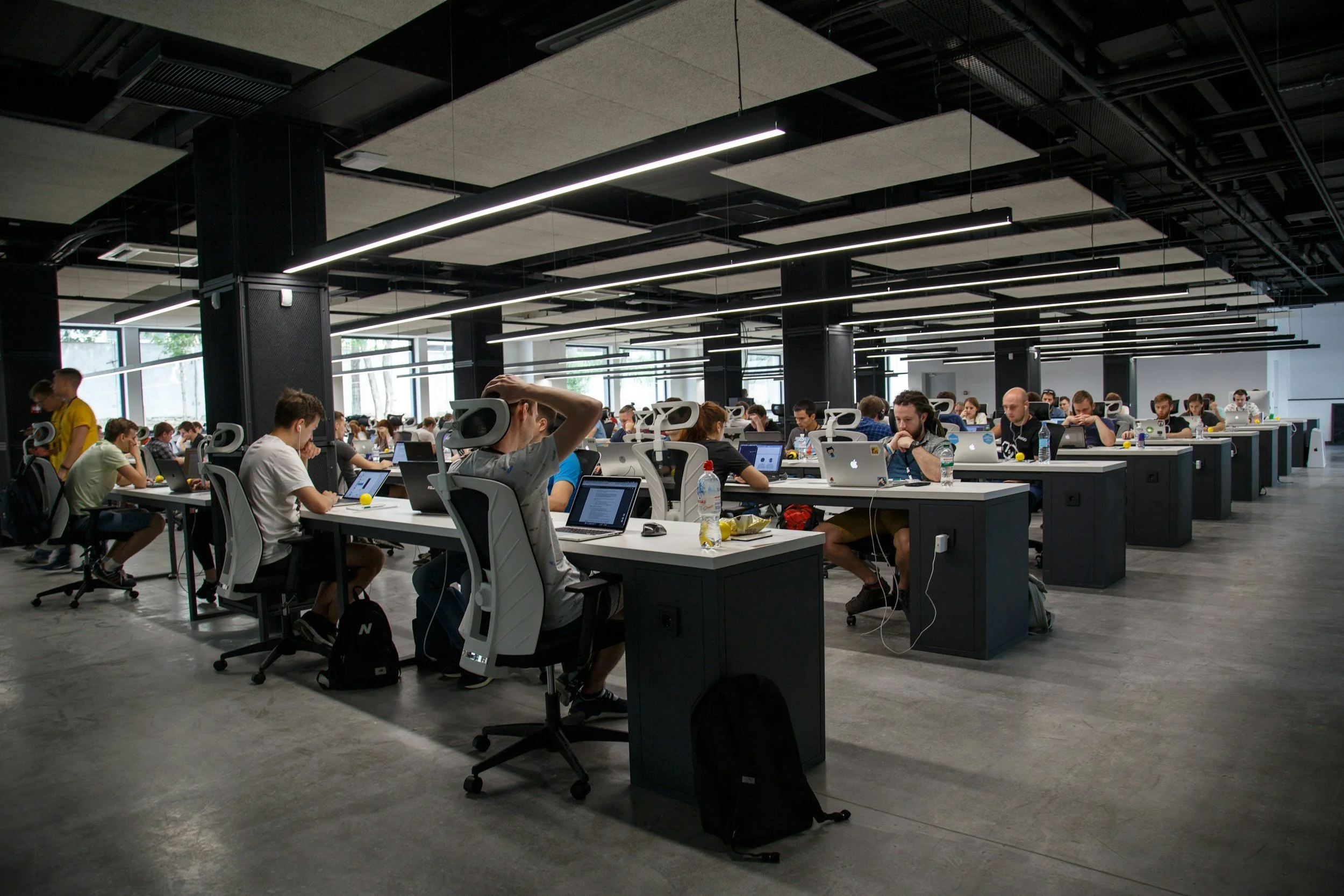
Stability Without Learning Creates Complacency
Low turnover is often celebrated as proof of engagement. And in many ways, it is. Stable teams protect cultural memory.
They understand nuance. They preserve service rituals and Brand expression with confidence. But tenure alone does not guarantee relevance.
When learning slows, repetition increases. Familiarity replaces curiosity. Advisors rely on what has worked before instead of adapting to new behaviors, new expectations, and new standards. Over time, performance plateaus — not dramatically, but subtly. Intentional training is what keeps stability dynamic.
Rather than focusing on foundational onboarding, organizations should invest in advanced elearning pathways inside the LMS — mastery tracks designed specifically for experienced team members. The Learning Lab can host peer-led workshops, scenario-based simulations, and leadership development modules that position senior advisors as culture multipliers.
Microlearning updates tied to evolving Brand narratives or client expectations ensure that expertise remains current. Observation frameworks and structured coaching conversations help maintain sharpness without undermining autonomy.
In this model, low turnover becomes leverage. It allows organizations to deepen capability rather than constantly rebuild basics. Stability becomes strength only when learning remains active.
Designing for Speed — Turning Workforce Churn into Capability
When workforce movement is frequent, improvisation is expensive. Without structure, onboarding becomes compressed.
Standards become interpretive. Managers default to survival mode. Performance becomes inconsistent. Yet high turnover contains hidden leverage: new hires are adaptable. They are more willing to adopt defined behaviors because they have not yet built competing habits. This window of openness is short — and valuable.
Organizations that win in high-turnover environments obsess over one metric: time to performance readiness. A strong LMS supported by focused elearning pathways can dramatically compress ramp-up time. Instead of overwhelming new hires with excessive content, The Learning Lab should deliver progressive learning bursts: daily five-minute modules tied directly to real interactions.
Behavioral rehearsal is critical. Role-play simulations, peer feedback loops, and structured observation accelerate skill adoption. Clear standards remove ambiguity. Early wins build confidence.
When onboarding is behavioral, measurable, and reinforced through microlearning, turnover shifts from disruption to renewal. Each new hire becomes fresh energy entering a stable system. High turnover does not have to dilute a Brand. With the right training architecture, it can strengthen it.
When Turnover Repeats, the Issue Is Growth — Not Content
Recurring turnover is rarely random. It clusters around specific pressure points: unclear expectations, inconsistent management, stalled development, or invisible effort.
The instinctive response is often to add more onboarding or refresh product knowledge. While clarity matters, information alone does not create commitment.
Most professionals leave when they cannot see a future. This is where training shifts from orientation to progression strategy. Organizations should design structured growth tracks within the LMS:
Junior to senior contributor pathways.
Specialist certifications in storytelling, complex client conversations, aftercare excellence, or conflict resolution.
Internal mobility preparation tracks.
Mentor and trainer development programs.
The Learning Lab can position experienced team members as contributors to learning, elevating their status and reinforcing cultural pride.
Equally important is manager capability. Leaders must be trained in micro-coaching: short, weekly feedback loops; observation checklists; and clear performance conversations that feel developmental rather than corrective.
Training cannot mask a poor culture. But it can make growth visible, structured, and attainable.
When employees believe they are building capital — skills, recognition, credibility — they are more likely to stay through challenges.

Gen Z at Work — The Generation That Demands Real Development
Gen Z is not a passing phase. They represent a structural workforce shift — and customer-facing environments are among the first to feel the impact because they hire early-career talent at scale.
Many leaders default to stereotypes: impatient, distracted, overly direct. These labels oversimplify what is actually happening.
Gen Z grew up in a world of instant information, visible career paths, and rapid feedback loops. They are used to transparency. They can commit deeply when the system feels coherent. They can disengage just as quickly when it does not.
What distinguishes them is not a lack of ambition — but a different relationship to authority and time. They expect clarity. They want defined standards. They want to know what skill they are building and how progress is measured. This creates pressure — but also opportunity.
Customer-facing roles remain one of the few professions where human connection, cultural storytelling, and craft still matter. The work can be meaningful. But the training system must reflect that meaning.
Strengths Gen Z Brings
Rapid skill acquisition when training is practical and scenario-based
High comfort with digital tools, LMS platforms, and short-form elearning
Strong responsiveness to precise, respectful coaching
Desire for purpose — service can be framed as craft and mastery
Leadership Challenges to Address
Low tolerance for chaotic onboarding
High sensitivity to tone, fairness, and unclear expectations
Quick disengagement when growth feels vague
Expectation of clearer work-life boundaries
Training Strategies That Work
Microlearning embedded weekly, not a single heavy induction
Frequent feedback loops instead of annual reviews
Transparent performance standards — what excellence looks like at each stage
Visible progress markers: certifications, skill credentials, digital badges within the LMS
Gen Z does not destabilize organizations. They expose whether systems are clear, fair, and developmental.
If The Learning Lab offers structured pathways, real coaching capability, and credible progression, this generation can become a high-performance layer of talent.
If not, turnover will remain high — not because of attitude, but because effort feels disconnected from growth.
What Turnover Rates Really Signal — Why Learning Must Be Built Like Infrastructure
Turnover becomes easy to dismiss when discussed in vague terms. Percentages change the conversation.
In many customer-facing sectors, annual turnover is often reported above 60%, with some high-volume segments approaching 70%. Even in premium environments, figures commonly sit between 30–35%.
Replacement costs are frequently estimated at 30–50% of annual salary in volume-driven roles — and can exceed 100% in specialized positions when you factor in onboarding, lost productivity, and ramp-up time.
These numbers are not destiny. But they are structural pressure. Turnover is not a seasonal inconvenience. It is an operating condition. And operating conditions require infrastructure — not motivational speeches.
If turnover is high, the organization must function like a professional academy:
Fast, structured onboarding pathways
Clearly defined and repeatable standards
Embedded coaching routines
Leadership continuity plans
A learning ecosystem that is always current and accessible
Practical strategies proven to stabilize teams are often straightforward:
Invest in training that builds competence quickly and visibly
Strengthen onboarding so new hires feel capable within weeks, not months
Recognize performance frequently and specifically
Improve communication, tools, and staffing clarity
Train leaders to coach consistently
These actions are not “soft.” They reduce operational stress. They increase confidence. They shape the daily experience that determines whether people stay.
The numbers do not suggest permanent instability. They signal that training must stop being treated as an event and start being treated as infrastructure. In high-turnover environments, learning is not support — it is operations.

Turnover Is Not the Question — System Strength Is
The question is rarely “How do we reduce turnover?”
The deeper question is “Have we built a system where people can win?”
When exits cluster, they often reveal friction: unclear expectations, inconsistent feedback, invisible progression, or underdeveloped leadership. Treating turnover as an isolated metric obscures these structural weaknesses. A resilient organization designs for movement.
The LMS becomes a daily performance tool — not a repository of static content. Elearning becomes practical, scenario-driven, and behavior-focused. The Learning Lab captures institutional knowledge so standards remain stable even when people move.
The key principles remain consistent:
Stability requires ongoing elevation, not complacency.
Volatility requires accelerated onboarding and repeatable routines.
Harmful attrition exposes leadership gaps.
Emerging workforce expectations demand transparency and feedback.
Financial replacement costs justify investment in structured training.
When learning is embedded into operations, confidence increases. When standards are documented and practiced, consistency strengthens. When growth pathways are visible, engagement improves. Reducing turnover becomes a byproduct — not the primary objective. The primary objective is system integrity.
If excellence is institutionalized rather than personalized, the Brand remains coherent regardless of individual movement. That is the difference between reacting to turnover and designing beyond it.