
2026 Landscape: Digital Training and Learning Experience Trends
What’s Next for Online Training and Learning Experiences in 2026
In 2026, online training will increasingly focus on personalized, data-driven learning experiences delivered through advanced digital platforms and mobile-friendly tools.
Personalized learning paths powered by AI will adapt to individual learner needs, while immersive technologies like augmented and virtual reality will provide interactive simulations that make skills development hands-on and engaging.
Microlearning will continue to grow, offering quick, digestible modules that fit seamlessly into busy schedules.
Gamification and social learning will enhance learner engagement, making training more collaborative and enjoyable.
AI-driven analytics will monitor progress and guide continuous improvement, while mobile-first platforms will allow flexible, anytime, anywhere access to learning.
As organizations increasingly prioritize sustainability and integrated digital strategies, training will also focus on environmental, social, and governance (ESG) practices, equipping learners to thrive in both digital and physical work environments.

Specialized LMS Platforms: Aligning Training with Organizational Goals
As organizations evolve, the need for specialized Learning Management Systems (LMS) has become increasingly clear.
Traditional, all-in-one LMS platforms no longer fully address the unique demands of modern training, prompting businesses to adopt systems that provide tailored, flexible, and efficient learning experiences.
These specialized LMS solutions offer features designed for personalized skill development, allowing learners to progress through training paths aligned with their roles, responsibilities, and organizational objectives.
Key aspects of this shift include:
Organizations are moving away from generic LMS platforms in favor of specialized solutions that address unique training requirements.
These systems offer customizable features and content, moving beyond one-size-fits-all approaches.
Companies now require dedicated onboarding and learning pathways that integrate role-specific skills, knowledge development, and opportunities for customized training aligned with brand values.
An effective specialized LMS often provides access to support teams or learning consultants who collaborate to design bespoke training journeys, including workshops, interactive modules, and practical, role-relevant content.
Advanced LMS features, such as mobile learning access, scenario-based simulations, and interactive modules, are crucial for delivering hands-on learning experiences that align with dynamic work environments.
No-Code LMS Platforms: Empowering Custom Learning Journeys
White label and no-code LMS platforms are increasingly essential for organizations seeking to deliver a fully customized learning experience without requiring extensive technical expertise.
These platforms allow organizations to create a brand-aligned learning environment, where the interface, colors, logos, and content reflect the company’s identity, ensuring a seamless and engaging experience for learners.
With no-code functionality, even non-technical teams can build, manage, and deploy bespoke training modules, making it easy to create and update content quickly and efficiently.
This flexibility enables organizations to design cohesive learning journeys that align with their values and strategic goals, without being constrained by the limitations of generic LMS platforms.
White label LMS solutions reinforce brand consistency across all learning touchpoints, ensuring that training not only delivers results but also strengthens organizational messaging, culture, and identity at every interaction.
Moving Beyond SCORM: Modern Authoring Tools for Dynamic Training
As the digital learning landscape evolves, the limitations of SCORM (Sharable Content Object Reference Model) have become increasingly apparent.
While SCORM was once a standard for e-learning, it no longer meets the demands of modern training environments, particularly in terms of flexibility, speed of updates, and mobile accessibility.
Agile authoring tools are now emerging as the preferred solution for creating engaging and dynamic learning content, offering a wide range of benefits:
User-friendly design interfaces, enabling even non-technical teams to create professional-quality learning content.
Agile development workflows, allowing content to be quickly adapted as training needs evolve.
Effortless content updates, ensuring training materials remain current without lengthy redeployment processes.
Seamless multimedia integration, including video and interactive elements, to enhance learner engagement.
Automatic translation and localization, making it easy to deliver training across global teams.
Branded templates, ensuring a consistent and cohesive learning experience that reinforces organizational identity.
These features make agile authoring tools the modern, user-friendly alternative to SCORM, perfectly suited for organizations seeking flexible, scalable, and brand-aligned learning solutions in today’s fast-paced environment.
Enhancing Training with Audio and Video Content
As training methods evolve, organizations are increasingly turning to audio and video-based learning to create dynamic and effective learning experiences.
These formats cater to diverse learning preferences and make complex concepts easier to understand and retain. With the growth of mobile learning, audio and video have become essential for delivering content that is both engaging and accessible.
Key benefits of audio and video learning include:
Higher engagement: Audio and video capture learners’ attention more effectively than text-based materials.
Improved retention: Visual and auditory content helps learners recall information more easily in real-world scenarios.
Mobile flexibility: Employees can access training on-the-go via smartphones, tablets, or other devices.
Simplified explanations: Videos are ideal for demonstrating processes, techniques, or complex concepts.
Learning while multitasking: Audio options allow learners to absorb content during commutes or other tasks.
Increased accessibility: Videos can include subtitles and audios can be transcribed to support learners with different needs.
Personalized and immersive content: Multimedia experiences make the learning journey engaging, interactive, and memorable.
By integrating audio and video into training programs, organizations can create modern, learner-focused experiences that improve knowledge retention, accessibility, and overall learning impact.
Creating Targeted Learning Journeys for Maximum Impact
As training programs become more sophisticated, organizations are moving toward personalized learning paths that cater to the unique needs of each learner.
By combining manual curation with AI-powered solutions, organizations can deliver training experiences that are highly relevant and tailored to individual roles, skill levels, and learning preferences. This approach ensures learners receive the right content at the right time, accelerating skill development and overall proficiency.
Key benefits of personalized learning paths include:
Role-specific content: Curated modules ensure learners focus on what is most relevant to their responsibilities.
AI-driven adaptation: Intelligent algorithms adjust learning experiences in real time, aligning content with individual progress and knowledge gaps.
Increased efficiency: Learners engage only with training that contributes to their growth, reducing time spent on irrelevant topics.
Accelerated skill development: Targeted learning enables learners to build capabilities faster and perform more effectively in their roles.
Higher motivation and engagement: Personalized content keeps learners invested in their development journey.
Support for diverse learning styles: Flexible options accommodate preferences for videos, interactive tasks, or hands-on simulations.
By implementing personalized learning paths, organizations can create dynamic, learner-focused experiences that enhance skill growth, engagement, and long-term development.

Agile Skill Building Through Nano and Microlearning
In today’s fast-paced work environments, employees need training that is both effective and easy to integrate into their busy schedules.
Nano and microlearning have emerged as powerful strategies for skill development, offering bite-sized, focused training modules that can be accessed anytime and anywhere. Delivered through mobile devices, these short, digestible sessions allow learners to build skills without long interruptions to their workflow.
Key advantages of nano and microlearning include:
Quick and accessible learning: Short sessions that fit into brief breaks or downtime, making it easy for learners to engage without disrupting their work.
Mobile delivery: Training can be accessed on smartphones, tablets, or other devices, enabling learning on-the-go.
Task-focused content: Modules concentrate on specific skills or knowledge areas, improving efficiency and relevance.
Better retention: Bite-sized content helps learners retain information more effectively by focusing on one concept at a time.
Minimal disruption: Learners can upskill without significant time away from core responsibilities.
Continuous development: Training modules remain accessible for review, refreshment, and ongoing skill growth.
By incorporating nano and microlearning into training programs, organizations can create flexible, engaging, and effective learning experiences that support continuous skill development and maximize knowledge retention.
Engage, Motivate, Achieve: Gamified Learning Strategies
As training programs evolve, gamification is emerging as an effective way to increase learner engagement and motivation.
By integrating elements such as leaderboards, badges, and rewards, gamified learning makes training more interactive, enjoyable, and immersive. These techniques encourage learners to complete their courses while fostering healthy competition and collaboration.
Gamification offers a wide range of benefits for modern training programs:
Leaderboards: Track progress and performance, encouraging friendly competition and motivating learners to improve.
Badges and achievements: Recognize milestones and skills, giving learners a tangible sense of accomplishment.
Rewards systems: Allow learners to earn points or unlock incentives, providing motivation to complete modules and enhance skills.
Team-based challenges: Promote collaboration and community, encouraging learners to work together toward shared goals.
Increased engagement and retention: Gamification transforms learning into a fun, competitive experience, keeping learners invested in their development.
Improved satisfaction and loyalty: A more enjoyable and rewarding training experience contributes to higher engagement, retention, and overall satisfaction.
By incorporating gamification into LMS and training programs, organizations can create dynamic, interactive learning experiences that enhance skill development, learner participation, and long-term performance.
Building Community and Engagement Through Social Learning
In 2025, social learning and collaboration tools are expected to play a pivotal role in training programs, transforming how employees interact with online learning experiences.
These tools provide platforms that encourage learners to share insights, ask questions, and support each other’s development, fostering a more collaborative and interactive learning environment.
By integrating peer-to-peer learning, discussion forums, and team-based projects into Learning Management Systems (LMS), organizations can cultivate a sense of community and collective growth among employees.
Key benefits of social learning and collaboration tools include:
Peer-to-peer learning: Learners can share knowledge and best practices with colleagues, enriching the overall learning experience.
Discussion forums and real-time messaging: Employees can ask questions, seek clarification, and exchange ideas in a supportive environment.
Virtual team projects: Promote collaboration and teamwork, even when learners are remote or spread across different locations.
Increased engagement: Learners become active participants in their own development, contributing to discussions and learning from peers.
Knowledge sharing: Insights from more experienced employees help upskill newer team members, fostering a culture of continuous learning.
Enhanced problem-solving: Collaborative tools allow teams to collectively tackle challenges, improving both learning outcomes and workplace efficiency.
By leveraging social learning and collaboration tools within LMS platforms, organizations can create engaging, interactive, and community-driven learning experiences that enhance knowledge retention, skills development, and organizational culture.
Flexible Learning for the Digital Era: Mobile-First Strategies
In today’s fast-paced work environment, flexible learning is no longer optional—it’s essential.
Mobile-first and anytime learning allows organizations to meet the needs of learners who require training that fits around their schedules.
By delivering content through mobile-optimized platforms, employees can access learning whenever and wherever it’s most convenient, making training part of everyday routines rather than a separate task.
Key advantages of mobile-first and anytime learning include:
Learning anywhere: Employees can engage with training modules on smartphones, tablets, or other devices, whether at home, commuting, or in between tasks.
Greater accessibility: Training materials are available outside of fixed schedules, supporting employees with varying routines.
Self-paced learning: Learners control the pace of their training, moving through modules in a way that fits their workflow.
Maximized efficiency: Short, targeted modules allow employees to develop skills without requiring long periods away from work.
Enhanced engagement: Interactive and visually appealing mobile content keeps learners invested in their progress.
Integrated experience: Learning becomes a seamless part of daily life, reducing friction and increasing adoption rates.
By embracing mobile-first and on-demand learning, organizations can create adaptive, learner-focused training programs that increase engagement, retention, and long-term skill development.
Bringing Expertise to Learners: Video Coaches in Action
In modern training programs, video coaches and mentors are becoming an essential tool for delivering personalized, expert-led learning.
By using multimedia formats such as pre-recorded lessons, podcasts, interviews, and live sessions, organizations can provide learners with direct access to experienced professionals, enabling them to gain practical insights and guidance in an engaging way.
Key benefits of video-based coaching and mentoring include:
Targeted coaching: Video sessions provide personalized guidance that helps learners understand complex concepts more effectively.
Expert knowledge sharing: Mentors can share real-world experiences, best practices, and actionable insights, making learning richer and more relevant.
On-demand learning: Podcasts, interviews, and pre-recorded content allow learners to engage with expert knowledge anytime, anywhere.
Live interaction: Real-time discussions with mentors enable learners to ask questions, clarify uncertainties, and receive immediate feedback.
Engaging, multimedia experiences: Video content makes learning more immersive and memorable, increasing retention and practical application.
Flexibility for diverse learners: Learners can access training in formats that suit their preferences, whether watching, listening, or participating interactively.
By integrating video coaching and mentorship into learning programs, organizations can create highly engaging, personalized, and effective learning experiences that accelerate skill development and empower learners to grow with confidence.
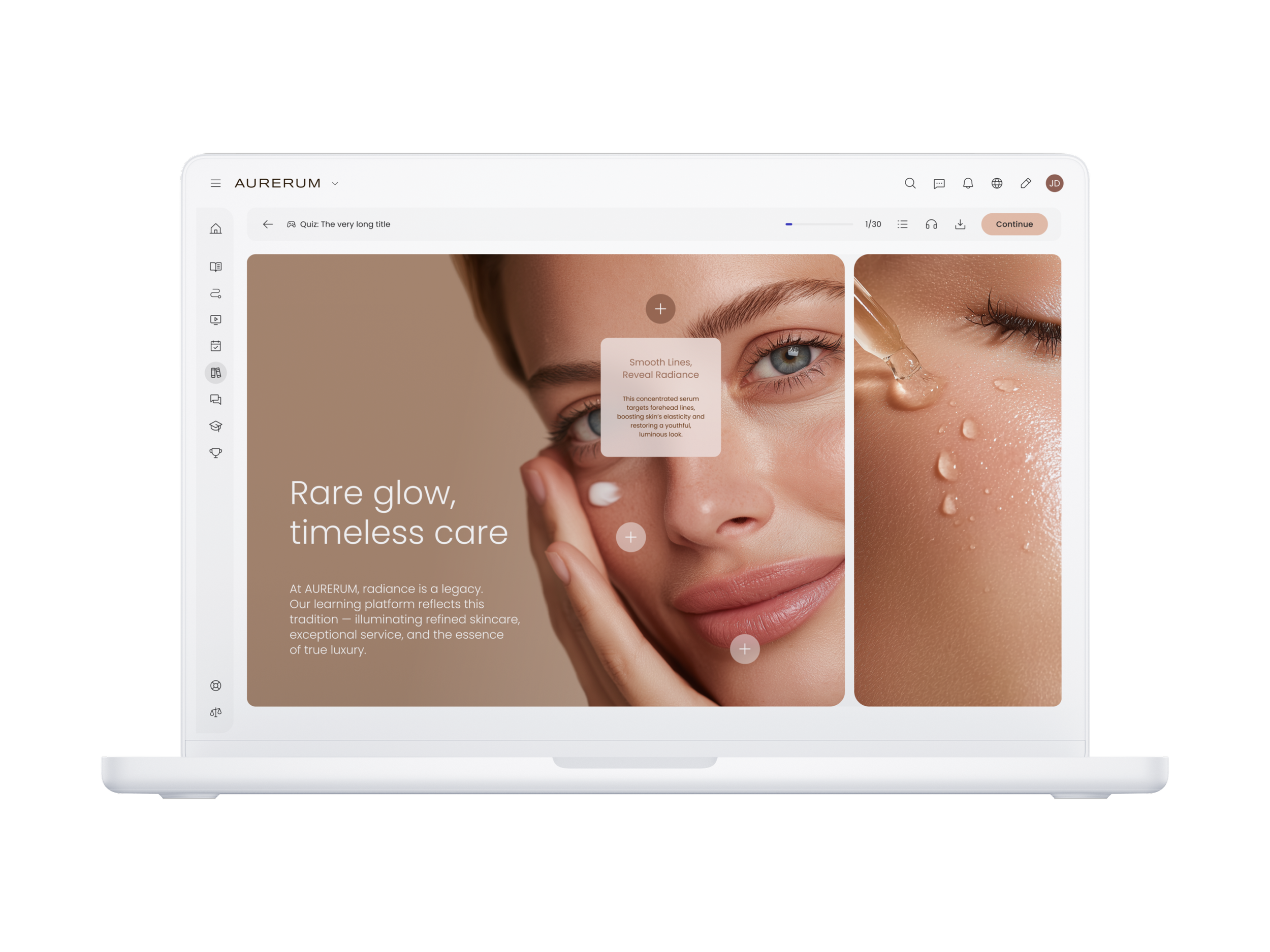
Maximizing Learning Outcomes with Blended Approaches
As training programs evolve, blended learning approaches are increasingly recognized as an effective way to balance flexibility, engagement, and interactivity.
While online training provides convenience and self-paced learning, a hybrid model that combines **digital modules with live instructor-led sessions—either in-person or virtual—**offers additional value.
Learners benefit from the autonomy of e-learning while also engaging in discussions, receiving real-time feedback, and collaborating with peers.
Key benefits of blended learning include:
Flexible online modules: Learners can access content anytime and progress at their own pace.
Live or virtual sessions: Opportunities for discussion, clarification, and interactive learning with instructors and peers.
Immediate feedback: Real-time guidance helps learners correct mistakes and reinforce understanding quickly.
Enhanced engagement: Combining digital and face-to-face interactions keeps the learning experience dynamic and immersive.
Deeper learning outcomes: Blended approaches support hands-on practice and more complex skill development.
Tailored learning experiences: The hybrid model delivers the best of both worlds—self-directed learning plus personalized support from instructors.
By adopting blended learning strategies, organizations can create flexible, engaging, and effective training programs that improve knowledge retention, skill mastery, and learner satisfaction.
Preparing Learners for Multi-Channel and Digital Environments
As organizations increasingly adopt multi-channel and integrated workflows, training programs must evolve to ensure employees are equipped to operate across different platforms and tools.
Online and blended learning programs can help learners gain proficiency with modern technologies, from digital platforms and software applications to collaboration tools and communication channels, ensuring a seamless experience for internal processes or client interactions.
Key benefits of multi-channel-aligned training include:
Technology proficiency: Training focuses on essential tools and platforms, helping employees work efficiently across digital and physical environments.
Seamless integration: Employees learn to navigate multiple systems and workflows, ensuring consistency and smooth operations.
Comprehensive knowledge: Staff gain understanding across all channels, enabling them to handle tasks, communication, and processes in various contexts.
Enhanced effectiveness: Training ensures employees can deliver high-quality outcomes regardless of the platform or workflow.
Adaptability: Employees develop the flexibility to switch between different tools, systems, or processes as needed.
Future-ready skills: Programs prepare employees for ongoing technological and procedural changes, supporting continuous growth and organizational agility.
By aligning training programs with multi-channel and integrated strategies, organizations can create cohesive, flexible, and future-proof learning experiences that improve skill versatility, operational efficiency, and long-term performance.